| Factor | Native development | Cross-platform development |
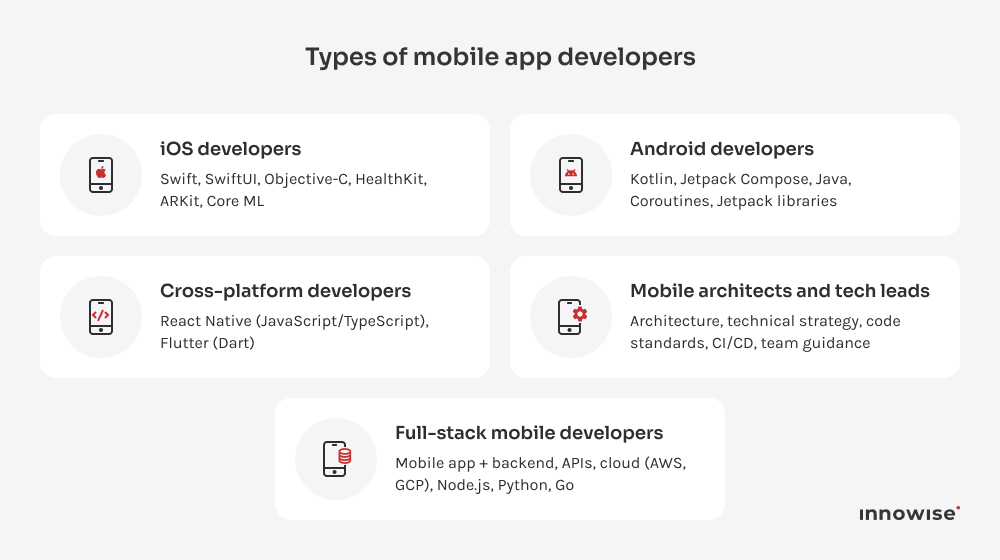
| Platforms | Separate iOS and Android codebases, usually built with Swift and Kotlin | One shared codebase for both platforms, commonly built with Flutter or React Native |
| Performance | A strong fit for demanding workloads and platform-specific behavior | Suitable for many commercial apps, though performance depends on the framework and workload |
| Device features | Direct access to platform APIs and device hardware | Some features may require native modules or custom platform code |
| Development speed | Building for both platforms usually takes more work | A shared codebase can speed up the initial release when platform behavior is similar |
| Team requirements | Requires iOS and Android expertise | Usually handled by one cross-platform team, with native support for platform-specific work |
| Maintenance | Each platform is updated and tested separately | Most changes are shared, though platform-specific parts still need separate maintenance |
| Best fit | Apps with complex interactions, deep OS integration, or demanding graphics | MVPs, internal tools, e-commerce apps, and products with similar flows across platforms |

 Hire us
 About us