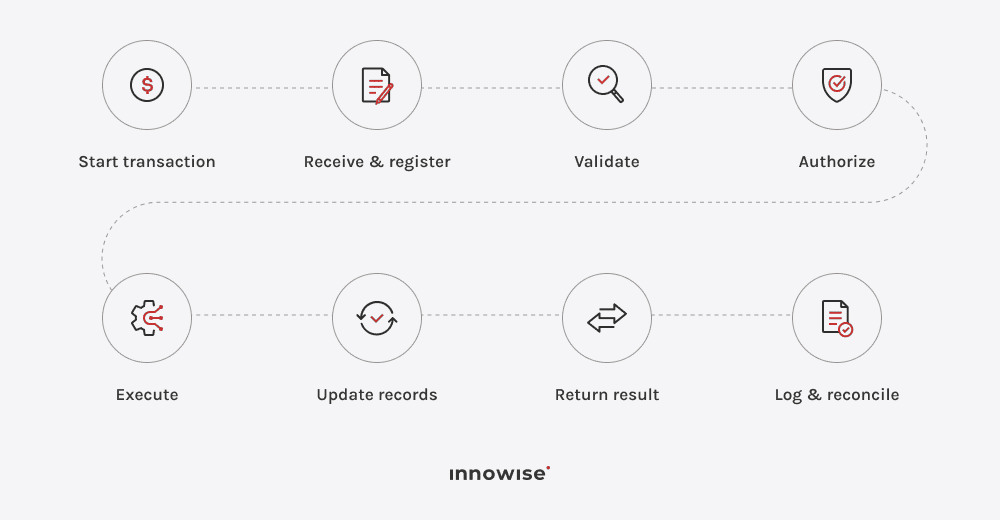
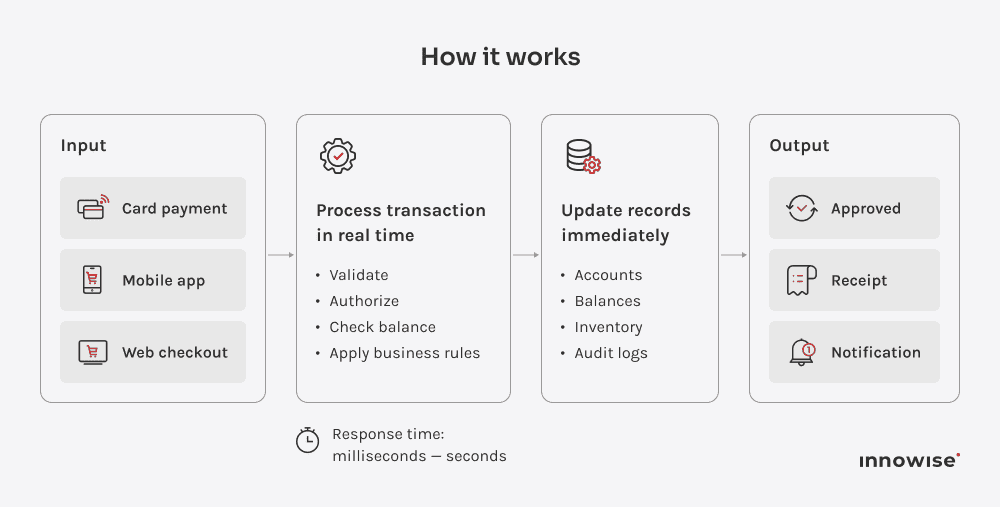
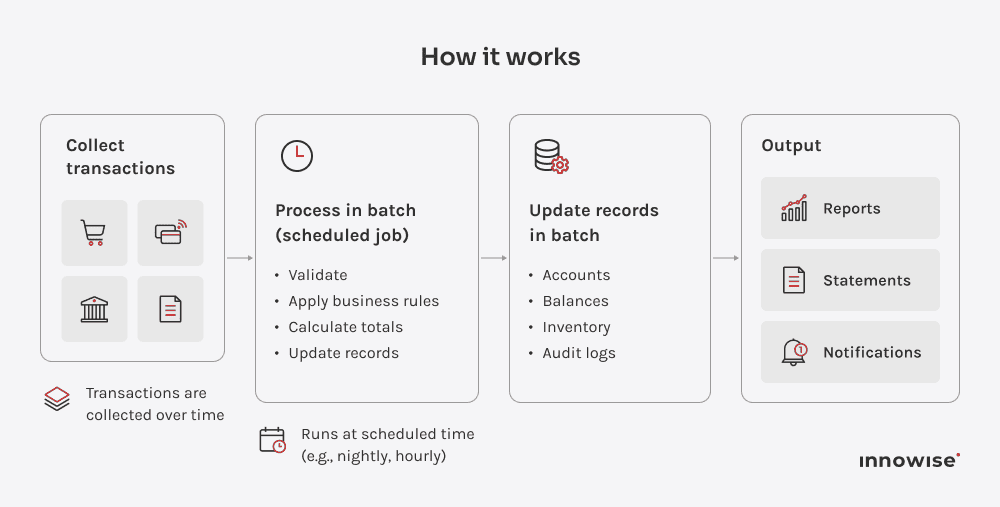
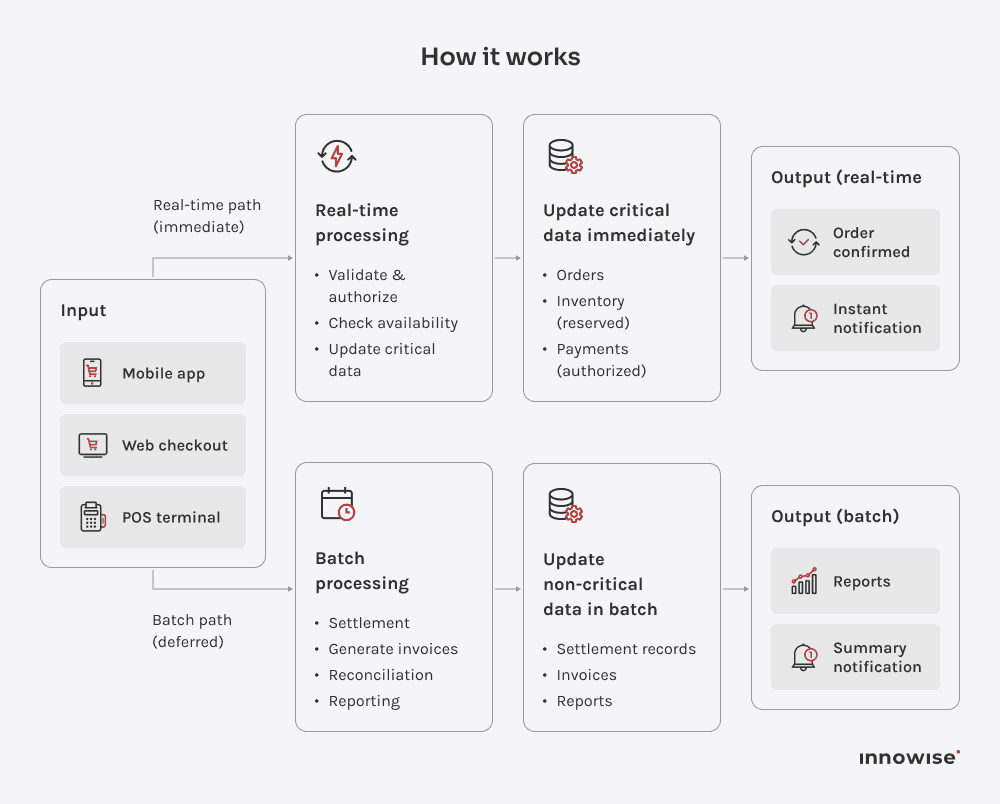
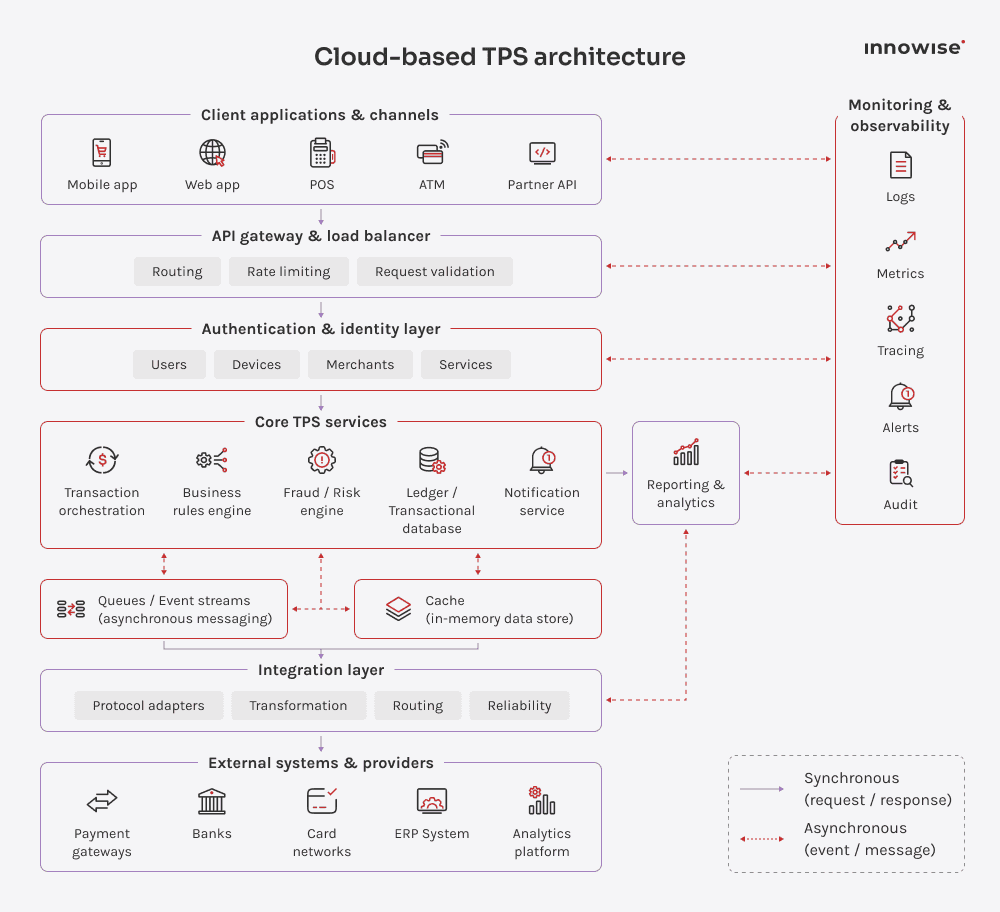
| Input layer | Receives transaction requests and converts them into a format the system can process | POS terminals, mobile apps, web checkouts, ATMs, API requests, IoT or device events, third-party system requests | REST or GraphQL APIs, payment protocols, webhooks, device gateways, request schemas, authentication tokens, transaction IDs, timestamps |
| Processing logic | Checks the request, applies business rules, and decides what should happen next | Validation, authorization, account and limit checks, pricing and fees, fraud screening, compliance rules, routing, orchestration, settlement logic | Rule engines, orchestration services, workflow engines, fraud APIs, routing services, state machines, synchronous calls, message queues |
| Database or ledger | Stores the transaction outcome and updates the records affected by it | Transaction records, balances, inventory, orders, customer data, ledger entries, audit history, settlement and reconciliation data | Relational or distributed databases, double-entry ledgers, ACID transactions, locking, version checks, append-only records, replication |
| Output layer | Returns the result and passes it to users or connected systems | Approvals, declines, confirmations, receipts, status updates, error messages, reports, notifications, webhooks, downstream events | API responses, webhooks, event streams, notification services, message brokers, report generation, status endpoints |
| Monitoring and audit trail | Tracks system health, transaction behavior, and the full history of each request | Application logs, metrics, alerts, error tracking, status history, audit trails, reconciliation reports, incident records | Centralized logging, distributed tracing, dashboards, alerting tools, correlation IDs, immutable audit records, reconciliation jobs |

 Hire us
 About us