






Generative AI trends in 2026: key technologies and future outlook

Nov 5, 2026 14 min read
Head of Delivery Office
Verified expert
Every article at Innowise is created by authors with real-world experience. They understand the topic beyond theory and bring insight from real projects.
9+ years of experience
Verified expert
9+ years of experience
Michael leads delivery operations across teams, technologies, and business units. Drawing on his background in engineering and enterprise systems, he improves delivery processes, manages operational risks, and helps large project teams work more consistently.
Expertise
Delivery management ERP & CRM Enterprise apps
Let's talk

Key takeaways

  • The question of whether to use generative AI is no longer up for debate. Businesses are now asking how to integrate it into their workflows and governance structures.
  • Despite varying market estimates, adoption, investment, and enterprise usage point to sustained growth in the coming years.
  • Banking, healthcare, education, logistics, transportation, and real estate are all reporting growing adoption of GenAI. However, maturity and deployment depth vary across sectors.
  • Looking ahead, we can expect AI to operate inside enterprise software, coordinate across applications through specialized agents, and handle more complex workflows under human supervision.
Summarize article with AI

Generative AI is a class of AI models that create new content based on prompts and context. This content can include text, program code, images, audio, video, or structured data. While traditional AI systems have primarily focused on classification or prediction, generative systems can create drafts, summarize content, translate text, and develop designs.

Generative AI features are now being integrated into CRM and ERP systems, technical support tools, and development environments, where they analyze corporate data and participate in multi-stage workflows. This is changing the nature of the questions executives ask. Generative AI trends are no longer about “Which chatbot should we try?” Instead, businesses ask which workflows need to change, what data should be integrated, and who will approve the system’s results.

So, what are the key trends in generative AI for 2026?

Let’s examine them, explore how AI is being used across six industries, and look at the risks to consider before launching projects. I’ll also share a forecast for the role of generative AI in companies’ day-to-day operations.

Build generative AI into your workflows

Generative AI market overview

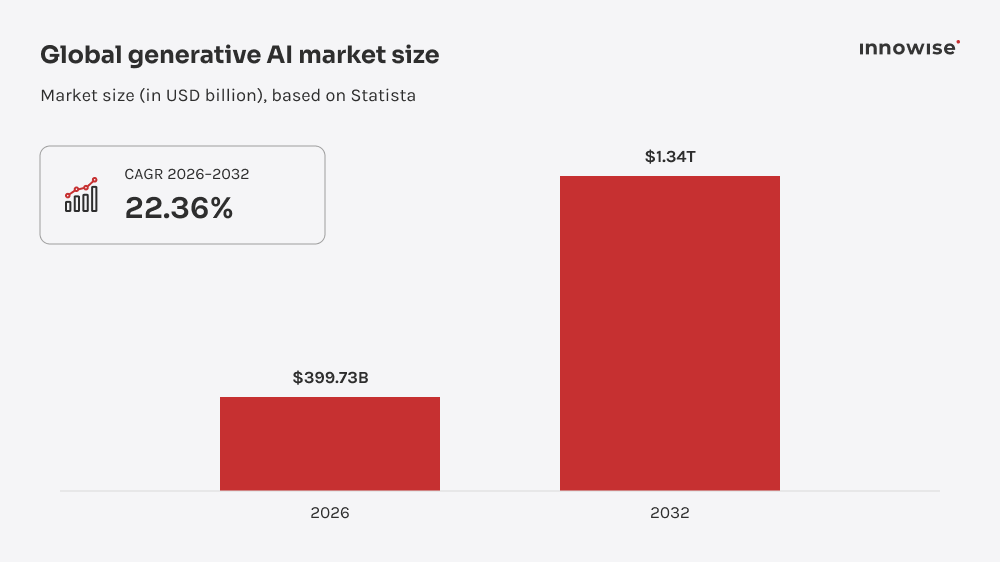
One of the main generative AI market trends is its rapid growth. In 2026, the market has grown fast, though estimates vary depending on who’s doing the counting. According to Statista, the worldwide generative AI market is projected to reach $399.73 billion in 2026 and $1.34 trillion by 2032. Other analyst firms publish far lower figures for the same year because they define the market more narrowly, so I’d focus on the overall growth trend rather than any single estimate.

Two bars show the worldwide generative AI market more than tripling between 2026 and 2032.

Technology adoption figures also point to growth. According to the Stanford AI Index 2026 report, 70% of surveyed organizations use generative AI in at least one business function, whilst 88% use AI in some form. The same report notes that in 2025, private investment in generative AI grew by more than 200%, with this technology accounting for almost half of all private investment in the AI sector. However, the report also points out that the use of AI agents is still in its early stages.

$1.34Tn

is expected generative AI market size by 2032

70%

of organizations use generative AI

>200%

Growth of investment in generative AI in 2025

Top generative AI trends in 2026

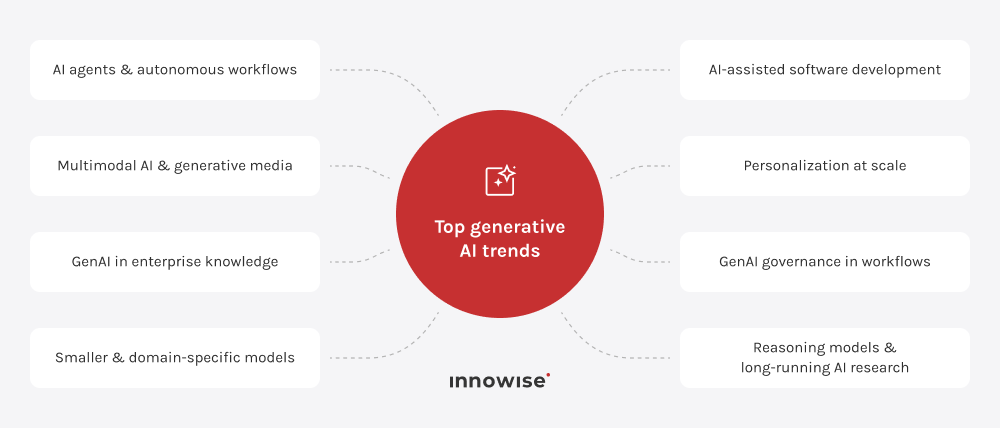
The top generative AI trends for 2026 have one thing in common. They’re all about how GenAI connects to data, tools, and people inside a business. Let’s look at what is changing this year.

A flowchart showing 9 latest generative AI trends.

AI agents and autonomous workflows

One of the most discussed AI trends is the rise of AI agents. Familiar chat assistants answer questions, but AI agents can also carry out tasks. They plan steps, call tools, and complete tasks in business systems such as a ticketing tool or a procurement platform. In 2026, vendors are building task-specific agents directly into enterprise software. Gartner predicts that 40% of enterprise applications will include task-specific AI agents by the end of 2026, up from less than 5% in 2025.

Actual adoption in production environments still lags behind interest in the technology. According to NVIDIA’s 2026 survey of the financial services sector, 42% of respondents were using or assessing AI agents, while 21% had already integrated them into their workflows. A key trend in 2026 is using specialized agents with limited authority and clearly defined approval workflows. Widespread autonomy is still some way off.

Multimodal AI and generative media

Multimodal models read and produce several formats in one workflow. A single request can start with a product brief and return draft copy, a set of images, a voiceover, and a short video. Editing has also improved: teams can adjust one scene, one sentence, or one color palette without regenerating the whole asset.

For businesses, the change in 2026 is that teams are increasingly using these capabilities in marketing, design, and training workflows. A marketing team can adapt one campaign into several languages and formats. A learning team can turn a policy document into a narrated walkthrough. Brand reviews and rights checks still require human oversight, because generated media can drift from brand guidelines or resemble protected content.

GenAI grounded in enterprise knowledge

The new generation of corporate assistants integrates with the company’s existing systems, such as internal wikis, request-handling systems, contract databases, and CRMs, and provides answers with links to relevant sections of source documents. Access control mechanisms operate at the data level, so employees see only the information to which they already have authorized access.

To me, this trend explains why retrieval-augmented generation (RAG) features in so many project plans. Answers with links to sources make it easier to verify information. This addresses the main objection to the use of generative AI in highly regulated departments. The most labor-intensive part of the work is usually not related to the model itself, but to data cleansing, configuring access rights, and keeping content up to date.

Smaller and domain-specific models

I see that companies increasingly understand that not every task needs the largest model. Smaller models tuned to a task or industry can answer faster and cost less to run, and some can run within a company’s own environment. Gartner predicts that by 2027 organizations will use small, task-specific models at least three times as often as general-purpose LLMs. Gartner VP analyst Sumit Agarwal puts the appeal this way: “These smaller, task-specific models provide quicker responses and use less computational power.”

The trade-off is breadth. A specialized model can outperform a general one on tasks like analyzing contract clauses or clinical coding and still struggle with requests outside its area of expertise. Many teams run both and route each request to the cheaper model when it is good enough.

Modular GenAI platforms and model access

More businesses are turning to platforms that combine models, APIs, and reusable components. A team might use one model for summarization, another for code, and a third for image work, with shared logging, permissions, and review processes across all of them.

In NVIDIA’s 2026 survey, 84% of financial services respondents said open-source models and tools were important to their AI strategy. Future generative AI platform trends point toward swappable parts: when a better or cheaper model appears, a business can replace it without rebuilding the entire workflow.

AI-assisted software development

Code assistants started with line-by-line suggestions. In 2026, this software development trend extends to code review, test generation, debugging, and longer tasks that span several files. In Stack Overflow’s 2025 survey, 84% of respondents used or planned to use AI tools, up from 76% a year earlier. Trust has not kept pace, though, with 46% saying they distrust the accuracy of AI tools. Only 31% of developers were using AI agents at that point. This gap suggests that teams let AI draft and propose changes while engineers review and own the merge.

Personalization at scale

Generative AI can adapt content and conversations based on the user’s context, such as their role, interaction history, language, and current task. A virtual banking assistant can explain changes to fees based on a customer’s specific account type. An in-house HR assistant can answer a question about vacation time, taking into account the employee’s country of residence and the terms of their employment contract. The same text-generation mechanism creates thousands of variations, so you don’t have to write each one by hand. In 2026, personalization is moving towards data from interconnected systems rather than relying solely on static segments of the customer base. This makes consent, access rules, and verification of AI-generated outputs even more important.

GenAI governance built into workflows

As generative AI is integrated into business systems, controls s are being embedded directly into workflows. By this, I mean role-based access controls, monitoring of queries and generated outputs, automated output validation, and mandatory human approval for actions that might have serious consequences. Stanford University’s 2026 AI Index report notes that AI development and adoption are outpacing efforts to manage the associated risks. The number of reported AI-related incidents rose from 233 in 2024 to 362 in 2025.

Regulatory requirements are adding more pressure. Although the EU’s Digital Omnibus package postponed the application of certain high-risk AI requirements from August 2026 to December 2027, the transparency obligations under Article 50 still apply as originally scheduled. Companies that use customer-facing chatbots or content-generation tools must now comply with the relevant disclosure and labeling requirements.

Reasoning models and long-running AI research

Generative AI is getting better at sustained, multi-step reasoning, and 2026 has provided some of the strongest public evidence yet. In May, OpenAI reported that its reasoning model had disproved a longstanding conjecture related to a geometry problem posed by Erdős in 1946, and DeepMind researchers reported an agent that resolved 9 of 353 open Erdős problems. Startups are chasing the same goal. PingYou published proof attempts for all 10 FirstProof problems, using a prototype orchestration system on top of off-the-shelf foundation models.

For business leaders, the point is the kind of work AI can now take on: extended tasks such as research, engineering experiments, and document-heavy reviews. Industries with lengthy, rule-bound processes may be among the first to benefit. Software and engineering teams can check AI-generated code against test suites. Pharma and healthcare organizations can review lengthy clinical and regulatory documents with links to sources. Banks can check credit and compliance files against written policies, and logistics companies can reconcile shipment and supplier data across systems. Decision-makers should treat headline claims with caution until they’ve tested the technology on their own data.

Explore how GenAI can benefit your systems and data

GenAI adoption trends across industries

GenAI adoption looks different across industries, and the surveys measuring it don’t always tell the same story. Here’s what the data shows across six sectors.

  • Banking
  • Healthcare
  • Education
  • Logistics
  • Transportation
  • Real estate
  • According to NVIDIA’s 2026 State of AI in Financial Services report, 61% of surveyed financial services professionals said their organizations were using or assessing generative AI.
  • 65% said their organizations were actively using AI in some form, up from 45% a year earlier.
  • 42% were using or evaluating agentic AI, while 21% had already deployed agents.

Common use cases of generative AI in banking include summarizing financial documents, helping advisors find information in internal knowledge, and drafting customer responses.

Modern banking ecosystem embracing innovation and technology-driven finance.
  • McKinsey found that 50% of surveyed US healthcare leaders reported that their organizations had implemented GenAI.This was the first time the figure had reached that level.
  • More than 80% said their organizations had deployed their first use cases to end users.
  • 82% expected a positive return on investment.

Drafting clinical notes, summarizing patient records for clinicians, and answering routine patient or member questions are among the common use cases.

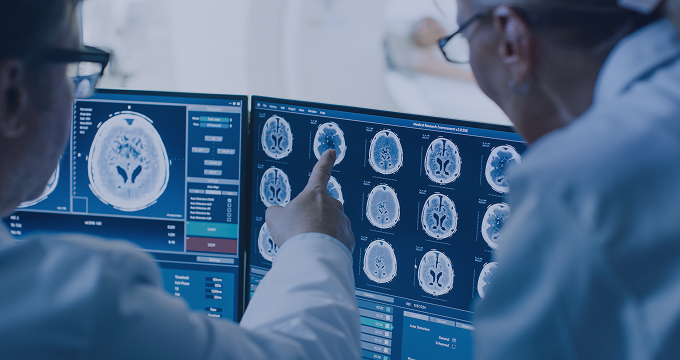
Healthcare professionals reviewing neurological MRI results on a multi-screen setup.
  • According to Chegg’s 2025 Global Student Survey,80% of undergraduates across 15 countries had used GenAI to support their studies.
  • Among those users, 53% worried about incorrect or inaccurate information.
  • Stanford’s 2026 AI Index also found that four in five US high school and college students use AI for schoolwork, reinforcing the picture of widespread adoption.

I’ve noticed that in education, GenAI is commonly used to explain difficult concepts, generate practice exercises with feedback, and assist educators in drafting lesson materials.

Digital learning transforming education through interactive and personalized experiences.
  • A survey by ABI Research of 490 professionals in the US, Mexico, Germany, and Malaysia found that 64% of supply chain leaders said AI and GenAI capabilities are important or very important when evaluating new technology. The figure covers both AI and GenAI.
  • More than 80% of respondents planned to use some form of AI for work such as demand forecasting and inventory management.

Logistics professionals use AI to summarize shipment exceptions, draft supplier communications, and answer operational questions using logistics data.

Smart supply chain powered by automation, analytics, and real-time visibility.
  • According to Descartes survey of 616 shippers and logistics service providers in North America and Western Europe, 96% reported using generative AI in transportation management.
  • Top uses were data entry (41%) and route and load optimization (39%).
  • However, adoption in this industry remains relatively shallow: only about half used it in three or more transportation functions.

Transport operators use generative AI to draft disruption updates for passengers or customers, summarize incident reports, and help staff retrieve policies and procedures.

Modern highway with a tech-enabled cycle bridge supports digital mobility and traffic flow optimization.
  • According to NAR, 54% of surveyed real estate agents plan to use generative AI for content creation over the next 12 months.
  • 23% of REALTORS® use AI daily.
  • Among agents who use AI, 75% use it to write listing descriptions.

Beyond writing property listings, AI use cases also include tailoring client follow-up emails and summarizing lease or transaction documents.

Digital real estate solutions enable automated smart home access, remote management, and secure transactions.
A generative AI pilot can perform well on a carefully selected set of documents. However, things can change once it's rolled out for full-scale use. To avoid problems, we recommend first cleaning up the sources the assistant will work with, configuring access rules, and then testing the workflow on real data.
Ivan Shatukha, Global Development Director.
Ivan Shatukha
Global Development Director

Risks and practical considerations

To give you a balanced view of the latest generative AI trends, I also want to highlight the main risks of using this technology in business workflows. Here’s what can go wrong and how you can respond.

RiskWhat can go wrongHow to address it
Data privacySensitive data may be disclosed through prompts, system outputs, or components connected to the system.Restrict access to data and establish policies for using approved AI tools.
Regulatory complianceAn AI-enabled workflow processes data or produces results that violate industry or local regulatory requirements.Verify the requirements for each use case and document the applicable controls and verification procedures.
Inaccurate outputsResponses that appear plausible may contain errors.Ground responses in reliable data and verify results that have significant consequences.
Bias and fairnessGenerated content or recommendations may be biased against certain groups.Test results on diverse user groups and review decisions that have a significant impact.
Transparency and auditabilityUsers are not informed they are interacting with AI, and employees cannot verify response sources or track the agent’s actions.Disclose the use of AI, cite sources (where possible), and log significant actions.
Intellectual propertyGenerated content may reproduce copyrighted material or raise questions about usage rights.Verify the input data, the service provider’s terms, and the system’s output before publication.
Prompt injectionMalicious content can manipulate the AI system's behavior.Treat external content as untrustworthy and test the associated workflows.
Uncontrolled agent actionsThe agent performs an unintended action in the business system.Restrict access rights, maintain an activity log, and require approval for significant operations.
Cost and ROIUsage and integration costs rise without clear business value.Track the results of system usage along with the costs of its implementation.
Lack of ownership and skillsThere is no team responsible for verifying results, monitoring performance, or troubleshooting issues.Assign clear ownership, define verification and escalation procedures, and organize training for staff who use the system.
Show more

This list isn’t all-encompassing, as each use case may have its own unique characteristics. Innowse runs a specialized AI Hub, where experts and consultants can help you work out a comprehensive plan for your generative AI project, including risk assessment and strategies for mitigating those risks.

Know the risks before you launch your GenAI project

The future of generative AI

As with any rapidly advancing technology, generative AI keeps pushing the boundaries of what it can do. We can expect significant changes to happen that will influence how companies implement these tools and use them in their day-to-day operations:

AI will become a standard feature of business software

It’s happening now, but we’ll see more GenAI features working inside CRM, ERP, and other tools, using task and application context. Users will interact with these features directly within the software. A sales rep sees a drafted follow-up beside the opportunity record, and a finance analyst sees a plain-language explanation next to an unusual ledger entry.

I expect buying decisions to shift from standalone AI subscriptions to AI features in software a company already licenses. This means data access rules and vendor terms will become an important part of software evaluations.

Agents will work together across applications

Once agents sit inside several tools, the next step is for them to coordinate toward one goal without the user having to switch between apps. Gartner expects networks of specialized agents to collaborate across multiple applications by 2028, with broader agent ecosystems emerging by 2029. This will require shared identity management, permissions, and activity logs across agents, while people take on a supervisory role. Gartner projects that at least half of knowledge workers will develop skills to work with, govern, or create AI agents.

Modular platforms and model selection

Businesses will combine ready-to-use models and components. Platforms will also select the most suitable model for each request based on quality, speed, cost, and data requirements. A routine classification request can go to a small, low-cost model, while contract analysis can be handled by a more capable one. Over time, this could make it easier and cheaper to switch providers and allow evaluation results, rather than brand names, to determine which model is used.

Long-running work with built-in checks

As models become capable of sustained reasoning, businesses will likely assign them tasks that run for days, such as research, engineering experiments, and document-heavy reviews. Teams will tend to choose tasks where outputs can be checked against tests, rules, or source documents, while testing and cost tracking become standard features of GenAI platforms.

Stronger governance

Evolving requirements for transparency, documentation, and human control will influence how GenAI systems are designed and operated, as the EU’s phased rules already show. Documentation that covers what a system does, what data it uses, and who approved it will likely become a standard by-product of running the system. Human oversight will be defined for each workflow, with approval steps for consequential actions. I expect companies operating in several jurisdictions to follow the strictest applicable requirements where possible, rather than maintain separate versions.

Weigh cost, risk, and return on a GenAI project

Our success stories

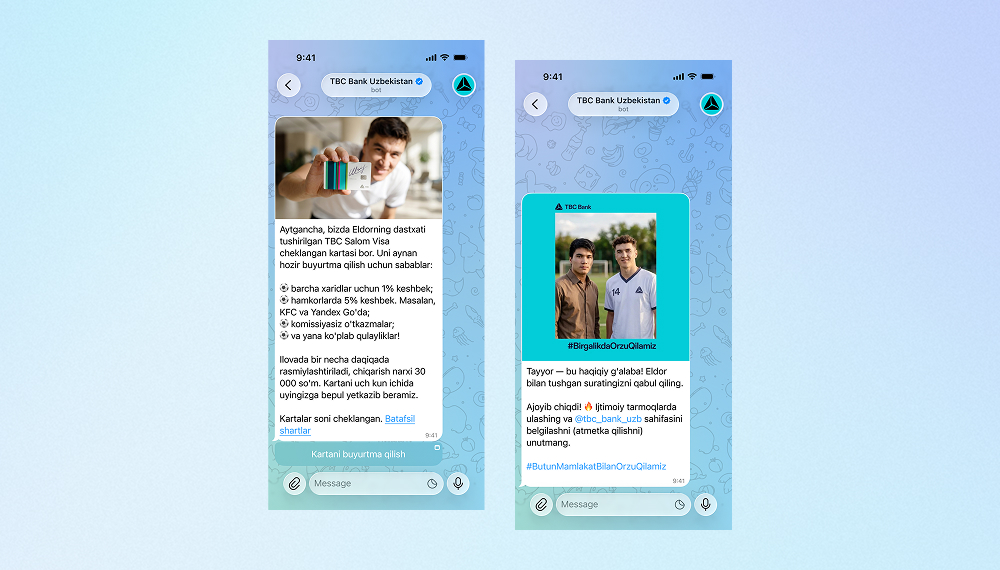
AI bot for TBC Bank marketing campaign
Innowise built a bilingual Telegram bot that generates AI selfies with TBC Bank's football-star brand ambassador.
3,000 users engaged
2 languages supported
View case study
Client review
View case study
Client review logo. Client review
AI Telegram bot..
Breast cancer detection software development
Innowise implemented a federated learning framework that enabled 3 clinics to collaboratively train a breast cancer detection model.
<68.6% improvement in segmentation AP
10,500 mammography images in an imaging repository
AI-powered end-to-end compliance ecosystem development
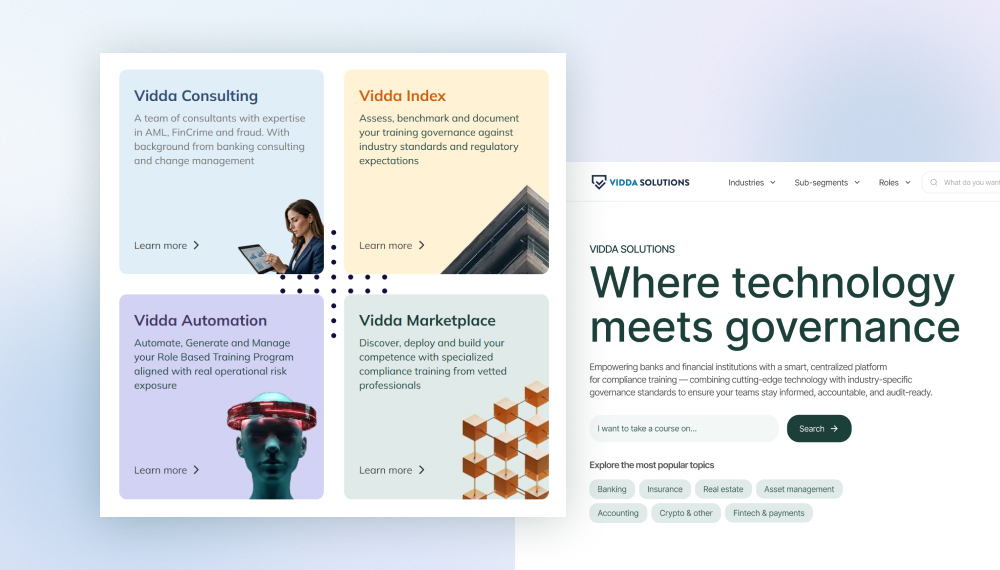
Innowise delivered an intelligent platform for compliance assessment and training in highly regulated sectors, like finance, insurance, etc.
8 months from concept to launch
100% GDPR and DORA rcompliance
View case study
Client review
View case study
Client review logo. Client review
Mobile medical advisor..
AI-assisted contract transformation platform development
We’ve built a contract management parsing module that uses AI for field classification and semantic content analysis.
10s to produce a parsed structure
100% DORA / NIS2 ready
View case study
Client review
View case study
Client review logo. Client review
AI-assisted contract transformation platform (DORA / NIS2 ready)..
Building a unified AI FinTech OS for fiat and crypto
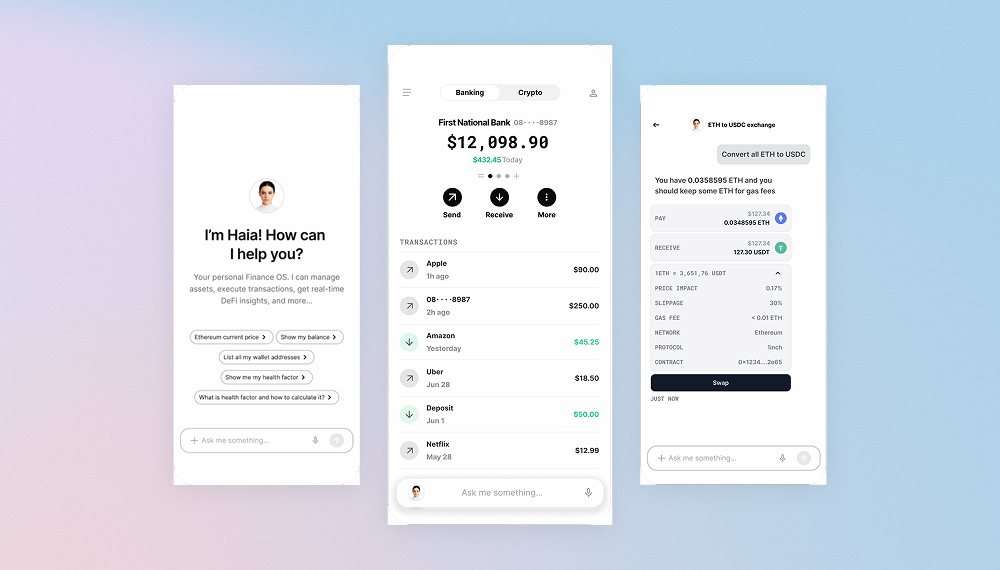
We helped build Haia, a modular AI finance OS that connects banks, crypto wallets, and investments, enabling secure, cross-chain operations.
25% more efficient LP via Superform integration
70 crypto app interfaces replaced with one
View case study
Client review
View case study
Client review logo. Client review
Haia: finance AI assistant.
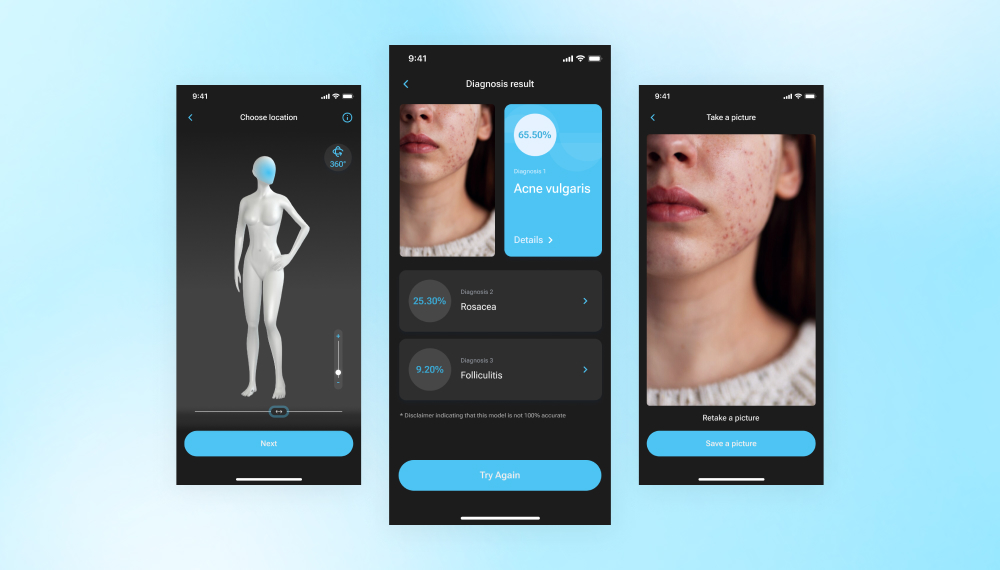
AI dermatologist skin scanner app development
An AI app we built uses deep learning and image recognition to quickly assess skin conditions, giving preliminary diagnoses based on photos.
30 dermatological conditions supported
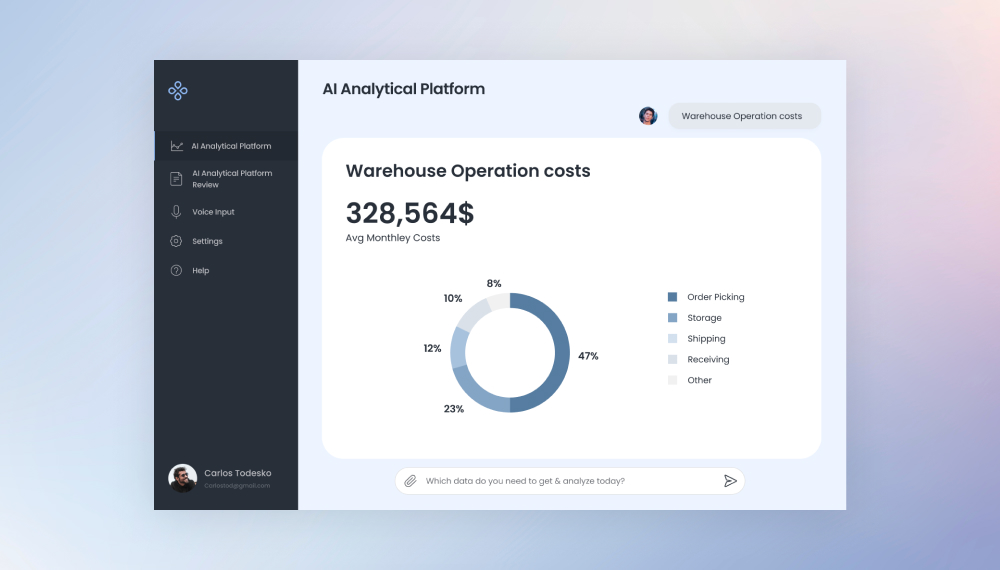
Building an analytical platform to improve decision-making
We developed an LLM-based analytical platform that can analyze the company’s internal data and generate responses to questions based on that info.
AI medical advice app development
Innowise has developed a cross-platform mobile app to provide travellers with medical advice and help find nearby medical facility locations.
100% GDPR compliance
01 / 01
Close popup icon

Conclusion

Intelligent agents, models grounded in company knowledge, compact models, and modular platforms are among the GenAI adoption trends showing how generative AI is becoming an integral part of products and workflows. Despite high adoption rates, deep integration into business workflows and trust in AI-generated results haven’t kept pace. This gives an advantage to teams that pay attention to data quality, governance, and how AI actually performs in their workflows.

A sensible first step is to introduce the technology into a single, well-defined workflow with a designated lead, reliable data, and clear procedures for verifying results. From there, the company can scale the solution to related tasks and expand the platform’s functionality as needs grow.

Innowise helps businesses with AI consulting and development. If you’re considering implementing generative AI in your organization, our team can help you assess potential use cases and risks, as well as develop an implementation plan. Feel free to reach out to us to discuss your project.

FAQ

Generative AI creates new content, such as text, code, images, audio, and video, from a prompt and context. Other AI technologies, such as traditional machine learning, primarily focus on tasks like classification and prediction, while generative models produce new content.

Generative AI trends and technologies are moving marketing from one-off drafting toward connected workflows for content, personalization, and campaign production. Marketers use multimodal tools to produce copy, images, and short videos from one brief, and teams adapt one campaign into multiple languages and formats. People still handle brand reviews, rights checks, and fact checks because generated material can drift from brand guidelines or resemble protected content.


GenAI adoption is growing across industries, but many businesses are still in the early stages of implementation. The Stanford AI Index 2026 reports that 70% of surveyed organizations use GenAI in at least one business function. Common early use cases include document summarization, internal knowledge search, and drafting customer or partner messages, while adoption of AI agents and more complex workflows is progressing more slowly.

Generative AI current trends in healthcare center on reducing documentation work and answering routine questions. Typical use cases are drafting clinical notes, summarizing patient records for clinicians, and answering routine patient or member questions. Because errors can affect patient safety, organizations pair these tools with source-linked answers, strong access controls, and human oversight, and privacy rules shape which data a system can use.

The latest generative AI trends in banking and finance show a shift from experiments toward document summarization, advisor support, and early AI agent deployments. NVIDIA’s 2026 survey found that 61% of financial services professionals said their organizations were using or assessing generative AI. Common use cases include summarizing financial documents, helping advisors find answers in internal knowledge bases, and drafting customer responses, with compliance checks before messages are sent to customers.

The challenges that most often slow enterprise adoption of GenAI are data readiness, governance, and ownership. Unclear business value, skills gaps, and security risks such as prompt injection add to the list. Starting with one workflow, trusted data, and clear review steps helps keep these problems manageable.

Show all

Table of contents

Build generative AI into your workflows

    Contact us

    Book a call or fill out the form below and we’ll get back to you once we’ve processed your request.

    Send us a voice message
    Attach documents
    Upload file

    You can attach 1 file up to 2MB. Valid file formats: pdf, jpg, jpeg, png.

    By clicking Send, you consent to Innowise processing your personal data per our Privacy Policy to provide you with relevant information. By submitting your phone number, you agree that we may contact you via voice calls, SMS, and messaging apps. Calling, message, and data rates may apply.

    You can also send us your request
    to contact@innowise.com
    What happens next?
    1

    Once we’ve received and processed your request, we’ll get back to you to detail your project needs and sign an NDA to ensure confidentiality.

    2

    After examining your wants, needs, and expectations, our team will devise a project proposal with the scope of work, team size, time, and cost estimates.

    3

    We’ll arrange a meeting with you to discuss the offer and nail down the details.

    4

    Finally, we’ll sign a contract and start working on your project right away.

    More services we cover

    arrow