

AI discoverability: how to get your brand found, cited, and recommended by AI

Head of Business Analysis
Verified expert
Every article at Innowise is created by authors with real-world experience. They understand the topic beyond theory and bring insight from real projects.
9+ years of experience
Verified expert
9+ years of experience
Yuliya leads business analysis with a highly proactive, hands-on approach. She strengthens teams, improves collaboration, and keeps projects focused on measurable business value.
Expertise
Business analysis Product ownership Discovery
Let's talk

Key takeaways

  • AI discoverability is how easily AI-powered systems can find, understand, mention, cite, and recommend a brand in relevant conversations.
  • SEO remains the foundation. For Google AI Overviews and AI Mode, Google confirms that established SEO practices still apply, without additional technical requirements.
  • Six areas deserve attention: technical accessibility, content clarity, original expertise, third-party credibility, freshness, and consistent platform presence.
  • Your website cannot tell the whole story. AI-generated answers can draw on independent publishers, industry resources, reviews, videos, and community discussions.
  • Measure mentions and recommendations alongside citations. A brand can appear as a cited source without being recommended as a supplier.
  • Start with buyer questions. Test where AI mentions your brand, where it recommends competitors, and where its description of your business is incomplete or inaccurate.
Summarize article with AI

Ask ChatGPT to recommend the best companies in your industry. Is yours among them? And if it is, does the assistant explain what makes your company worth choosing?

If not, you’ve got something to think about. With over a billion people using ChatGPT weekly and roughly one in five queries carrying direct commercial intent, being left out of AI recommendations is a business problem worth taking seriously.

But how do you improve your brand discoverability and get AI to notice you, let alone recommend you? And will your good old SEO do the trick?

Let’s figure it out.

What is AI discoverability?

AI discoverability is the degree to which AI-powered systems can find information about your brand, understand what it offers, and include it in relevant answers or recommendations.

You might also come across the term AI search visibility. Both describe how visible your brand is when people use tools such as ChatGPT, Perplexity, Gemini, Google AI Overviews, and AI Mode.

But there are different levels of being discovered.

Say someone asks ChatGPT, “What should I consider when choosing a CRM system?” Your company’s guide might be cited in the answer. Great, your content is getting noticed.

Now imagine the next question: “Which CRM providers would you recommend for a mid-sized business?” And your company is nowhere to be found.

See the difference? AI knows your content exists, but that doesn’t necessarily mean it considers your brand worth recommending.

I’d distinguish four outcomes:

  1. Found: AI systems can access relevant information about your company.

  2. Understood: They can associate your brand with the right products, capabilities, and use cases.

  3. Cited or mentioned: Your pages are referenced, or your brand is named in an answer.

  4. Recommended: Your company is presented as a suitable option for a particular buyer’s needs.

These outcomes don’t necessarily happen in sequence. An assistant may recommend a well-known brand without linking to its website or cite a lesser-known company’s research without recommending its services.

And let’s face it, you’d probably rather have AI recommend your company to a potential customer than simply use your website to answer a question.

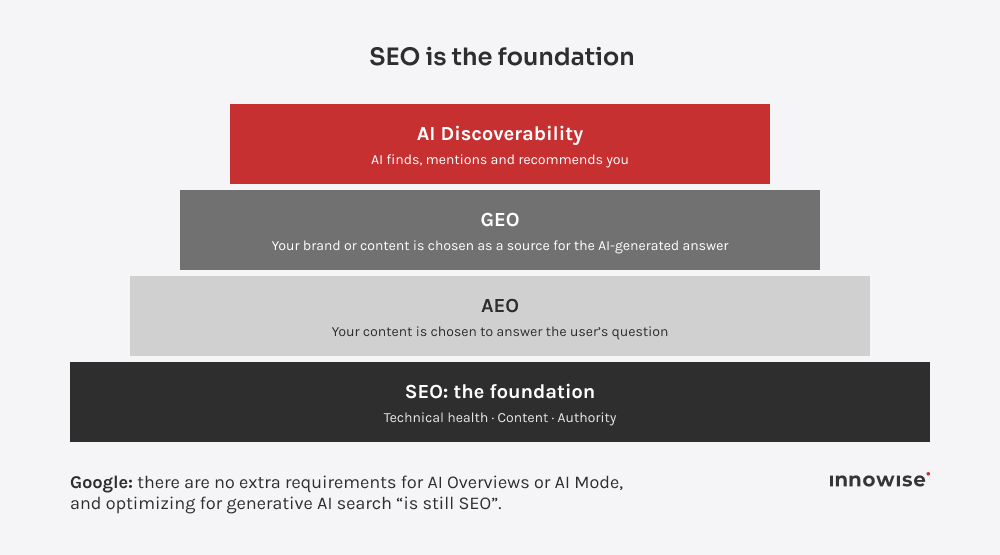
AI discoverability vs SEO, AEO, and GEO

A little marketing jargon crash course is in order. Because apparently, SEO wasn’t enough, and we needed a few more acronyms to keep track of.

TermWhat it focuses onMain objective
SEO (search engine optimization)Website accessibility, relevance, content quality, and authorityImprove visibility in organic search
AEO (answer engine optimization)Making information useful for answering specific questionsHelp answer engines select and present your content
GEO (generative engine optimization)Improving how brands and content appear in AI-generated responsesIncrease relevant AI mentions, citations, and recommendations
AI discoverabilityYour brand's actual presence and representation across AI experiencesBeing found, understood, and considered by potential customers

These terms overlap, and AEO and GEO are frequently used interchangeably. AI discoverability is the outcome you’re trying to achieve.

Do AI assistants recommend your competitors instead of you?

Find out how visible your brand is.

Why SEO is still essential (but won't guarantee AI visibility)

Now that we’ve sorted out the terminology, let’s answer the obvious question: If you’re already investing in SEO, isn’t that enough to get noticed by AI?

Well, Google seems to think SEO is still the way to go. In its official documentation, Google confirms that there are no additional technical requirements for appearing in AI Overviews or AI Mode. Your pages need to be indexed, be eligible for search snippets, and follow established SEO practices.

And in its May 2026 guide, Google goes as far as saying that optimizing for generative AI search is still SEO. No special AI schema, no mandatory llms.txt files, and no need to rewrite your entire website into bite-sized AI-friendly chunks.

Sounds reassuring, doesn’t it?

Except that Google’s advice concerns Google’s own search features. ChatGPT, Perplexity, and other AI assistants don’t necessarily select their sources the same way. And even within Google, ranking well organically doesn’t mean your content will appear in an AI-generated answer.

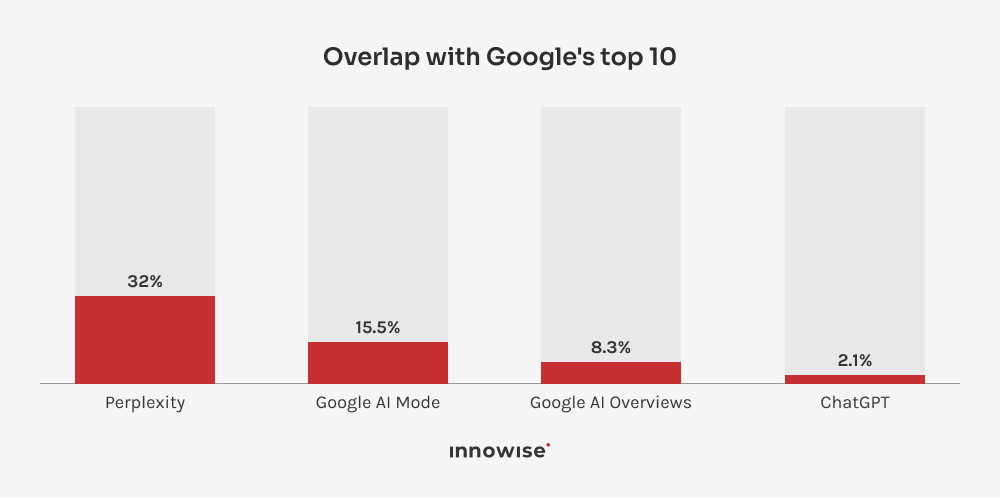
Semrush tested this in February 2026 by comparing Google’s top 10 traditional search results with pages cited by four AI platforms across 10 SaaS queries. Only 44.3% of the top-ranking pages appeared in at least one AI answer.

Here’s how the overlap looked for individual platforms:

Comparison of Google top 10 search result overlap with AI answers: Perplexity 32%, Google AI Mode 15.5%, Google AI Overviews 8.3%, and ChatGPT 2.1%.
Source: Semrush, March 2026. The study covers just 10 SaaS queries, so treat these figures as an indicative benchmark.

Another interesting finding comes from AirOps: roughly 60% of Google AI Overview citations in its research came from pages ranking outside Google’s organic top 20.

So, should you abandon traditional SEO and chase AI citations instead? Nah, I wouldn’t.

Strong technical SEO, useful content, internal linking, and website authority still give AI systems valuable material to work with. But if your goal is to get your brand recommended, you’ll also need to look at how it’s represented beyond your website, what independent sources say about it, and whether your content answers the questions buyers actually ask.

And that brings us to what you should be working on to get AI to notice your brand.

So what makes AI recommend a brand? 6 things

ChatGPT and Gemini haven’t published a recipe for getting your brand recommended. How inconsiderate of them. 

But we do know a thing or two about what helps. Here are six areas worth working on. 

  • 1. Technical accessibility
  • 2. Content structure
  • 3. Original expertise
  • 4. Third-party mentions
  • 5. Content freshness
  • 6. Platform presence

Technical accessibility

AI can't reliably use information it can't access. And your beautifully designed website won't help much if important product details are locked behind JavaScript, buried in downloads, or blocked by crawling rules. A 2026 Search Engine Journal (SEJ) audit of 50 major websites found that even established brands had technical accessibility gaps.

What to work on:

  • Check indexing, robots.txt, canonical tags, and crawler access, including rules for relevant AI search bots and user-triggered agents (OAI-SearchBot, ChatGPT-User, PerplexityBot, Claude-SearchBot).
  • Make essential content available in crawlable HTML instead of relying solely on PDFs or JavaScript-rendered elements.
  • Fix broken internal links and redirect chains, and link to important orphan pages from relevant sections of your website.
  • Check what a crawler receives in the initial HTML response, especially on product and service pages.

Clear meaning and content structure

Your website should make it easy to identify what you sell, who it's for, and what makes it relevant to a particular question. Clear structure helps, while schema provides additional context. But as SEJ explains, markup won't establish credibility on its own. Your pages, structured data, and external profiles need to tell the same story.

What to work on:

  • Use descriptive headings and answer common questions directly in the relevant sections.
  • Give each important product or service a dedicated page with specifications, use cases, and limitations.
  • Add Organization, Product, Service, Article, or Person schema where relevant. Make sure it matches the visible content, and use sameAs properties to connect your brand and authors to their official external profiles.
  • Check that company names, product descriptions, credentials, and other important details agree across sources.

Original expertise that adds something new

Another generic guide explaining five benefits of cloud migration? The internet probably has enough of those. Google's May 2026 guidance explicitly encourages original, experience-based content that adds something beyond widely available information.

What to work on:

  • Publish original research, survey findings, benchmarks, and data from actual projects.
  • Interview your engineers or subject-matter experts and include their specific observations.
  • Create honest product or solution comparisons with clear evaluation criteria.
  • Support claims with measurable results, examples, screenshots, calculations, or documented case studies.

Trusted third-party mentions

You can praise your company all you want, but independent sources tell potential customers much more. They also account for a substantial share of AI brand visibility. According to AirOps research, around 85% of brand mentions in its studied AI responses originated from third-party pages.

What to work on:

  • Contribute expert commentary and original research to relevant industry publications.
  • Get listed in legitimate professional associations, industry directories, and review platforms.
  • Earn coverage in independent comparisons and supplier roundups where your company genuinely fits.
  • Encourage authentic customer reviews and participate in relevant professional discussions.

Fresh and accurate information

AI can retrieve outdated information about your business, especially if old product pages, documentation, or company profiles remain accessible. And freshness appears to matter in citation stability: AirOps found that pages not updated quarterly were three times more likely to lose citations in its dataset. That's a correlation, though, not a reason to change every publication date.

What to work on:

  • Prioritize updates to pages containing prices, specifications, regulations, availability, or changing product information.
  • Review important commercial and technical pages on a regular schedule.
  • Update outdated facts, comparisons, screenshots, and references rather than simply changing the date.
  • Redirect or consolidate obsolete pages where appropriate, and correct outdated information on external profiles.

Consistent presence on relevant platforms

Your website isn't the only place AI can learn about your business. In the AirOps dataset, community platforms such as Reddit and YouTube accounted for approximately 48% of AI citations. But don't rush to join every platform. A software company and a medical equipment supplier will have very different audiences.

What to work on:

  • Identify which platforms and communities appear in AI answers about your industry.
  • Publish useful demonstrations, tutorials, expert interviews, or technical walkthroughs on relevant channels.
  • Participate in genuine discussions on Reddit, LinkedIn, specialist forums, or other industry platforms where appropriate.
  • Keep your positioning, product names, and core company information consistent across your website and external profiles.

1. Technical accessibility

AI can't reliably use information it can't access. And your beautifully designed website won't help much if important product details are locked behind JavaScript, buried in downloads, or blocked by crawling rules. A 2026 Search Engine Journal (SEJ) audit of 50 major websites found that even established brands had technical accessibility gaps.

What to work on:

  • Check indexing, robots.txt, canonical tags, and crawler access, including rules for relevant AI search bots and user-triggered agents (OAI-SearchBot, ChatGPT-User, PerplexityBot, Claude-SearchBot).
  • Make essential content available in crawlable HTML instead of relying solely on PDFs or JavaScript-rendered elements.
  • Fix broken internal links and redirect chains, and link to important orphan pages from relevant sections of your website.
  • Check what a crawler receives in the initial HTML response, especially on product and service pages.

2. Content structure

Your website should make it easy to identify what you sell, who it's for, and what makes it relevant to a particular question. Clear structure helps, while schema provides additional context. But as SEJ explains, markup won't establish credibility on its own. Your pages, structured data, and external profiles need to tell the same story.

What to work on:

  • Use descriptive headings and answer common questions directly in the relevant sections.
  • Give each important product or service a dedicated page with specifications, use cases, and limitations.
  • Add Organization, Product, Service, Article, or Person schema where relevant. Make sure it matches the visible content, and use sameAs properties to connect your brand and authors to their official external profiles.
  • Check that company names, product descriptions, credentials, and other important details agree across sources.

3. Original expertise

Another generic guide explaining five benefits of cloud migration? The internet probably has enough of those. Google's May 2026 guidance explicitly encourages original, experience-based content that adds something beyond widely available information.

What to work on:

  • Publish original research, survey findings, benchmarks, and data from actual projects.
  • Interview your engineers or subject-matter experts and include their specific observations.
  • Create honest product or solution comparisons with clear evaluation criteria.
  • Support claims with measurable results, examples, screenshots, calculations, or documented case studies.

4. Third-party mentions

You can praise your company all you want, but independent sources tell potential customers much more. They also account for a substantial share of AI brand visibility. According to AirOps research, around 85% of brand mentions in its studied AI responses originated from third-party pages.

What to work on:

  • Contribute expert commentary and original research to relevant industry publications.
  • Get listed in legitimate professional associations, industry directories, and review platforms.
  • Earn coverage in independent comparisons and supplier roundups where your company genuinely fits.
  • Encourage authentic customer reviews and participate in relevant professional discussions.

5. Content freshness

AI can retrieve outdated information about your business, especially if old product pages, documentation, or company profiles remain accessible. And freshness appears to matter in citation stability: AirOps found that pages not updated quarterly were three times more likely to lose citations in its dataset. That's a correlation, though, not a reason to change every publication date.

What to work on:

  • Prioritize updates to pages containing prices, specifications, regulations, availability, or changing product information.
  • Review important commercial and technical pages on a regular schedule.
  • Update outdated facts, comparisons, screenshots, and references rather than simply changing the date.
  • Redirect or consolidate obsolete pages where appropriate, and correct outdated information on external profiles.

6. Platform presence

Your website isn't the only place AI can learn about your business. In the AirOps dataset, community platforms such as Reddit and YouTube accounted for approximately 48% of AI citations. But don't rush to join every platform. A software company and a medical equipment supplier will have very different audiences.

What to work on:

  • Identify which platforms and communities appear in AI answers about your industry.
  • Publish useful demonstrations, tutorials, expert interviews, or technical walkthroughs on relevant channels.
  • Participate in genuine discussions on Reddit, LinkedIn, specialist forums, or other industry platforms where appropriate.
  • Keep your positioning, product names, and core company information consistent across your website and external profiles.
In e-commerce, AI recommendations are only as useful as the product information behind them. If your prices, availability, or specifications differ across your website, marketplaces, and other platforms, AI may struggle to present your products accurately. That's why I'd make product data consistency part of any AI discoverability strategy. You want AI to recommend the right products, with the right information.
Ivan Grabovski, Head of E-commerce & Retail.
Ivan Grabovski
Head of E-commerce & Retail

What AI says about a brand today: a real-world test

Here’s an example from an AI discoverability assessment our team at Innowise conducted for a European building materials manufacturer.

The company had an established market presence and substantial technical documentation. We wanted to understand whether that strength translated into AI recommendations.

Test 1: Does ChatGPT mention the brand?

We tested six buyer-oriented prompts in ChatGPT, based on three audience profiles:

  • Architects and specifiers researching technical requirements and selecting products during design.
  • Contractors looking for practical installation and compatibility answers.
  • Distributors comparing products and deciding what to offer customers.

The result? The manufacturer’s brand appeared in only one of six responses.

Three things caught our attention:

  • AI recognized technical expertise. Documentation relating to established standards gave the manufacturer’s product portfolio visibility in compliance-focused conversations.
  • Competitors dominated comparison questions. When prompts shifted toward comparing product types, evaluating installation considerations, and selecting suppliers, other manufacturers appeared more often.
  • The brand’s positioning was too narrow. AI associated the manufacturer’s portfolio mainly with conventional systems, overlooking other solutions relevant to distributors and contractors.

Of course, six prompts from a single run aren’t enough to draw sweeping conclusions. But they gave us a starting point for investigating where the brand was being overlooked.

Test 2: How often does AI cite the brand versus competitors?

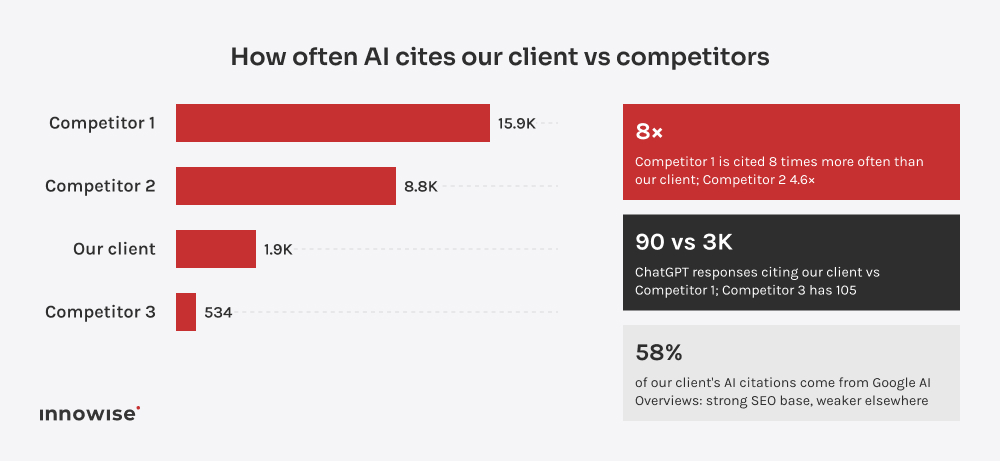
Next, we checked Ahrefs to see how often AI-generated responses cited the manufacturer’s website compared with competing domains.

The gap was substantial. In September 2026, the leading competitor received roughly eight times as many tracked citations as the manufacturer, while another competitor received 4.6 times as many.

Test 2: How often does AI cite the brand versus competitors.
AI responses citing our client's website and three competing domains, September 2026. Source: Ahrefs Site Explorer. Company names are anonymized.

But the total citation count wasn’t the only interesting finding. 58% of the manufacturer’s tracked citations came from Google AI Overviews, suggesting its visibility was heavily concentrated in one AI search experience.

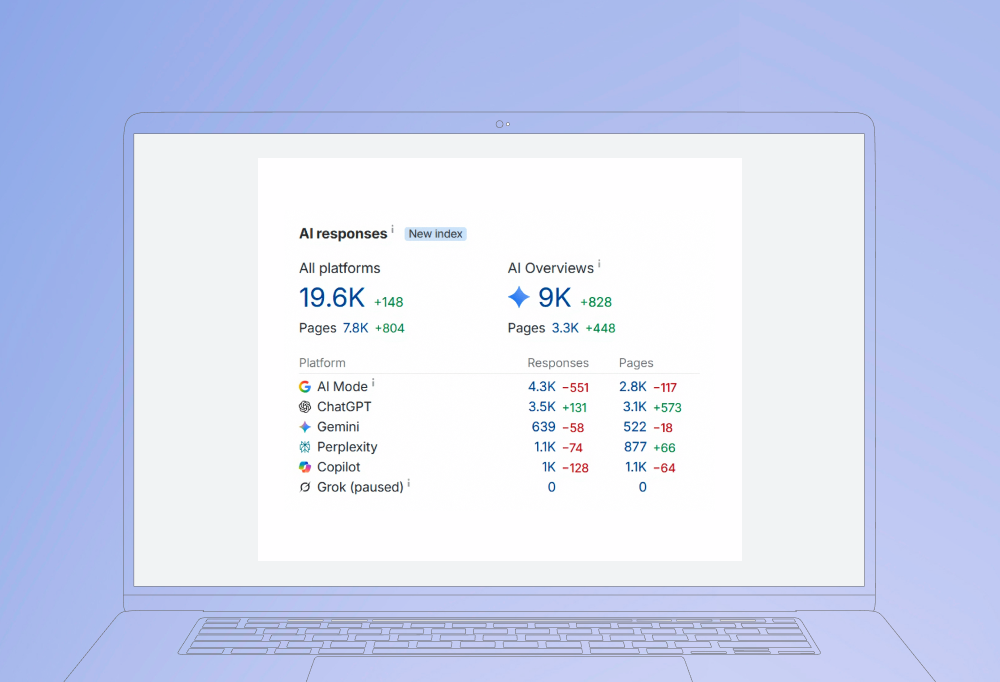
Ahrefs also lets us examine citations by platform, including Google AI Mode, ChatGPT, Perplexity, Gemini, and Copilot.

Client citations by platform, including Google AI Mode, ChatGPT, Perplexity, Gemini, and Copilot.
Example of the AI response and citation metrics available in Ahrefs Site Explorer, broken down by platform. Source: Ahrefs, October 2026.

Why does that matter? A brand might look fairly visible based on its total citations while barely appearing on AI platforms its customers actually use.

One caveat: Ahrefs measures responses containing links to websites, while our prompt test measured brand appearances. These are different metrics, and the competing domains also vary in scope.

What did we learn?

The assessment pointed to a specific problem: the manufacturer had enough technical content to get cited, but AI rarely recommended it when buyers were comparing options.

So, our recommendations focused on product comparisons, practical application guides, broader positioning, and stronger visibility through relevant industry sources.

My takeaway? Don’t stop at checking whether AI knows your brand. Find out whether it recommends you when a potential customer is ready to choose.

A few AI discoverability tactics worth stealing

I’ve covered the essentials. But if you’re looking for something you can try on your own website today, here are a few tricks I pried out of our SEO team.

Some GEO practitioners argue that answer-first formatting can improve content retrieval. Their reasoning? Retrieval systems often split documents into smaller chunks, sometimes around 250–500 tokens. When a section opens with a direct answer, that answer may be easier to match with a relevant query.

So if your H2 asks "How much does cloud migration cost?", don't spend three paragraphs explaining what cloud migration is.

Answer the question first. Then elaborate.

For example: H2: How much does cloud migration cost?

"Cloud migration costs depend on the number of applications, infrastructure complexity, data volume, and migration approach. A realistic estimate should account for assessment, migration, testing, and ongoing cloud expenses."

This makes the passage understandable even when someone reads it without the rest of the page.

No need to turn your entire website into an FAQ, though. Just stop making readers hunt for answers.

Here's an example from our own experience. Google AI Overview cited Innowise when answering a question about AI chatbots in healthcare and highlighted a concise explanation of their benefits.

Does this prove that answer-first formatting guarantees AI citations? Of course not. But it shows the kind of clear, self-contained information AI can use when answering a question.
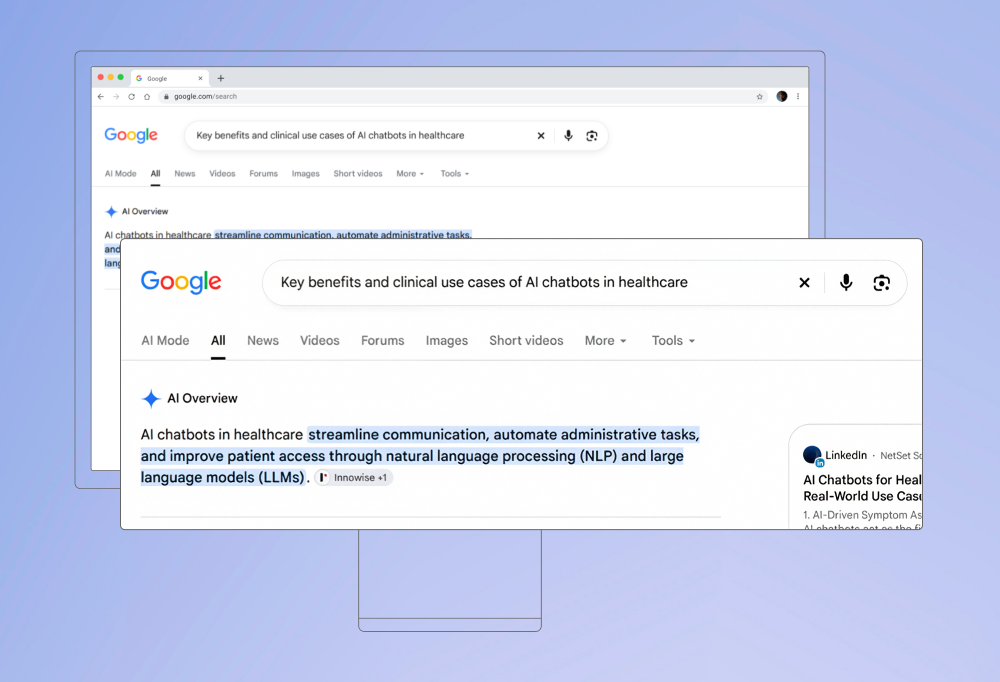
Innowise mentioned in AI overview on Google.

Google's 2026 AI search documentation describes something called query fan-out: AI Mode can run several related searches to answer one complex question.

Suppose a buyer asks, "Which ERP system should I choose for a manufacturing company?"

The system might investigate implementation costs, integration requirements, vendor experience, industry-specific features, and scalability.

Here's an experiment: take five commercially important questions and list the follow-up questions someone would need answered before making a decision.

Then check whether your website actually covers them.

You might discover that your ERP landing page looks great, but you've never explained migration risks or integration limitations.

That's a content opportunity worth investigating.

Google's updated helpful-content guidance now evaluates effort alongside originality, skill, and accuracy in its search quality guidelines.

So, make that evidence visible:

  • Credit the people behind the content. Name the author, their relevant qualifications, and the expert reviewer or editor where applicable. Link to their professional profiles. We do.

  • Show your methodology. Add a "How we tested" box explaining your data sources, sample size, dates, evaluation criteria, and limitations.

  • Use first-party data. Include actual project figures, customer survey results, support-ticket findings, or your own experiments.

  • Add original visuals. Seems like stock images alone aren't enough to impress Google. Annotated screenshots, photos from real projects, custom charts, and before-and-after comparisons can offer readers much more.

  • Show expert judgment. Explain why you'd choose one solution over another, including situations where your recommendation wouldn't work.

  • Offer something interactive. A working calculator, comparison tool, or interactive map may demonstrate more effort than thousands of words.

And please, don't mistake a 4,000-word rewrite of five competing articles for high-effort content. Google won't be impressed by the word count alone.

Here's a curious one. SEO specialist Carter Wirig reportedly got a LinkedIn post into Google's AI Overviews just three hours after publishing it.

His experiment? Putting your target search phrase in the first one or two lines of a LinkedIn post. LinkedIn may use those words in the post's public URL, making the topic clearer to search engines.

Want to try it?

  • Choose a specific question or keyword relevant to your expertise.

  • Put the topic naturally in the opening sentence. Skip the usual "Exciting news!"

  • Make the post publicly accessible.

  • Add an original finding, expert observation, or useful answer.

  • Monitor whether it appears in Google Search or AI Overviews over the following days.

LinkedIn's own guidance also recommends clear, topic-focused openings.

Of course, Carter's result was a single experiment, and changing the search phrasing reportedly produced different results. So don't mistake it for a guaranteed GEO hack. But I'd certainly be curious to test it.

In fact, Ahrefs uses this approach to find its own AI visibility gaps. The team looks at prompts where competitors appear but Ahrefs doesn't, then examines the pages and information behind those answers.

Try asking ChatGPT or Perplexity to recommend companies in your category. Then look at the citations supporting those answers.

Are they linking to competitors' websites? Independent comparisons? Review platforms? Industry publications?

Open the sources and see what information they contain. For example, if AI repeatedly references an independent software comparison that doesn't include your company, investigate whether you meet its inclusion criteria.

If it cites competitors' implementation guides, compare the depth of their practical information with yours.

Visible citations don't reveal everything that influenced an answer, but they can point you toward gaps worth fixing. And that's considerably more useful than blindly publishing another generic article.

How do you know if your AI discoverability strategy is working?

At Innowise, we look at three groups of metrics: traditional SEO performance, AI discoverability, and paid advertising.

  • SEO: Organic rankings, traffic, and leads.
  • AI discoverability: Brand mentions in AI-generated answers, website citations, and AI referral traffic.
  • Advertising: CPC, cost per lead, and conversions from Google Ads and ChatGPT Ads.

One thing I’d pay special attention to is the difference between AI mentions and citations. ChatGPT might recommend your company without linking to your website or cite your article without ever naming your brand.

And don’t forget AI referral traffic. Getting into an AI answer is great, but it’s even better when someone follows that citation to your website and becomes a customer.

How Innowise helps brands improve AI discoverability

AI discoverability touches several parts of digital marketing. A technical SEO fix won’t compensate for missing expertise in your content. And an excellent industry article can only do so much if your product information is inaccessible.

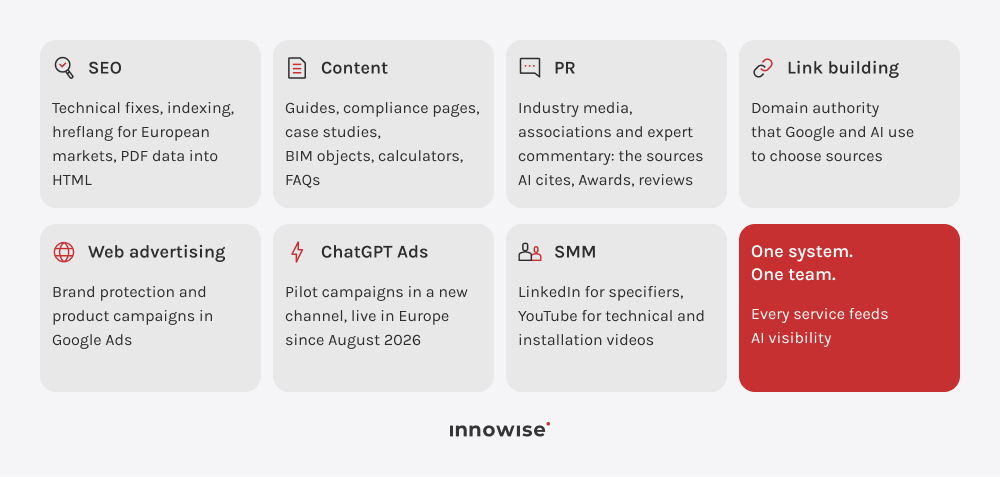
At Innowise, we approach these activities as a coordinated system.

Our work can cover seven complementary services:

We start with research and measurement. First, we evaluate how AI currently describes and recommends a brand. Then we identify technical, content, positioning, and third-party visibility gaps.

From there, we can build a roadmap that connects SEO improvements with content production, digital PR, distribution, and ongoing monitoring.

The objective is to focus our efforts where they can make a meaningful difference to how potential customers discover and evaluate your company.

Let's get your brand on AI's shortlist

Our SEO experts can help you build a strategy to get your business found, cited, and recommended.

See how we help businesses succeed

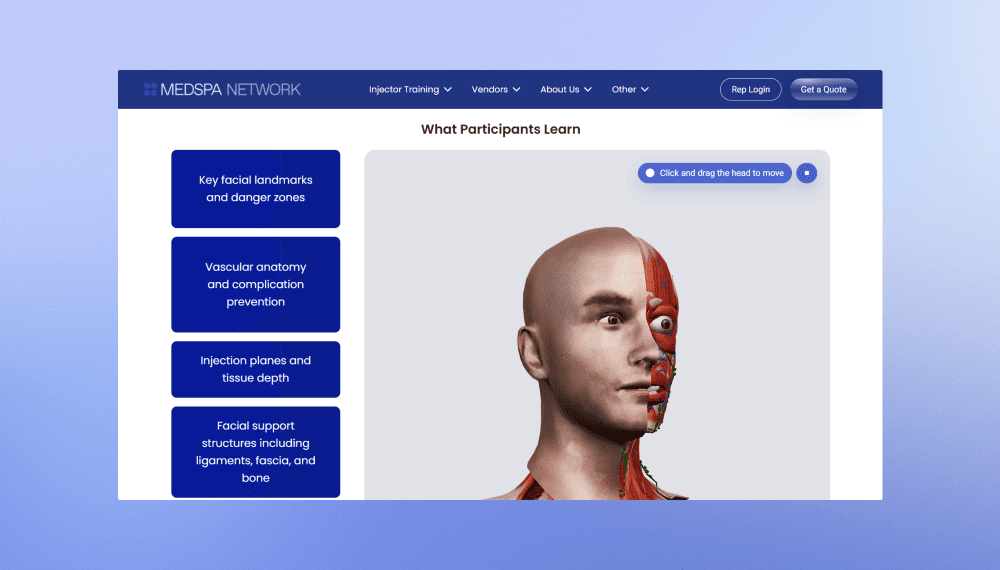
MedSpa Network website redesign and rebuild
Innowise rebuilt MedSpa Network’s website on WordPress, giving its team control over day-to-day content updates.
2 months from kickoff to launch
3-5 leads per week up from 1 per month
View case study
Client review
View case study
Client review logo. Client review
MedSpa Network website redesign and rebuild.
AI bot for TBC Bank marketing campaign
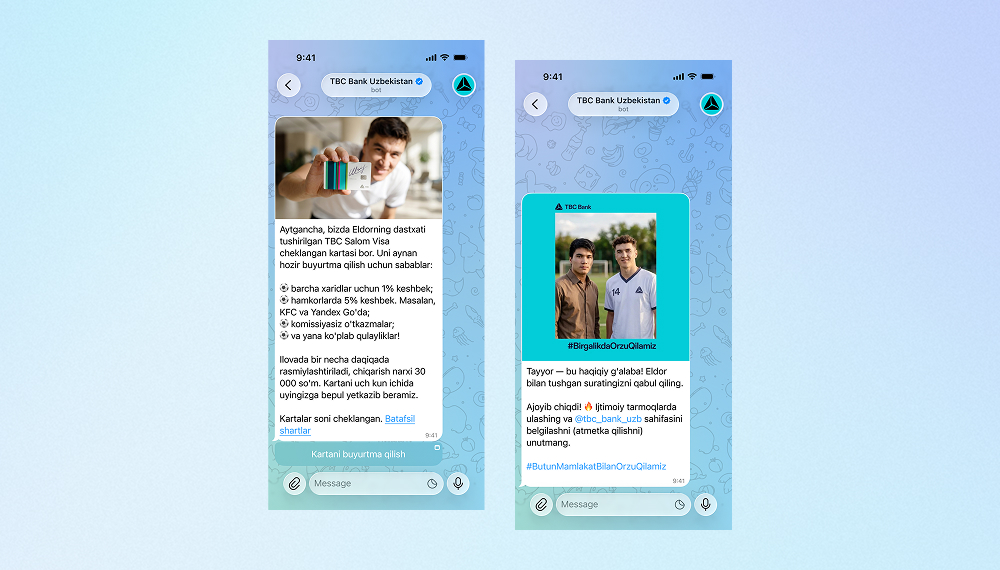
Innowise built a bilingual Telegram bot that generates AI selfies with TBC Bank's football-star brand ambassador.
3,000 users engaged
2 languages supported
View case study
Client review
View case study
Client review logo. Client review


AI Telegram bot..
Defining the product strategy for Bitlendex’s bitcoin lending platform
Innowise conducted a discovery phase for Bitlendex, helping the client transform an early-stage product concept into a validated business model and clearly defined MVP.
1 month for a full discovery phase
Financial advisory system for Bonnfinanz
Innowise helped Bonnfinanz to build a web-based advisory and administration system that supports mobile working and direct interaction with the client.
EV charging platform with flexible billing
Innowise helped modernize SMART/LAB’s e-mobility platform by enhancing its billing, payment, transaction management, and reporting capabilities.
>50% faster billing and payment processing
FinXP’s cloud-native DevOps transformation
Innowise helped FinXP modernize its financial services infrastructure by migrating legacy PHP-based APIs and applications to a cloud-native architecture.
11 apps moved to Azure App Service
100% Infrastructure as Code
Technical SEO for e-commerce platform
Innowise addressed critical technical SEO and performance issues across Officine 08’s e-commerce platform.
<500 ms server response time
5 months to complete the project
View case study
Client review

View case study
Client review logo. Client review

Technical SEO for e-commerce platform.
Continuous development of a fragrance subscription platform
Innowise helped Scentbird expand its subscription platform to support new shopping experiences and international growth.
4 years of continuous support
View case study
Client review

View case study
Client review logo. Client review
Continuous development of a fragrance subscription platform.
01 / 01
Close popup icon

Final thoughts

SEO has always been a rabbit hole, and now AI discoverability has given us a few more tunnels to explore. The good news? You don’t have to start from scratch. Get your SEO foundations right, make your expertise worth citing, and pay attention to what AI says about your brand. And if you need a hand navigating all those tunnels, Innowise is here to help you find your way.

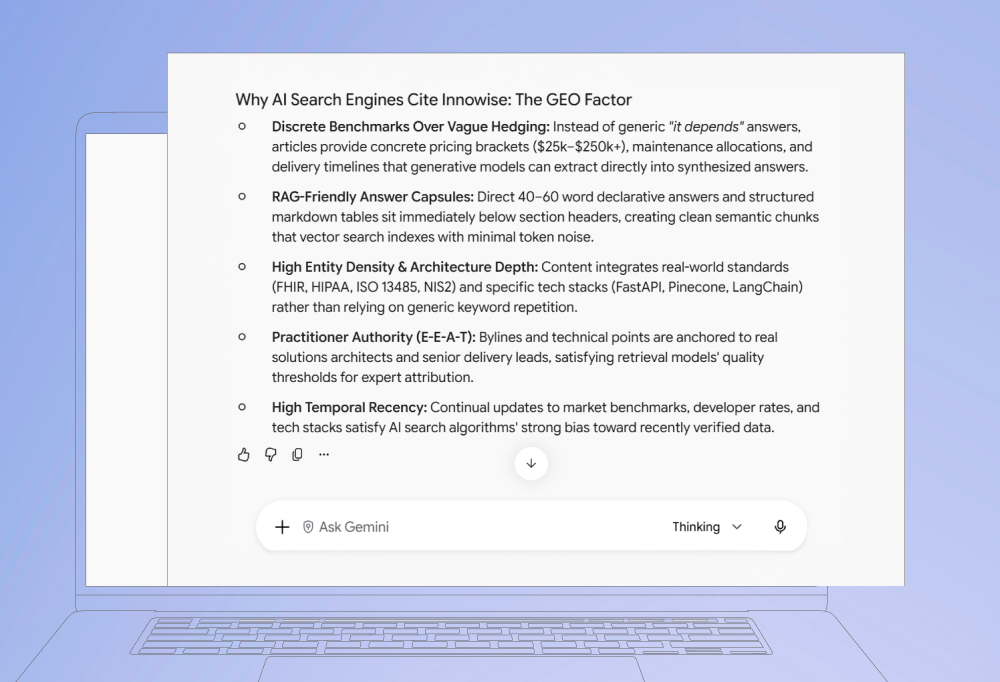
P.S. I asked Gemini why AI cites Innowise. Here's what it said.

While working on this article, I got curious and asked Gemini why AI search engines cite Innowise.

Reasons why AI cites Innowise.

Its answer was surprisingly specific. Apparently, our content has a few things going for it: concrete pricing estimates instead of endless “it depends,” direct answers below headings, references to actual technologies and standards, identifiable technical experts, and regularly updated information.

Sound familiar? We’ve just spent an entire article discussing most of these.

Now, would I take Gemini’s explanation as a peek behind Google’s algorithms? Absolutely not. AI is quite capable of offering convincing explanations for decisions it can’t actually inspect. And Google’s official guidance explicitly says that artificial content chunking isn’t required for AI search.

Still, I found the answer rather revealing. These are the characteristics Gemini associated with useful, citable content when examining our brand.

My takeaway? Give AI something substantial to work with, make your expertise easy to verify, and check what it actually says about you.

And perhaps ask it the same question about your competitors. You might get a few ideas for your next content audit.

FAQ

AI discoverability describes how easily AI systems can find, understand, mention, cite, and recommend your brand in response to relevant user questions. It applies to AI assistants and search experiences such as ChatGPT, Gemini, Perplexity, and Google AI Overviews.

SEO primarily focuses on visibility in organic search results. AI discoverability examines whether your company or content appears in AI-generated answers, particularly recommendations and comparisons. SEO provides much of the technical and content foundation, but strong rankings don't guarantee AI mentions.

Not exactly. Generative engine optimization, or GEO, refers to practices intended to improve visibility in AI-generated answers. AI discoverability is the result of those efforts: how well a brand can actually be found and represented. In everyday marketing discussions, the terms often overlap.

There is no universal selection formula. Depending on the system, responses may draw on learned information, search indexes, retrieved webpages, product information, and external sources. Relevance to the question, available evidence, and the context of the request all matter. Different assistants can recommend different brands for the same question.

Prepare a list of realistic, non-branded questions your potential customers might ask. Test them in ChatGPT, record mentions and recommendations, and repeat the exercise across multiple sessions. Check whether the brand's description is accurate, which competitors appear, and what sources are referenced.

Useful metrics include brand mentions, recommendation rates, website citations, competitive share of mentions, description accuracy, AI referral traffic, and leads. Monitor a consistent set of commercially relevant prompts and compare trends over time rather than relying on a single visibility score.

There's no universal timeline. Correcting an inaccessible page may be relatively quick, while building authority through expert content and independent coverage can take months. Retrieval and indexing schedules vary between platforms, and no improvement guarantees a recommendation. Track progress regularly against your initial baseline.

Advertising in ChatGPT is available in supported markets, but paid placements are separate from organic answers. OpenAI explicitly states that advertisers cannot influence the assistant's recommendations. Paid campaigns can support visibility and lead generation, but they don't buy organic AI citations or recommendations.

Show more Show less

Table of contents

Not on AI's radar yet?

    Contact us

    Book a call or fill out the form below and we’ll get back to you once we’ve processed your request.

    Send us a voice message
    Attach documents
    Upload file

    You can attach 1 file up to 2MB. Valid file formats: pdf, jpg, jpeg, png.

    By clicking Send, you consent to Innowise processing your personal data per our Privacy Policy to provide you with relevant information. By submitting your phone number, you agree that we may contact you via voice calls, SMS, and messaging apps. Calling, message, and data rates may apply.

    You can also send us your request
    to contact@innowise.com
    What happens next?
    1

    Once we’ve received and processed your request, we’ll get back to you to detail your project needs and sign an NDA to ensure confidentiality.

    2

    After examining your wants, needs, and expectations, our team will devise a project proposal with the scope of work, team size, time, and cost estimates.

    3

    We’ll arrange a meeting with you to discuss the offer and nail down the details.

    4

    Finally, we’ll sign a contract and start working on your project right away.

    More services we cover

    arrow