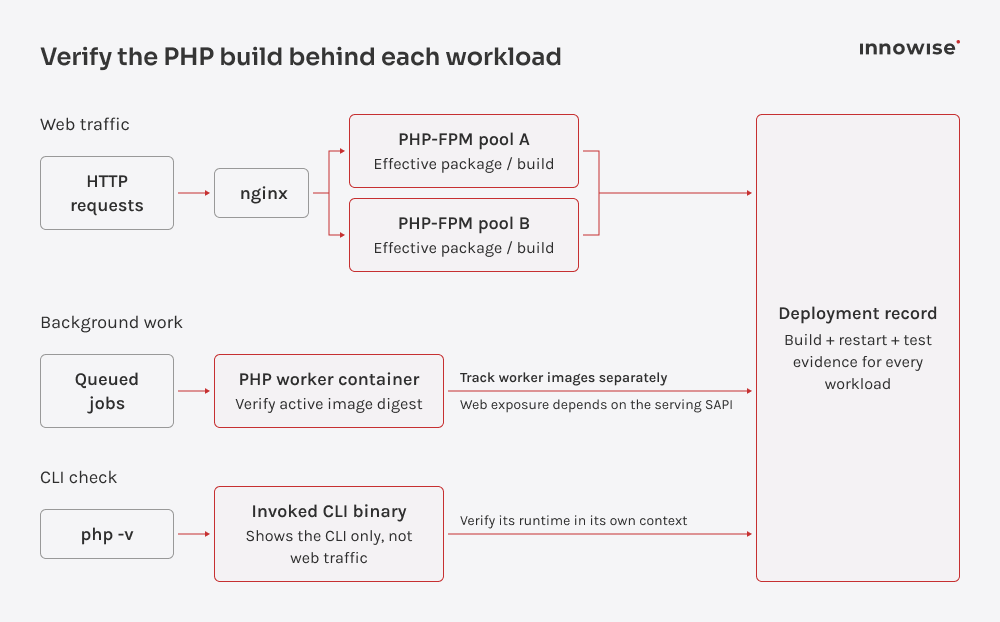
Check the active runtime. Review your web-server configuration to identify the PHP module, FPM pool, or embedded SAPI handling requests. Confirm its version using access-restricted diagnostics, and remove any temporary endpoints afterward. Never expose phpinfo() or a version endpoint publicly.
Check installed packages. On Ubuntu with PHP 8.3, these read-only commands show installed packages and available versions:
dpkg-query -W 'php8.3*'
apt-cache policy php8.3-fpm
Adjust package names for your PHP branch and compare the installed versions with the vendor’s security notice or package changelog. Linux vendors may backport fixes into older PHP versions. For example, Ubuntu lists these patched builds:
Both contain the relevant fixes despite their lower version numbers. Check the Ubuntu security notice.
Patch and redeploy. Install the patched packages. For containers, record the running image digest, update vulnerable PHP base images, rebuild, and redeploy affected workloads, including queue workers.
Verify the result. Restart or replace affected PHP workers and confirm that running processes and containers use patched builds or verified vendor backports. Record package versions, running image digests, restart details, and verification results.
PHP 8.1 and earlier are no longer supported upstream, although some vendors still provide security backports. Check whether your installed build is covered and upgrade if it isn’t. PHP 8.2 security support ends on 31 December 2026, so pair any short-term patch with an upgrade plan. You can find the full support timeline in the PHP support schedule.

 Hire us
 About us











 Client review