| Embedded systems | ARM Cortex-M (M4/M33), RISC-V, Zephyr RTOS or FreeRTOS, embedded C/C++ | Run device firmware, control sensors, and manage power consumption. |
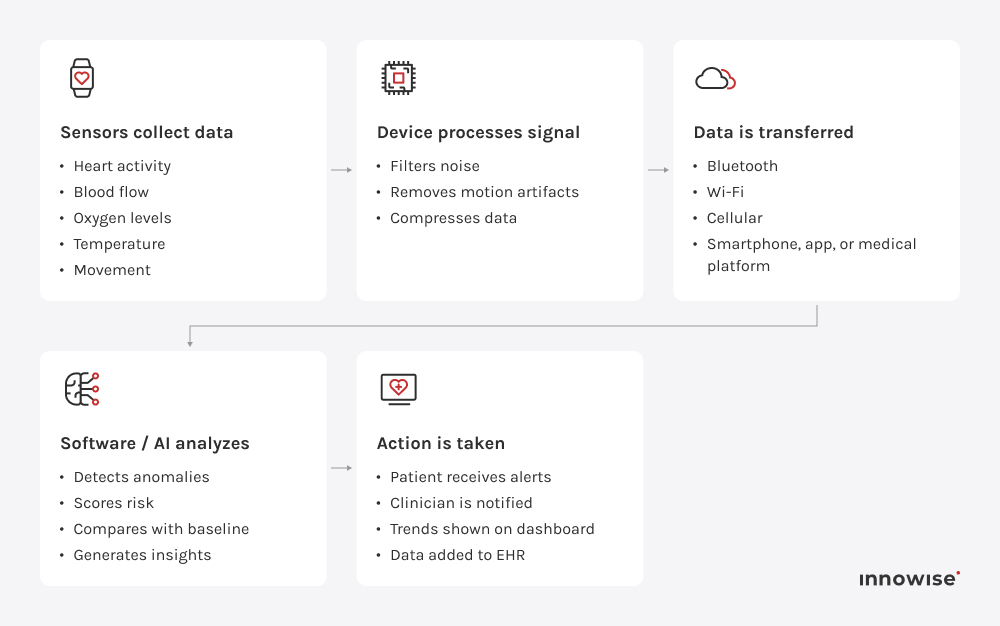
| Biosensing technologies | ECG, PPG, MEMS accelerometers, continuous glucose monitoring (CGM) sensors | Capture physiological and movement signals used to derive health measurements. |
| Advanced and emerging biosensing technologies | Microfluidic sweat sensing arrays, bioimpedance spectroscopy (BIA), electrodermal activity (EDA/GSR), piezoelectric acoustic sensors, digital skin temperature sensors, NIRS optical sensors, barometric pressure sensors, 6-axis and 9-axis IMUs, environmental gas and VOC sensors | Expand monitoring to include sweat biochemical composition, hydration and fluid balance, stress response, arterial stiffness, temperature trends, tissue oxygenation, fall detection and rehabilitation indicators, motor disorders, and respiratory triggers. |
| Edge AI and signal processing | Digital signal processing (DSP), TinyML, TensorFlow Lite for Microcontrollers, Edge Impulse, quantized neural networks | Remove motion artifacts, detect anomalies, and extract specific biomarkers locally so only actionable insights are transmitted. |
| Wireless communication protocols | Bluetooth Low Energy (BLE) with GATT, NFC, Wi-Fi, LTE-M, NB-IoT | Connect wearables to smartphones, gateways, or cloud services. |
| Mobile development frameworks and APIs | Apple HealthKit, Android Health Connect, Core Bluetooth | Enable mobile apps to access, synchronize, and share supported health and wearable data. |
| Cloud computing and streaming technologies | AWS, Microsoft Azure, Google Cloud, Apache Kafka | Ingest, process, and manage wearable data across devices and patient populations. |
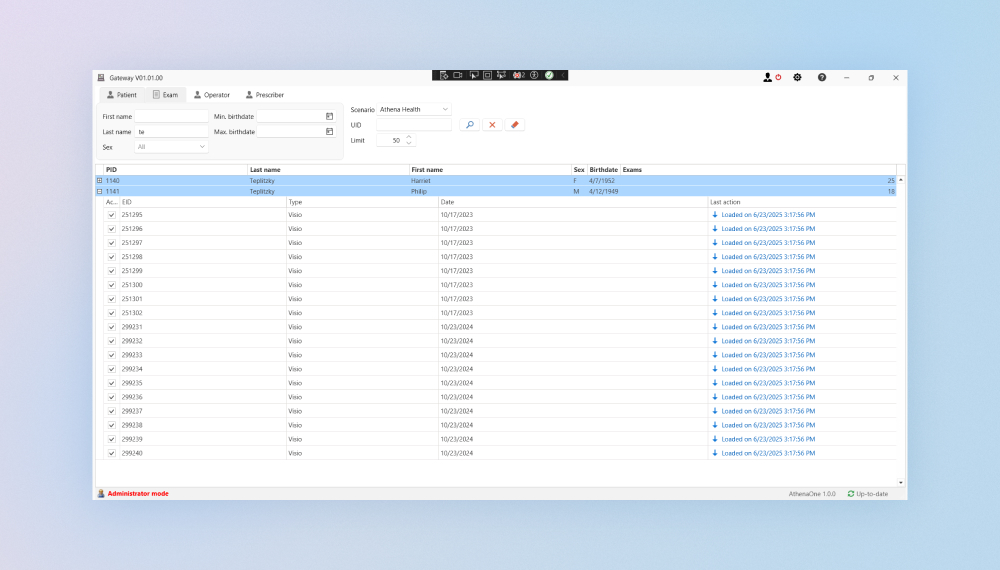
| Healthcare data standards and APIs | HL7 FHIR, FHIR Observation resource, SMART on FHIR | Exchange wearable measurements with EHRs and other clinical software systems. |
| Machine learning and time-series analytics | Python, PyTorch, scikit-learn, Google Cloud Vertex AI | Analyze longitudinal readings, detect anomalies, and develop models for clinical evaluation. |
| Security and identity technologies | TLS, AES-256, OAuth 2.0, OpenID Connect | Protect data exchanges and control access to wearable platforms and patient information. |

 Hire us
 About us










 Client review