





Your message has been sent.
We’ll process your request and contact you back as soon as possible.
The form has been successfully submitted.
Please find further information in your mailbox.

Select language

Innowise migrated all client applications to a single Azure-based ecosystem utilizing a unified technology stack.

While the project's complexity was initially underestimated, the subsequent reinforcement of the team significantly enhanced operational organization and communication. This allowed Innowise to professionally manage intricate technical layers, delivering high-quality results that met our business objectives.
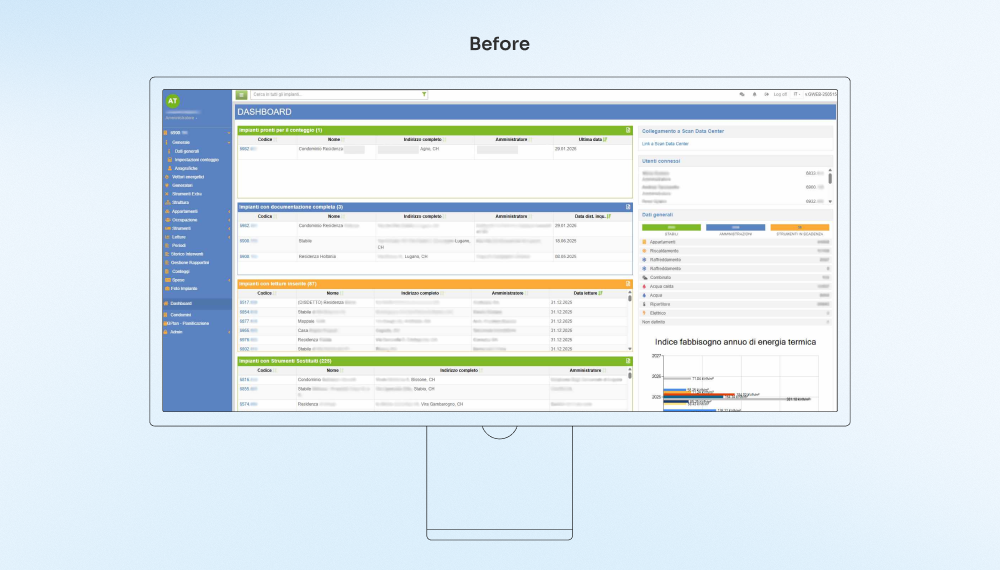
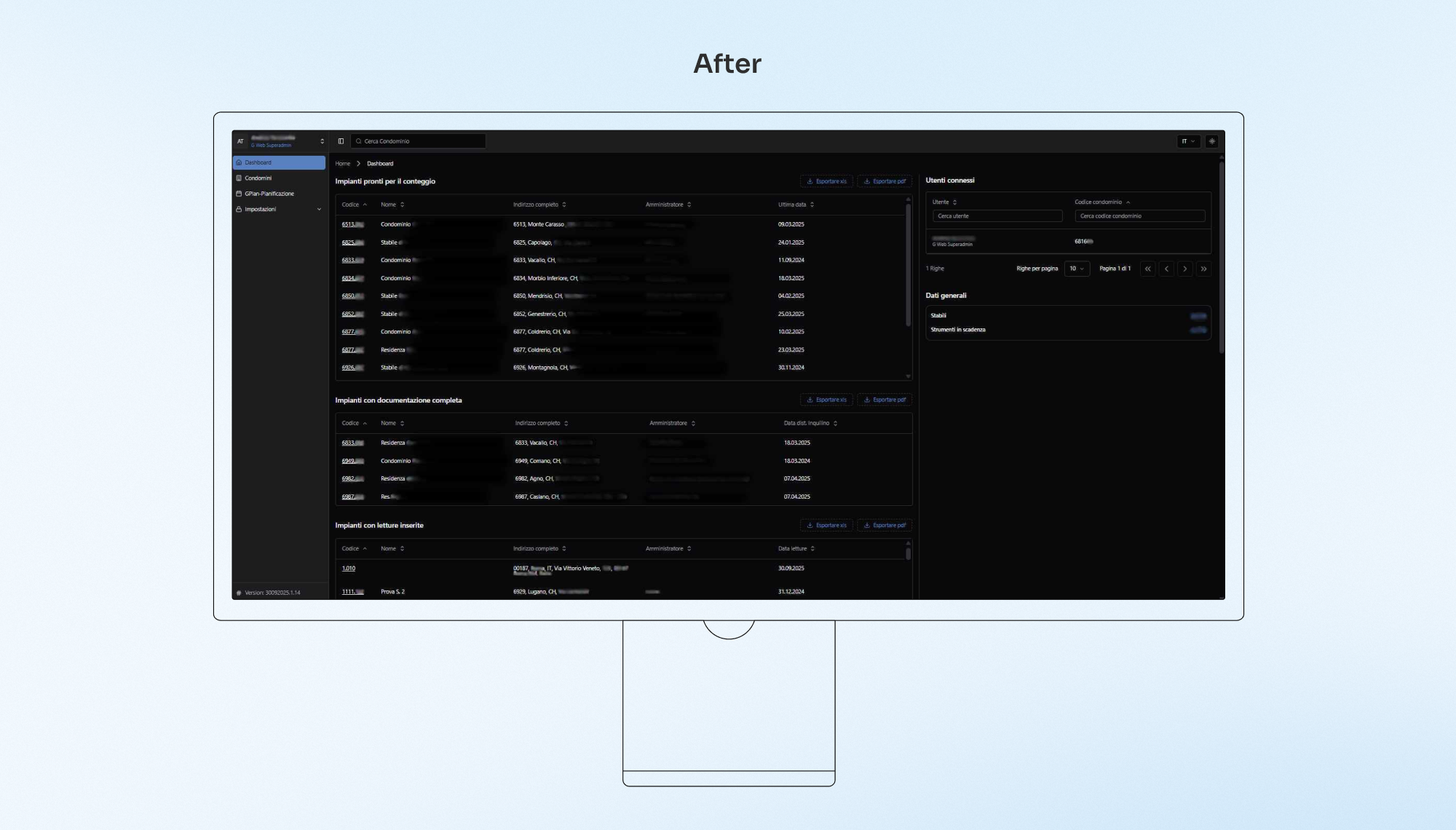
Over time, Gestical’s application ecosystem — Gestical Web, Gestical Plan, and Gestical MIF — had grown significantly in features and system load. However, architecture, infrastructure, and performance optimization had not evolved accordingly. Innowise was engaged to modernize the core application, Gestical Web.
Innowise implemented a phased modernization strategy that transformed Gestical’s legacy system into a cloud-native, scalable, and secure platform.
The modernization covered Gestical’s core operational application, Gestical Web, which users use to manage buildings, monitor devices, generate reports, and energy costs.
The modernization began with a comprehensive assessment of the existing Gestical Web ecosystem. The legacy application was built using an outdated version of ASP.NET MVC and hosted on a single Azure virtual machine, which created scalability constraints and performance issues.
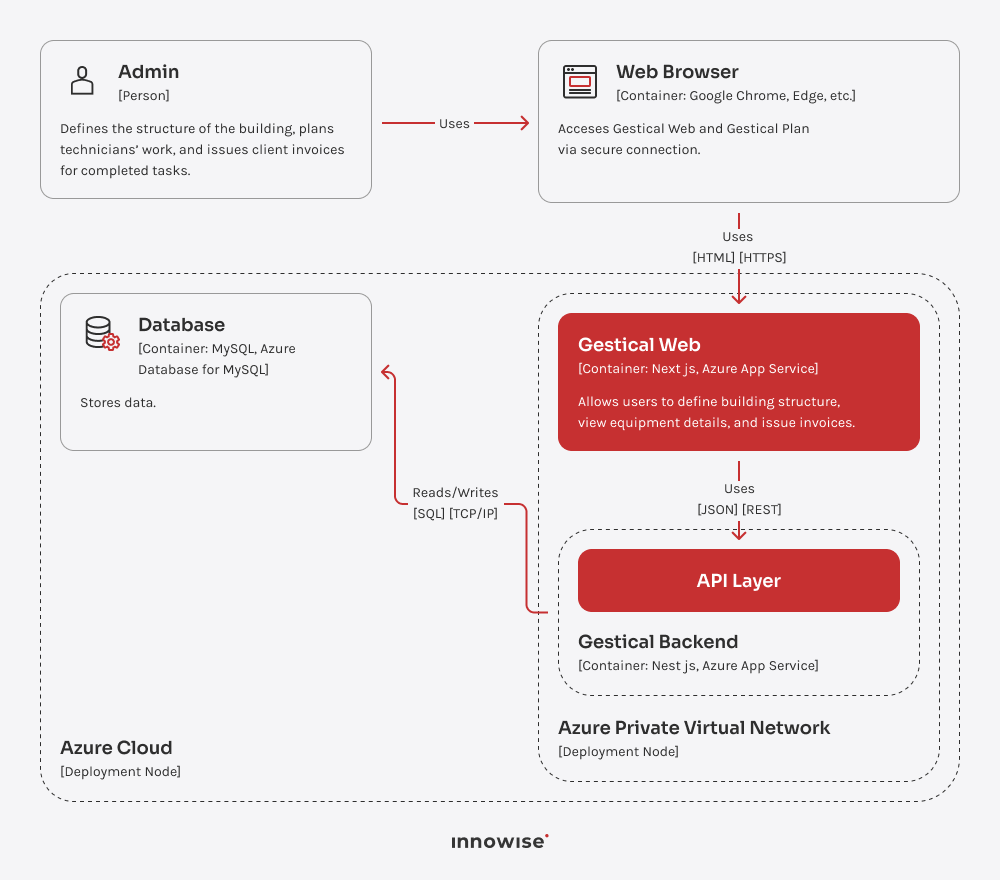
Our team reimplemented Gestical Web using Next.js and NestJS and deployed it to Azure App Service, a cloud-managed PaaS platform. This approach reduced the client’s infrastructure management effort and ongoing maintenance costs.
A critical part of the modernization was the migration and optimization of the database layer. To address critical performance issues, we migrated the self-hosted MySQL database to Azure Database for MySQL.
Previously, several applications accessed the database directly, creating hidden dependencies. This made updates risky and increased migration complexity.
We introduced a centralized REST API layer that now serves as the single point of communication between the client’s applications and the database. This approach standardized data exchange, strengthened validation and access control, and significantly reduced architectural complexity.
All system components of Gestical Web now interact through this secure API layer.
Working on the Gestical platform required careful alignment between existing systems and the new architecture. Our team focused on designing a scalable foundation that allows the platform to evolve while maintaining continuity for ongoing operations.

Aliaksandr Kavalchuk
Project ManagerNestJS
React, TypeScript
MySQL, TypeORM
Azure AD

The Gestical Web platform now operates within a unified backend architecture, improving system reliability and creating a more stable environment for managing operational workflows.
By deploying the platform on Azure App Service, the client reduced infrastructure maintenance costs and simplified ongoing platform management.
With the introduction of a centralized REST API layer, communication between applications and the database is now standardized and more secure, reducing hidden dependencies and making future system updates easier to implement.
These steps establish a structured, secure, and scalable cloud-native foundation for the continued phased modernization of the Gestical platform.
Your message has been sent.
We’ll process your request and contact you back as soon as possible.

By signing up you agree to our Privacy Policy, including the use of cookies and transfer of your personal information.