






Your message has been sent.
We’ll process your request and contact you back as soon as possible.
The form has been successfully submitted.
Please find further information in your mailbox.

Select language

Innowise provided DevOps/SRE support for Lendo’s loan platform, centralizing infrastructure ownership and improving stability. Following a successful collaboration, the client engaged us to handle selected Java and QA tasks as part of its broader modernization efforts.
Stable production support
for Lendo’s core loan platform
15% lower cloud costs
in the early optimization phase

Lendo is a Scandinavian fintech company that helps people compare loan offers through one application instead of going to banks one by one. Founded in Sweden in 2007, the company has grown into a major loan comparison platform operating across Sweden, Norway, and Denmark.
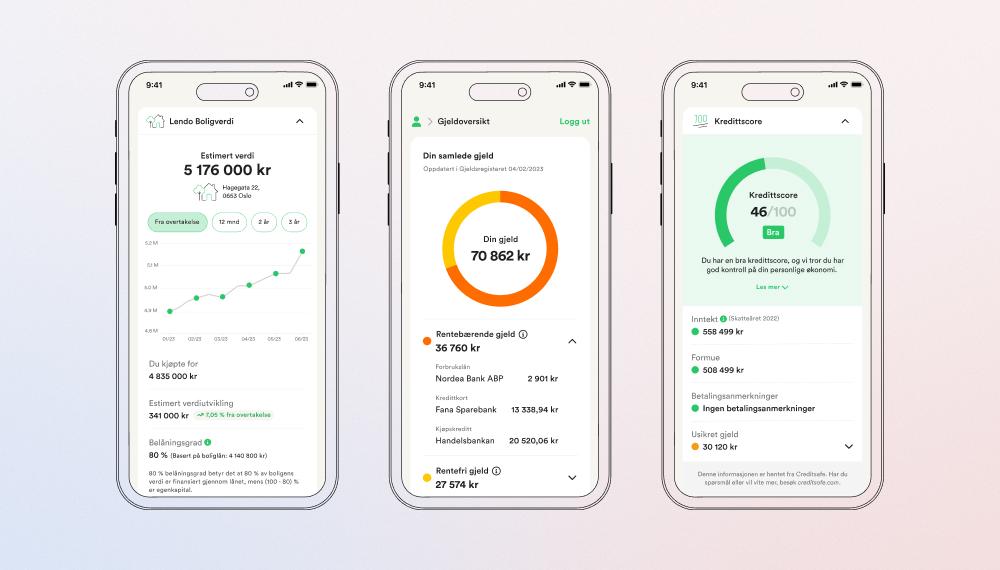
What makes the platform especially demanding from an operational standpoint is the scale and sensitivity of the process behind it. A single application can be matched with offers from up to 40 lenders, which makes platform reliability, consistent delivery, and well-structured quality processes critical to the client’s core business. Alongside its lending marketplace, Lendo also offers Kreddy, an app that gives users visibility into their credit profile and existing loans.
The Innowise team joined Lendo to strengthen the client’s DevOps/SRE function and take over a critical area of infrastructure ownership. At the start, the project had very limited documentation and incomplete knowledge, so our engineers first had to understand how the environment was set up, how its core components worked together, and where the main operational risks were.
Our team reviewed infrastructure across GCP and AWS, including clusters, virtual machines, databases, cloud services, monitoring flows, and support channels. This helped define the areas that needed the fastest attention: infrastructure ownership, alert handling, recurring issues, cloud visibility, and safer change management.
Based on the initial assessment, we set up a delivery model focused on stronger infrastructure ownership, stable platform operations, and better control over infrastructure changes.
The work was split according to the actual state of the environment. In GCP, the team supported and improved the existing Infrastructure as Code setup. In AWS, the focus was on bringing manually configured infrastructure under more structured management. The team also defined a clearer operating model for on-call rotations, support lines, and alert handling.
The Innowise team took over the daily management of infrastructure operations and introduced a clearer process for handling infrastructure changes. Our engineers worked with clusters, virtual machines, databases, and other core platform components, becoming the main team responsible for coordinating and delivering infrastructure changes requested by the product and development teams.
We also reviewed the existing environment, mapped how its parts were connected, and built a more centralized model for infrastructure support.
As the project infrastructure was distributed across both GCP and AWS, our team had to work across two cloud environments in parallel. This work covered cloud services, compute resources, networking, containerized environments, and the infrastructure dependencies tied to them. The team also worked to make the overall setup easier to manage and safer to change as the project evolved.
Another important part of the work focused on modernizing the delivery pipeline. Part of the existing setup still relied on legacy tools such as Travis, Spinnaker, and sk8ts, so one of the team’s key tasks was to move this process to a more modern GitOps-based approach using GitHub Actions and ArgoCD.
Operational support was a big part of this project. Our DevOps team set up on-call rotations, organized first-line and second-line support, and reviewed the existing alerting setup together with the client’s engineering teams.
Our engineers checked how alerts were configured, how they were routed, which alerts required technical action, and which ones reflected expected workload behavior. We also helped improve alert channels and made the overall response process more structured and easier to manage. For this work, the team used tools such as PagerDuty, Prometheus Stack, Victoria Metrics, Grafana, CloudWatch, Stackdriver, and Humio.
The team worked through recurring infrastructure issues and took on tasks that needed cleanup, clarification, or technical fixes. We reviewed existing configurations, identified gaps in platform operations, and handled infrastructure requests that required quick and reliable execution.
Most of this work was handled directly by the Innowise team. Our engineers took on the investigation, systematization, and documentation of the infrastructure themselves, involving developers only when it was necessary to clarify dependencies or make sure changes would not disrupt application-side work.
Alongside operational work, the project included security and resilience tasks. Depending on the need, the team handled vulnerability-related work, infrastructure reviews, and urgent technical requests connected with platform reliability and operational readiness. The team also supported resilience testing and similar activities when they had to be completed within short timeframes.
At a later stage, the project grew to include a major infrastructure transition. Lendo was separating from its previous parent company and preparing to join a new one, which created a large volume of infrastructure work. The environment had to be split from the old setup and prepared for the next phase of integration.
As part of the wider DevOps/SRE scope, the Innowise team supported the client through this complex transition and handled the infrastructure changes it required. Our engineers helped keep the process structured, stable, and easier to manage during this period.
One part of the work focused on a critical database connected to an older PHP monolith. This part of the system had remained unchanged for a long time because the client’s team lacked a clear understanding of how to safely upgrade the database or what changes would also be required on the application side.
The Innowise team analyzed the setup from both sides, coordinated the work with developers, clarified what needed to be changed in the monolith, and then carried out the database upgrade with the required testing and debugging. As a result, the client was finally able to address a part of the system that had been left untouched for a long time because of the risks involved.
Alongside the DevOps/SRE stream, our QA engineers helped build testing processes for Lendo’s long-term modernization initiative. This stream included creating test documentation, building a regression suite, preparing requirements and test cases, and structuring testing activities more systematically.
The QA team analyzed the current product, extracted logic from the codebase, and formalized requirements in Confluence. They also prepared the ground for TestRail integration with Jira, improved testing visibility, and supported process optimization with tools such as Fiddler.
Lendo engaged Innowise as a team, and that defined the working model from the start. The client wasn’t relying on one person to cover everything. Instead, several senior engineers shared the work, owned different areas, and handled multiple streams in parallel while staying in sync on daily priorities. That setup helped keep progress steady and made day-to-day communication with the client’s team much easier.
The collaboration followed an Agile/Kanban model with regular retrospectives. We used Jira for task tracking, and Slack and Google Chat for daily communication.
The work itself depended on close cooperation with the client’s developers and product stakeholders. The team stayed in regular contact, discussed requests directly, clarified priorities, and agreed on next steps together. Alongside planned tasks, they also brought forward improvement ideas based on what they were seeing during the project and talked those through with the client before taking them further.
Another useful part of the setup was access to wider expertise inside Innowise. When extra input was needed, the team could reach out to internal specialists and bring that knowledge into the project. It gave the client a dedicated team involved in the delivery, with broader engineering support behind them when needed.
By taking full ownership of our infrastructure, implementing industry best practices, and modernizing our entire core ecosystem, we have transitioned from a legacy-dependent setup to a modern, autonomous platform. This shift ensures the stability and flexibility required for our next phase of growth.

The project is still ongoing, but the impact is already visible in Lendo’s infrastructure operations and support model. In the first months of the engagement, the Innowise team became the primary team responsible for Lendo’s infrastructure. Clusters, virtual machines, databases, and related changes moved under a clearer, more centralized support model, giving the client a dedicated team to handle daily infrastructure work.
Also, our team introduced on-call rotations, set up first-line and second-line support, reviewed the alert landscape, and cleaned up alert channels and priorities. Alongside that, Innowise engineers handled recurring infrastructure issues, supported urgent security and resilience tasks, and worked closely with development teams on infrastructure-related requests.
The engagement also improved maintainability across key infrastructure areas. The team reviewed legacy services, addressed long-standing technical blockers, improved cloud cost visibility, and made future infrastructure changes easier to plan and manage.
Following the successful DevOps/SRE cooperation, Lendo expanded its work with Innowise to selected Java and QA tasks. These additional tracks supported the client’s broader modernization effort, while the core engagement remained focused on DevOps/SRE and infrastructure operations.
Your message has been sent.
We’ll process your request and contact you back as soon as possible.