Your message has been sent.
We’ll process your request and contact you back as soon as possible.
The form has been successfully submitted.
Please find further information in your mailbox.


AR and VR have come a long way. What once started as experimental technology is now used daily in various industries, including healthcare, education, retail, and entertainment. These advancements highlight the evolving AR and VR trends that are shaping innovation across sectors.
AR and VR have shifted from nice-to-have add-ons to tools that address real business issues and create authentic connections between the physical and digital worlds.
For businesses, understanding these trends isn’t just about keeping up; it’s about unlocking new opportunities to improve workflows, enhance customer experiences, and outpace the competition.
In this article, we’ll explore how the latest AR/VR trends can help your business thrive in a rapidly changing landscape and prepare for the next big leap in innovation.
The AR/VR market is on the rise thanks to technology advancement and the growing demand from all kinds of industries.
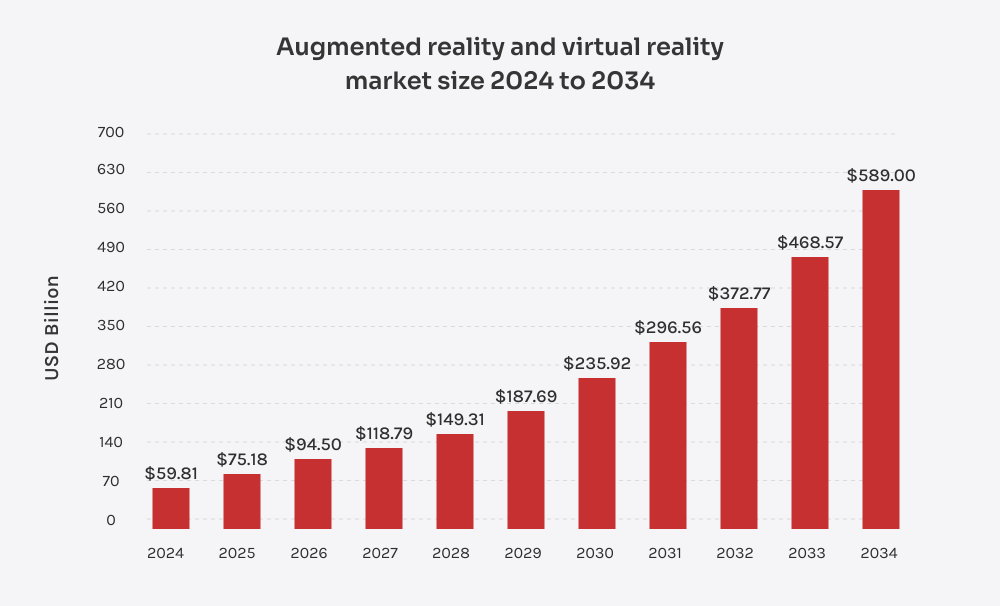
According to Statista, by 2030, the AR and VR market is expected to hit $75.9bn, growing at a healthy CAGR of 10.27% between 2025 and 2030. Looking even further ahead, Precedence research forecasts suggest it could reach a staggering $589 billion by 2034, with sectors like gaming, healthcare, education, retail, and manufacturing leading the charge.
What’s behind this growth? More capable hardware and smarter software. Devices like Meta Quest and Apple’s Vision Pro are driving AR and VR technology trends. With better displays, improved computational power, AI integration, and significantly sleeker hardware designs, these tools are now more user-friendly and far less clunky than they were just a few years ago.
Gaming and retail are still the top users, but industries like healthcare and education are now also leveraging AR/VR for training, diagnostics, and learning. This diversification reflects AR/VR industry trends as the technology matures.
In 2026, spatial computing will become a cornerstone of AR and VR technology. Simply put, spatial computing refers to how AR/VR devices understand and interact with the real world. This technology will enable AR/VR devices to track and map your environment in real time, allowing them to adjust the virtual experience based on where you are and what you’re doing.
The AR/VR space is evolving rapidly. In 2026, the focus will be on enhancing the user experience with smarter, more adaptable technologies, improving both usability and content.
Bringing artificial intelligence into AR and VR solutions has completely changed the game. AI makes these technologies smarter, more immersive, and easier to use.
AI improves how AR and VR process data in real time. AI streamlines the generation of environments, reducing the need for extensive work by 3D artists. Instead of manually creating every detail, such as mountains or forests, AI can automatically generate these locations, making the process faster and more cost-effective. And this has been a major breakthrough for developing lifelike, engaging content.
For example, AI-powered architectural tools can generate detailed virtual spaces. Whether it’s gaming or training simulations, AI-generated environments feel more dynamic and immersive than ever.
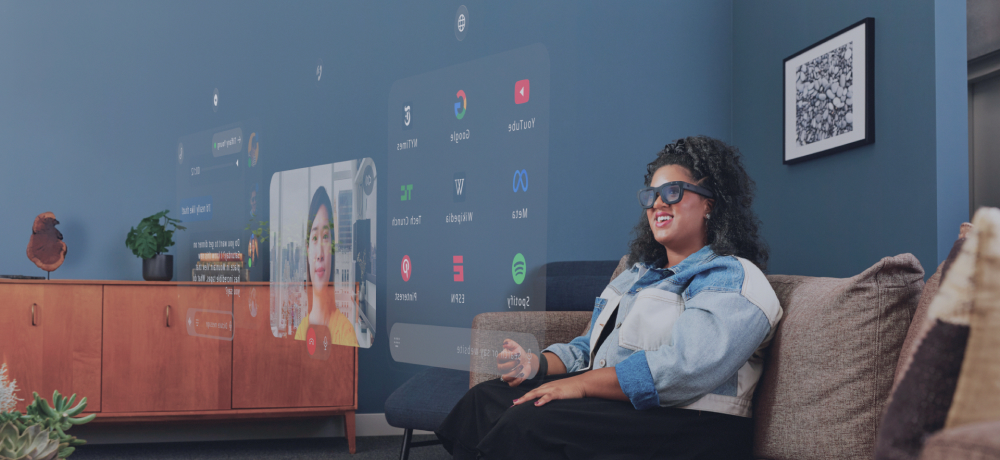
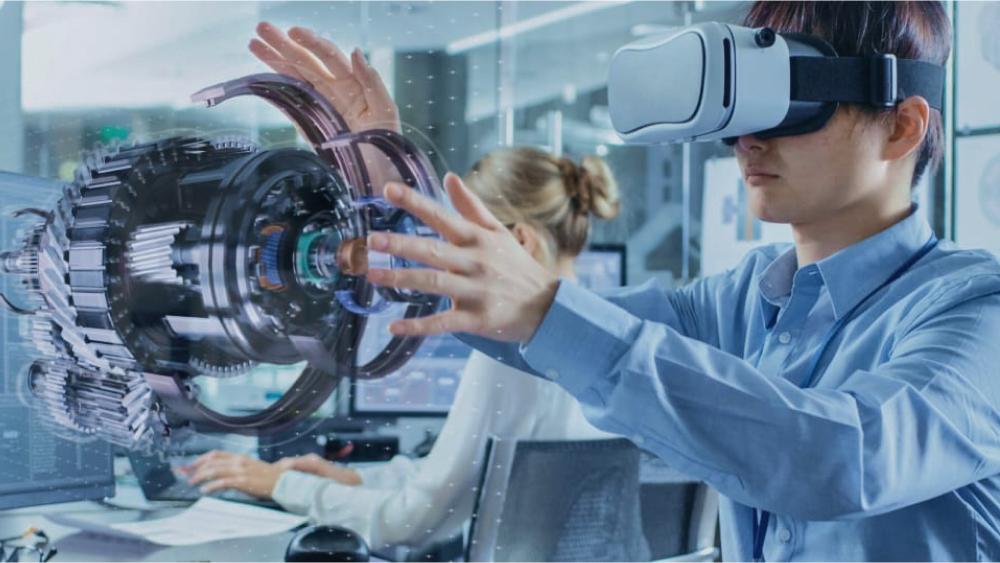
AI has also taken VR gesture-tracking to the next level. Devices like Orion glasses can interpret hand and finger movements. So, there is no need for controllers anymore, and interactions feel natural and intuitive. This is just a game-changer for fields like design, gaming, and engineering. Imagine manipulating 3D models with just your hands — it feels futuristic and boosts productivity.

In manufacturing, AI-powered AR solutions overlay real-time data on machinery, providing technicians with precise, context-aware guidance for complex tasks. This reduces errors, improves efficiency, and ensures that even intricate processes are executed accurately.
Predictive maintenance systems use AI to spot potential issues before they happen, making work smoother and safer. With AR, maintenance workers can see important information, like diagnostics or repair steps, right in front of them through their headsets. This helps them fix problems faster, stay on track during routine checks, and avoid mistakes, reducing downtime and improving safety.
AI is also raising the bar for object recognition in AR. Tools like Google Lens can identify objects, translate text, or provide a helpful context in real time. In retail, this aligns with augmented reality market trends, as customers can visualize products in their homes or pull up reviews instantly. This makes shopping more interactive and personalized.
Imagine walking into a virtual store where a friendly, lifelike assistant greets you, answers your questions, and helps you find exactly what you need.
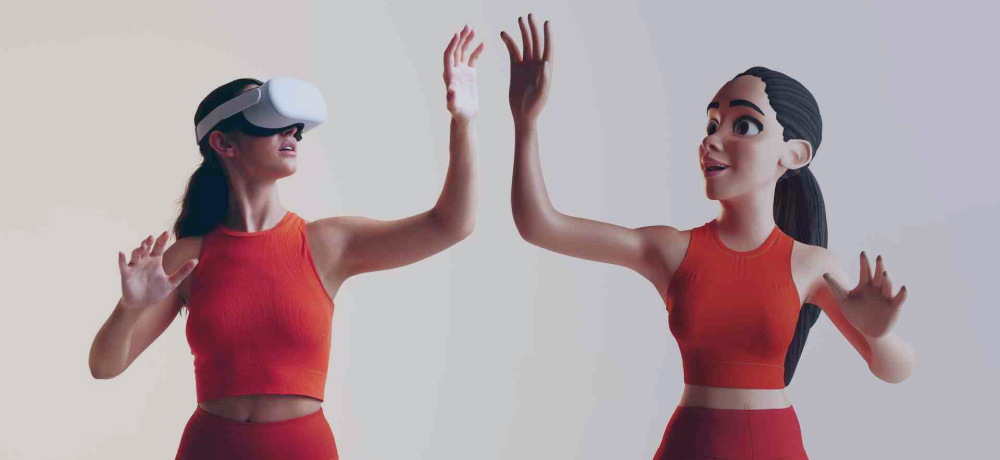
That’s the power of digital avatars. These AI-driven 3D characters are changing the way businesses interact with consumers. They definitely make communication more engaging, efficient, and personalized.
Take Skoda, for example. They’ve implemented AI-powered avatars to handle customer service inquiries 24/7. These virtual assistants provide tailored support or answer product-related questions. All this streamlines operations and delivers a top-notch customer experience.
But digital avatars don’t stop at customer service. In marketing, they’re becoming the face of brands. Virtual influencers like Lil Miquela are setting trends on Instagram and TikTok. They connect with younger audiences: host product launches, guide virtual showroom tours, and create immersive, interactive campaigns that traditional marketing just can’t match.
In the Metaverse and other virtual spaces, digital avatars act as customizable identities for users.
Platforms like Decentraland allow people to create avatars that can attend virtual events, shop, or collaborate on projects. These avatars bring a sense of identity and interaction to virtual spaces, whether you’re in a virtual meeting or socializing at a virtual concert.
When integrated with AR and VR, the potential of avatars grows even more. For instance, Accenture uses avatars in VR onboarding to create team-building exercises and provide real-time feedback. That is what makes learning engaging and effective.
WebAR reflects augmented reality future trends, making AR more accessible than ever. Instead of downloading special apps, users can dive into AR experiences directly through their web browsers. This means no complicated setups — just instant access to immersive, interactive content that works smoothly across devices and platforms.
In retail, companies like IKEA used WebAR to help shoppers visualize furniture in their homes using nothing more than a smartphone or tablet — a clear example of how AR and VR make shopping more interactive. Similarly, Sephora offers a WebAR makeup try-on feature, which allows customers to see how products look on their faces without downloading an app. It’s very convenient.
WebAR is also a hit in marketing. Take the Pepsi Max Bus Stop campaign, for instance. When it was launched, it was a groundbreaking use of augmented reality in outdoor advertising. It transformed a traditional bus stop into an interactive digital experience that brought unbelievable scenarios to life.
Another great example is 1-800-Flowers, which uses WebAR to showcase 3D models of floral arrangements. Customers can zoom in, rotate, and visualize the flowers in their space before buying.
Even education is benefiting from WebAR. Google’s Search AR lets students explore 3D models of animals, scientific concepts, and historical artifacts directly from a browser. Whether it’s a classroom or a home study session, these interactive tools enrich learning without requiring extra software.

Wearable AR/VR devices are transforming from bulky gadgets into sleek, practical tools that are easier to use and integrate into everyday life. With longer battery life, more powerful hardware, and compact designs, these devices are becoming indispensable across industries.
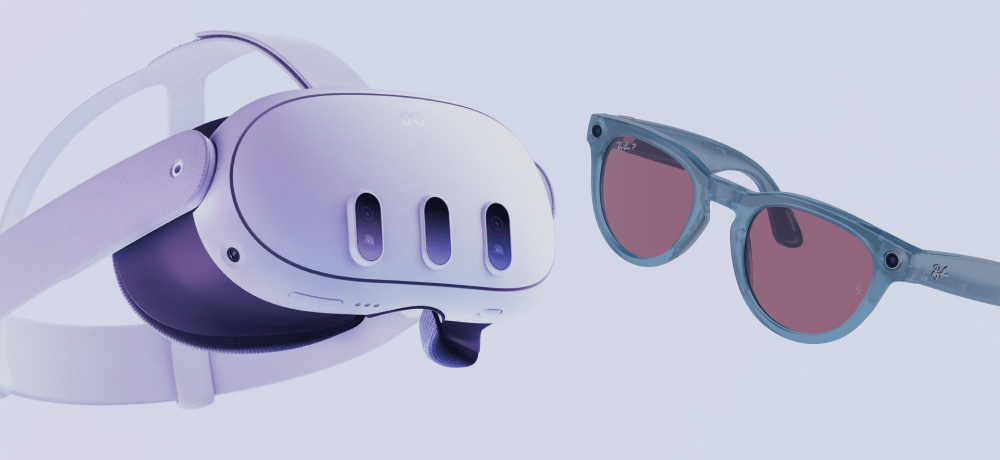
Take the Apple Vision Pro, for instance. It combines high-resolution displays, advanced spatial audio, and gesture controls to create immersive AR and VR experiences. Similarly, the Meta Quest 3 offers cutting-edge quality with a focus on mixed reality. They allow users to toggle between virtual and real-world interactions. It’s lighter, faster, and more affordable than its predecessors. This makes such glasses ideal for gaming, training, and collaborative VR projects.

For those looking for lightweight AR solutions, Orion glasses stand out. These wearables allow users to interact with digital environments using just natural hand movements — no controllers needed. Their compact design makes them perfect for engineering visualization, medical training, and consumer experiences.
Meta Ray-Ban also brings AR functionality to everyday eyewear. With built-in cameras, voice controls, and easy content sharing, these glasses make AR wearables as unobtrusive as regular glasses. While currently focused on social and media tasks, they hint at a future AR trend of blending technologies into daily routines.
Using AR and VR to deliver gamified experiences is transforming how businesses engage with customers across various industries. AR and VR industry trends reflect how these technologies merge entertainment with education and fitness to keep users engaged.
By mixing fun with functionality, AR/VR is turning ordinary tasks into exciting, immersive experiences that keep users engaged and motivated. Whether it’s learning, working out, or shopping, adding game-like elements makes everything feel a little more rewarding. And honestly, who doesn’t want a little more fun in their day-to-day routine?
Take education, for example. Tools like ClassVR let students step into historical landmarks, dive into 3D science concepts, or practice real-world skills in a safe, virtual setting. It’s not just learning — it’s exploring. And by making lessons hands-on and interactive, these platforms turn even the trickiest subjects into something relatable and fun.
In fitness, apps like Supernatural and FitXR are redefining workouts. Who wouldn’t want to box, dance, or meditate in stunning virtual worlds? Users have a great time during their workouts, and the rewards help them stay committed over time. It’s an exercise that doesn’t feel like a chore.

In training and mental health, gamification is making a real impact. VR-based scenarios teach employees critical skills like conflict resolution or technical repairs in a safe, game-like way.
In 2026, spatial computing will become a cornerstone of AR and VR technology. Simply put, spatial computing refers to how AR/VR devices understand and interact with the real world. This technology will enable AR/VR devices to track and map your environment in real time, allowing them to adjust the virtual experience based on where you are and what you’re doing.
Think of it as the difference between virtual spaces that are confined to a screen versus ones that exist all around you, interacting with the real world in meaningful ways. Whether it’s used in gaming, healthcare, or remote work, spatial computing will make AR and VR experiences feel more natural and integrated into our day-to-day lives.
Remote work is here to stay, and XR tech will make it even better. Over the next few years, we’ll start seeing virtual offices, 3D workspaces, and immersive meetings that take remote collaboration to a whole new level. Forget video calls. Teams will be able to meet in virtual spaces that feel way more interactive and engaging, almost like being in the same room.
It might not be something everyone adopts right away, but for companies looking to boost productivity, training, or collaboration, XR will offer significant advantages
The demand for hyper-realistic experiences in AR/VR will reach new heights by 2026. With advances in graphics, AI, and spatial audio, the gap between the virtual world and reality will continue to narrow. Expect to see VR experiences that are almost indistinguishable from real life, whether it’s for entertainment, training, or education.
This will be particularly impactful in industries where high levels of realism are crucial, such as architecture, healthcare, and virtual tourism. The more realistic and immersive these virtual worlds become, the more seamlessly they’ll integrate into our everyday and professional experiences.
By 2026, AR will be increasingly used in enterprises for training simulations, real-time diagnostics, and predictive maintenance. These applications are expected to precede widespread consumer adoption, as businesses leverage AR to reduce downtime, increase efficiency, and enhance skill development. AR solutions provide hands-on, immersive experiences, improving the accuracy and speed of complex tasks, especially in manufacturing and healthcare industries.
Imagine entering a virtual space — whether for work, training, or service — and instead of just seeing a static interface, you interact with a full-bodied, intelligent AI agent. This agent moves with you, adapts to your actions, and responds to changes in the environment. For instance, an AI agent in a customer service setting could guide a technician through troubleshooting a complex issue, predicting the next step based on the user’s behavior and providing real-time solutions as needed.
These AI agents will be able to make decisions, manage tasks, and help the user without constant input. They’ll use context (like location, actions, or environment) to anticipate what you need next. This is a huge leap from the reactive assistants we know today.
AR and VR already power day-to-day operations in many sectors. The examples below show how different industries apply them to solve real challenges.
AR and VR are changing how healthcare professionals learn, diagnose, and care for patients. Platforms like Osso VR bring surgical training to a whole new level, letting doctors practice in realistic simulations without any risk to patients. The results? Surgeons trained with VR perform up to 230% better than those trained with traditional methods.
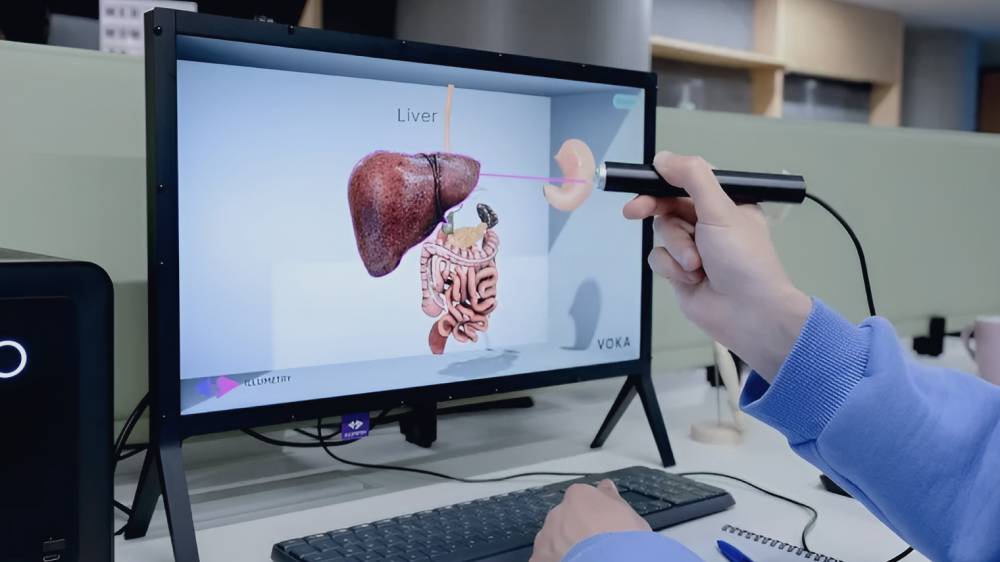
AR is also making diagnostics and treatments smarter. AccuVein, for instance, uses augmented reality to project a map of veins onto a patient’s skin. It helps clinicians place IVs with pinpoint accuracy. Similarly, Voka.io offers AR tools that overlay 3D anatomical models onto patients and give surgeons a clearer view for planning and executing complex procedures.
Rehabilitation is another area where VR shines. Applications like MindMotion use gamified therapy to help stroke patients regain motor skills.
In mental health, VR is being used for exposure therapy. It allows patients to safely confront and manage phobias, PTSD, and anxiety in controlled environments.

AR and VR are simply revolutionizing manufacturing. These technologies make processes faster, training smarter, and quality higher. What’s also great is that they reduce errors and downtime.
Take AR glasses, for example. They provide real-time overlays on machinery, guiding technicians step-by-step through assembly or repairs. Boeing uses this technology in aircraft production, projecting wiring diagrams directly into the technician's view. The result? A 25% reduction in assembly errors and significantly faster production times.
When it comes to quality assurance, AR tools are helping workers detect defects faster and with greater accuracy, ensuring that production meets the highest standards. On the other side, VR is transforming worker training. Companies like Siemens use VR simulations to let employees practice operating complex machinery or navigating safety protocols in a completely risk-free virtual environment. This not only speeds up training but also reduces workplace risks.
AR and VR are also making remote collaboration easier than ever. Imagine a specialist connecting with on-site technicians through AR glasses, overlaying visual instructions right onto the equipment. Companies like Caterpillar are already using this approach to guide repairs remotely.
AR and VR are offering interactive and personalized experiences that were unimaginable a few years ago. As augmented and virtual reality trends continue to shape retail and entertainment, these technologies are becoming integral to customer engagement strategies. These tools let customers explore products in entirely new ways.
Virtual showrooms are just one example of such an approach. Brands like BMW enable customers to explore car interiors, customize features, and even take virtual test drives — all without setting foot in a dealership.
At the same time AR is enhancing the in-store experience. For example, Zara once used AR displays that showed clothing on virtual models when customers scanned specific areas with their phones.
AR and VR allow students to explore complex topics visually and hands-on. This makes lessons more memorable and engaging.
We’ve already mentioned platforms like ClassVR. With them, students can virtually visit ancient civilizations, dive into the ocean’s depths, or explore outer space, which really helps to turn classes into adventures that stick. This not only boosts understanding but also makes learning genuinely enjoyable.
Augmented reality adds another layer of engagement by providing real-world context. Tools like Merge Cube let students hold and interact with 3D models of planets, molecules, or historical artifacts in their hands, making abstract concepts feel tangible.
In higher education and vocational training, VR has proved invaluable for simulations and skill development. Medical students can practice surgeries in a risk-free virtual environment, while engineering students use VR to test and refine prototypes. Platforms like zSpace combine AR and VR to teach STEM subjects. They let students manipulate virtual circuits or 3D anatomical models, deepening their understanding through hands-on exploration.

From gaming and live events to theme parks and films, AR and VR bring stories and experiences to life in fresh and exciting ways.
In gaming, platforms like Meta Quest 3 and PlayStation VR2 pull players into fully interactive environments, making them active participants in the action. Games such as Beat Saber and Half-Life: Alyx turn gameplay into dynamic, physical experiences that go far beyond the traditional screen.
AR is enhancing live entertainment, too. Coldplay incorporates AR visuals that blend live music with augmented effects viewable through smartphones. This creates a hybrid experience that feels fresh and engaging. Sports broadcasts are also stepping up, using AR to show real-time stats, 3D replays, and enhanced visuals, thus making games more interactive and informative for fans.
In film and storytelling, VR is opening up new creative possibilities. Platforms like Oculus TV and apps like Within let audiences enter 360-degree cinematic experiences. Instead of just watching a story, viewers can explore virtual sets and interact with narratives, bringing them closer to the action than ever before.
Theme parks are another area where AR and VR are shining. Disney and Universal Studios are using these technologies to enhance rides and attractions. Guests can interact with digital characters or dive into virtual adventures that respond to their movements, creating personalized, unforgettable experiences.

AR and VR are changing the way we experience technology. But as these technologies grow, they bring some challenges that need to be solved for them to be fully adopted.
AR and VR rely heavily on data collection to deliver immersive experiences. These systems track everything from your location to biometric data, including eye movements, heart rates, and behavioral patterns within virtual spaces. While this data personalizes the user experience, it also raises serious privacy concerns.
A major risk is the misuse or unauthorized access to sensitive data. For instance, VR systems that monitor eye movements could inadvertently expose personal preferences or emotional states. If such data is mishandled or exploited, it could lead to targeted manipulation or fraud, emphasizing the need for strong security protocols.
Another challenge is the secure storage of data. Google Maps’ AR feature, known as Live View, relies on real-time mapping and may capture sensitive information about users’ homes or workplaces. Without proper encryption, this data becomes a potential security threat.
Latency is a critical hurdle. Even the smallest delay between the user’s actions and the system’s response can break the virtual experience or induce motion sickness. This is where faster networks like 5G come into play, offering the low-latency connections necessary for seamless real-time interactions.
Device processing power remains a key challenge. To render high-resolution graphics while tracking hand gestures and eye movements, devices like Meta Quest 3 and Apple Vision Pro must balance power consumption, avoid overheating, and preserve battery life. Despite progress, the struggle to balance size, performance, and cost remains a major obstacle.
Connectivity is also a concern. Many AR and VR systems offload processing to the cloud to lighten the device’s load, but this depends heavily on having a robust internet connection. In areas with slower internet speeds, users may experience lag or incomplete experiences, which limits the broader adoption of AR and VR technologies.
The size and design of AR and VR devices have always been a challenge for widespread adoption. Bulky and heavy headsets aren’t exactly known for comfort, especially when you have to wear them for long stretches. But thanks to improvements in materials, miniaturization, and more efficient processors, these devices are becoming much more practical and user-friendly.
In the early days, VR headsets like the HTC Vive and Oculus Rift were heavy and tethered to a computer, making movement difficult and long sessions uncomfortable. Now, devices like the Meta Quest 3 and Apple Vision Pro are slimmer, wireless, and much easier to wear for extended use.
AR devices are also improving in terms of portability. Products like Meta Ray-Ban and Snapchat Spectacles look like regular glasses, seamlessly integrating smart features like cameras and displays. These devices balance functionality and style, so they fit into everyday life without standing out.
As AR and VR devices continue to get smaller, they’re becoming more comfortable, portable, and easier to use in everyday life. These advancements are opening the door to wider adoption and making immersive experiences a natural part of how we work, play, and connect.
Spending too much time in AR and VR can lead to a variety of health concerns, from eye strain to motion sickness.
Eye strain happens when you stare at screens too close for too long. It can cause dry eyes, irritation, and headaches. Some devices, like the Meta Quest 3, have features to help, like blue light filters and adjustable focus, but it’s not a complete fix.
Motion sickness is another common issue. In VR, if the visuals don’t match your movements, it can make you feel dizzy or nauseous. Even though improved tracking and higher refresh rates help, some users still experience discomfort during more intense virtual activities.
Physical strain is a problem, too. Even with lighter designs, wearing a headset for a long time can cause neck and shoulder pain. Newer ergonomic designs that distribute weight better are helping to improve comfort.
Finally, there are mental health concerns. Spending too much time in virtual spaces can lead to overstimulation, disrupted sleep, or feelings of isolation. While AR and VR are amazing, it’s important to use them in moderation.
AR and VR are transforming how we interact with the world, blending the physical and digital to create practical tools and exciting experiences. From training doctors and improving education to enhancing shopping and entertainment, these technologies are already making a real impact.
However, challenges like data privacy, device comfort, performance, and health concerns still need to be addressed. With ongoing advancements in hardware, software, and connectivity, AR and VR are becoming more accessible, reliable, and integrated into everyday life.
The future of AR and VR is filled with potential. By focusing on user needs and solving current limitations, these technologies will continue to create immersive, meaningful, and transformative experiences that shape the way we live and work.
The AR/VR market is growing quickly. In 2024, it generated $59.75 billion. By 2030, it is expected to reach $200.87 billion, growing at 22% per year. This growth is driven by gaming, healthcare, education, and retail industries, which use these technologies to improve experiences and processes.

The future of AR and VR looks bright, especially with some exciting virtual reality trends emerging. Mixed reality creates seamless experiences, 5G ensures smoother performance, and AI adds smart features like real-time object recognition, making these technologies more accessible and useful across various areas of life and work.
AR and VR are advancing rapidly, with devices like Meta Quest 3 and AR glasses becoming more powerful and affordable. Improved software and content make them valuable in education and healthcare. While challenges like high costs remain, these technologies are becoming increasingly common and accessible.
AR and VR are growing as better devices and software make them easier to use. With lower costs and rising demand for immersive experiences, industries like training, marketing, and design are adopting these tools, bringing them into everyday life.

Product Design Team Lead
Dmitry strips away complexity to create intuitive, high-impact user experiences. As a design lead, he pushes the boundaries of functional aesthetics, ensuring that every interface is a purposeful tool rather than just a visual.


Your message has been sent.
We’ll process your request and contact you back as soon as possible.