Il tuo messaggio è stato inviato.
Elaboreremo la vostra richiesta e vi ricontatteremo al più presto.
Il modulo è stato inviato con successo.
Ulteriori informazioni sono contenute nella vostra casella di posta elettronica.

Selezionare la lingua


Medical topics are inherently difficult to understand. From the complexities of the human anatomy and diseases to the molecular structures of drugs, so much of modern healthcare hinges on concepts that are hard to imagine in your mind’s eye or explain.
And it’s this visualization gap that creates the most common hurdles for everyone. Students struggle to understand how the human body functions. Doctors need quick references to discuss conditions with patients and peers. Patients often have trouble grasping their diagnoses and treatment plans. Healthcare and pharma companies face issues explaining how their devices, drugs, or services work.
To address these practical challenges, our team set out to make medical 3D visualization accessible and intuitive, but without compromising or reducing clinical accuracy.
Before we share what we’ve been up to, it’s worth mentioning why visuals are so important for medicine. Spoiler: visual communication isn’t just a luxury; it has a measurable impact. Let’s have a look at some statistics:
Taken together, these findings underscore a simple yet powerful truth that our brains are wired for visuals. And in a field as intricate as healthcare, clear visual explanations are essential.
Despite medicine being complex by nature, the way we present it doesn’t have to be. Our goal is to remove unnecessary barriers, but without oversimplifying the science itself.
In our activities, the team focuses on three core principles: accessibility, clinical accuracy, e visual excellence.
The question then is this: how do we turn these principles into meaningful impact? By building practical visual tools that doctors, educators, students, patients, and marketers can use every day. Here are the solutions our team came up with:
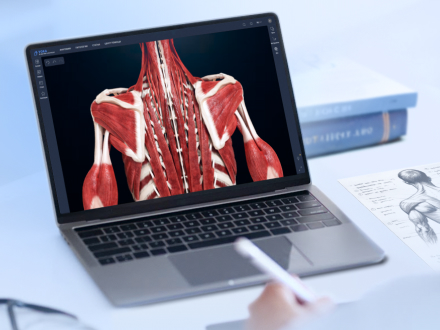
Our flagship solution is the VOKA 3D Anatomia e patologia app that we develop under the supervision of practicing physicians. It’s an interactive 3D atlas, available on web and applicazioni mobili, that makes medical education, clinical preparation, and patient communication more visual and intuitive. At present, the app is localized in English, German, and Russian.
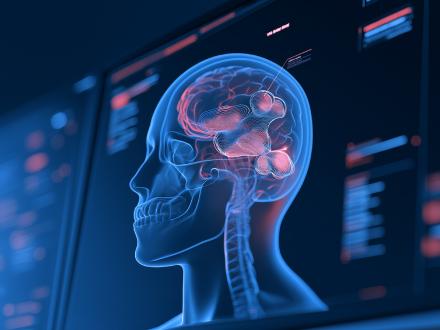
The VOKA app currently includes 1,000+ interactive 3D models covering both anatomy and pathology. Users can study the body by regions or systems, dive into embryology, microanatomy, and biomechanics, and explore 19 pathology categories, from heart and vascular conditions to dermatology, neurology, traumatology, and many more.
Our models are built using MRI and CT data, histology references, and clinical manuals. They’re reviewed by medical specialists and continuously updated to reflect current industry standards.
We focused on making the experience as interactive as possible. When manipulating the model, you can zoom in/out, rotate, isolate, or hide structures. Plus, we added many features to enrich your anatomy and pathology exploration, including:
In addition to 3D models, the app also includes medical articles that connect visuals with clear explanations.
As mentioned earlier, we want the app to work wherever and however it’s needed, across different settings and scenarios. Beyond mobile and web, VOKA 3D Anatomy & Pathology is compatible with anatomy tables, interactive boards, LMS platforms, touch displays, and VR/AR devices. Whether you’re in a classroom, a clinic, or a conference room, the experience is seamless.
In fact, the app is already integrated into the programs of several universities, giving students direct access to our 3D models as part of their coursework and study materials.
Since medicine isn’t static, that led us to another challenge: how can we help people see dynamic processes?
How a drug works at the molecular level. How a medical device interacts with tissue. How a surgical procedure unfolds step by step. These are dynamic mechanisms, and even interactive 3D models aren’t enough here. So, that’s how our second major direction was born.
Over the years, our medical animation work has grown far beyond a single niche. What started as individual projects has evolved into a diverse portfolio across numerous therapeutic areas: cardiology, oncology, dermatology, gynecology, traumatology, endocrinology, and many more.
Some animations focus on the mechanism of action (MoA) or mechanism of disease (MoD), others explain surgical techniques, physiology, biotech processes, or the inner workings of medical devices. We also develop explainer videos that translate science into engaging stories.
Our team has partnered with clients from a wide range of healthcare and life science industries. Each of them came to us with a different challenge, but all shared the same need: to visualize something complex in a compelling and credible way.
Among our clients are pharmaceutical companies, medical device manufacturers, aesthetic medicine and plastic surgery clinics, and marketing agencies. For them, clear visualization is not just a design choice. So we build our animations around their needs to educate patients, build trust among investors, and engage the right audience in a competitive market.
Many of our clients rely on industry events, exhibitions, and congresses as a key part of their marketing strategy. To meet this demand, we also started to adapt our visual experiences to event spaces with interactive displays, touchscreens, and LED walls that captivate attendees. Also, our renders are used for brochures, banners, and presentations.
With a growing library of visuals and a strong in-house medical team, we realized there was one more piece missing – a structured knowledge base to connect everything. That’s how VOKA Wiki was created.
VOKA Wiki is an educational resource developed by medical professionals. It features clearly written articles that explain anatomy, pathology, and clinical concepts, each supported by our images and videos to reinforce understanding.
The platform also includes quizzes that engage active learning and allow users to test their knowledge.
Even with so much already achieved, our journey is just getting started. For VOKA 3D Anatomy & Pathology, we plan to:
On the animation side, production is in full swing. We keep pushing the boundaries of scientific accuracy, engagement, and interactivity, and help people see medicine in ways that weren’t possible before.
Medicine never stands still. New treatments, technologies, and research discoveries appear every year. Each of them introduces new mechanisms that need to be explained to doctors, patients, and the wider healthcare community. This constant progress means there is always more to visualize.
At VOKA, we’re convinced that visualization is one of the most powerful ways to make medicine understandable. And that belief drives everything we create, from interactive 3D models and medical animations to educational resources like VOKA Wiki.
For us, it’s a mission. That’s why we keep expanding our tools and content to help people see medicine clearly and learn smarter.

Responsabile delle pratiche commerciali nel settore sanitario
Dedita all'innovazione tecnologica nel settore sanitario, Anastasiya Dziemieszkiewicz è il motore di molti dei progetti all'avanguardia di Innowise: applicazioni AI, strumenti per la salute digitale e così via. Lavora a stretto contatto con team interfunzionali e aziende sanitarie per dare forma a soluzioni che soddisfino le normative del settore e gli obiettivi dei clienti. Con un interesse genuino per il miglioramento dei risultati dei pazienti e dei flussi di lavoro in ambito sanitario, Anastasia non smette mai di stupire i clienti con il suo approccio pratico e le sue idee fresche.


Il tuo messaggio è stato inviato.
Elaboreremo la vostra richiesta e vi ricontatteremo al più presto.

Iscrivendosi si accetta il nostro Informativa sulla privacy, compreso l'uso dei cookie e il trasferimento dei vostri dati personali.