El poder del mapeo de datos en la atención sanitaria: ventajas, casos de uso y tendencias futuras. La rápida expansión del sector sanitario y de las tecnologías que lo sustentan genera una inmensa cantidad de datos e información. Las estadísticas muestran que alrededor de 30% del volumen mundial de datos se atribuye al sector sanitario, con una tasa de crecimiento prevista de casi 36% para 2025. Esto indica que la tasa de crecimiento es muy superior a la de otras industrias como la manufacturera, los servicios financieros y los medios de comunicación y entretenimiento.

Principales tendencias ERP 2026: innovaciones y estrategias para el crecimiento empresarial

Actualizado: Jan 23, 202610 minutos de lectura

Principales conclusiones

  • ERP market news today points to rapid rollouts of AI copilots, industry cloud packs, and tighter API security.
  • Strong ERP market growth highlights the importance of modern platforms for companies wanting to stay ahead of future trends in ERP.
  • Cloud-first is the new default. Companies are ditching on-premise systems for flexible, scalable, and cost-effective cloud ERP setups.
  • Zero Trust, API protection, and AI-powered threat detection are must-haves as ERP systems become more connected.
  • Sustainability takes center stage. Modern ERP solutions now track carbon footprints, resource use, and ESG compliance out of the box.

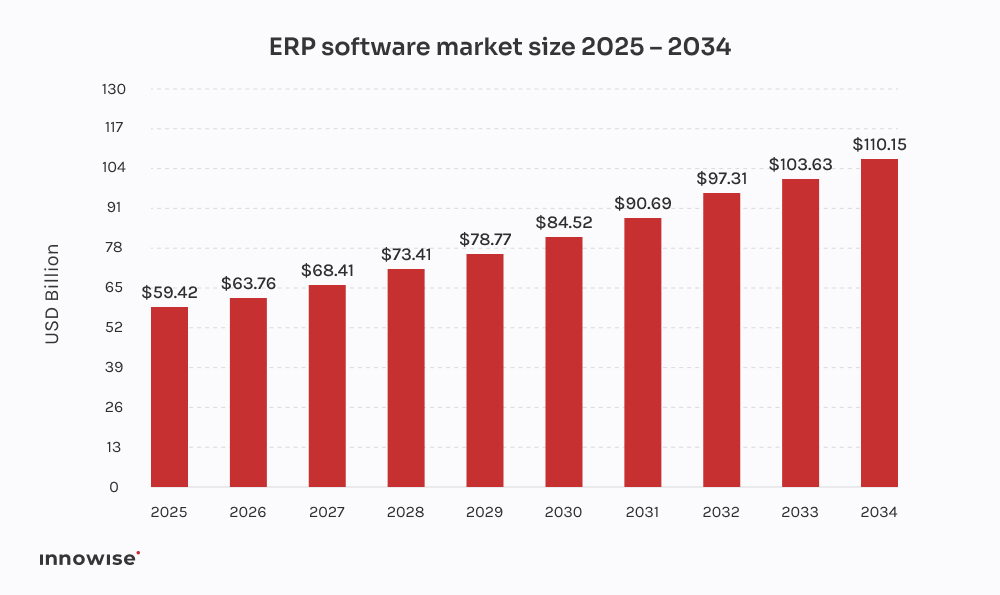
In 2025, the global ERP software market hit $59.42 billion and is projected to grow 7.1% per year through 2034. That surge in ERP market share shows just how crucial ERP is for streamlining operations, improving decision-making, and keeping up with fast-changing business demands.

ERP software market growth chart from 2025 to 2034 in USD billions
To stay relevant these days, modern ERP solutions are tapping into AI, big data, IoT, and other emerging tech. In this article, I’ll walk you through these ERP industry trends​ and explain why soluciones ERP personalizadas can sometimes handle real operational complexity better than a standard product.

Tendencias actuales en sistemas ERP

From AI to IoT to blockchain, these ERP trends are already changing how these systems work. This year is set to bring even more automation, sharper forecasting, and efficiency that truly changes the game. And as every day grows more competitive, having that extra edge becomes crucial.

Soluciones ERP basadas en Cloud

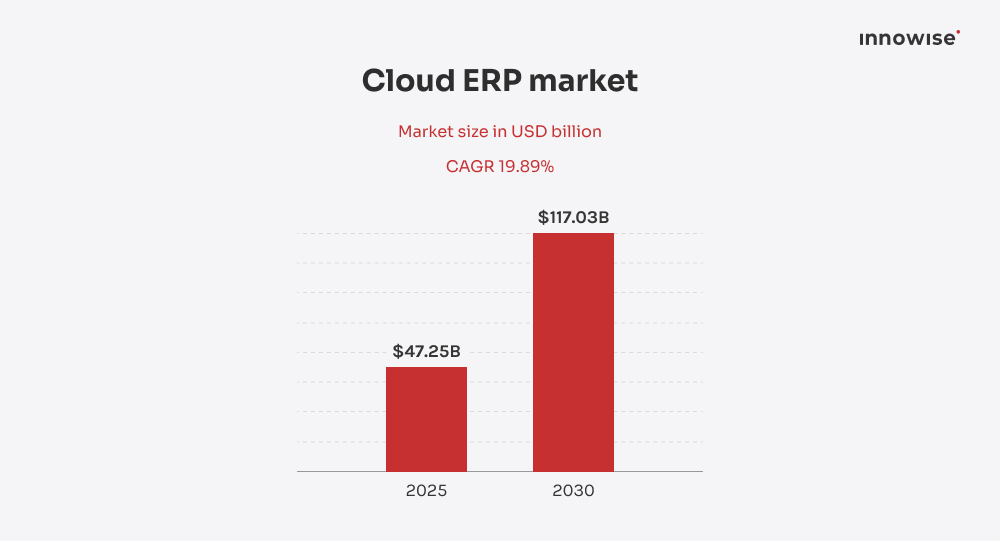
Cloud ERP solutions remain at the forefront of ERP trends 2026. It’s flexible, easy to scale, and doesn’t drain your budget with hardware or upkeep. The market reached around $47 billion in 2025 and is on track to hit $117 billion by 2030, growing fast at nearly 20% a year.

Cloud ERP market growth chart from 2025 to 2030 in USD billions

The main drivers for shifting infrastructure to the cloud ERP are the ability to slash maintenance costs and give your teams access to the system from anywhere. It keeps work flowing regardless of geography, creating always-on companies that stay connected and resilient through any disruption.

We’re also seeing businesses turning to multi-cloud and two-tier setups. The premise is simple enough: a strong core ERP runs at the center, while lighter cloud versions support regional offices or specific units. This setup keeps processes aligned across the company and gives local teams room to adapt to their own markets, currencies, and regulations.

Connected operations and IoT-driven real-time data

IoT gives ERP systems a live connection to what’s really happening on the ground. Machines, sensors, and warehouses feed data straight into the system, so teams always have the latest numbers in front of them instead of waiting for someone to update a spreadsheet.

For instance, a manufacturer can track equipment performance in real time, get alerts when something looks off, and schedule maintenance before a breakdown stops production. In logistics, connected warehouses update stock levels automatically, trigger restocks, and keep deliveries on schedule without manual checks.

With all that data coming in live, teams can react faster, spot problems early, and make decisions based on what’s happening right now.

AI-native ERP and GenAI copilots

ERP trends like AI and ML are changing systems by bringing deeper analysis, predictive insights, and automation to the table. Take SAP Business AI as a good example. It already includes over 200 AI-powered use cases and plans to double that by the end of 2025. Companies use them to forecast demand, manage inventory, streamline production, and improve customer service.

With natural language processing and machine learning, systems start to understand context and make better recommendations. Generative AI is quickly becoming a built-in feature, too. Gartner expects that by 2028, around 80% of ERP systems will include generative AI and predictive analytics as standard.

Composable and modular ERP architectures

One of the notable ERP software trends 2026 is composable ERP, which gives businesses room to move. Instead of running one big, rigid system, you build your setup from smaller modules that connect through APIs. Each piece handles its own task and can be added, replaced, or upgraded without breaking the rest.

Let’s say your company runs a solid ERP core for finance and supply chain. You might plug in a separate tool for e-commerce, another for ESG reporting, and a forecasting app that uses AI to predict demand. All of them talk to each other through defined connections, so you get a nice and steady workflow instead of scattered tools.

This modular setup helps you respond faster to change. You can try new software without long-term commitments, scale successful pilots, and retire what no longer fits.

Industry-specific and vertical cloud ERP

More businesses are choosing ERP systems built for their industry instead of trying to adapt a generic one. The market for these vertical solutions is growing fast, from about $169 billion in 2025 to nearly $549 billion by 2035.

These platforms come with ready-made workflows, reports, and compliance tools for specific fields like fabricación, healthcare, logistics, or retail. Platforms such as Infor CloudSuite Healthcare or SAP’s industry cloud already include the terms, processes, and logic those teams use every day.

Most companies use these systems alongside a core ERP. The main system handles finance and shared operations, while the industry module takes care of the details like lab management, fleet tracking, or shop-floor control.

Blockchain para mejorar la seguridad y la transparencia

A big trend ERP teams are watching right now is integrating blockchain into ERP systems. It significantly enhances security and transparency in business operations. Industry leaders like SAP and Microsoft are already on board, using blockchain to protect sensitive data and keep critical info safe.

Gracias a su diseño descentralizado y a prueba de manipulaciones, blockchain hace que las transacciones sean a prueba de fraude y sin errores. También mejora la gestión de identidades, reduciendo el acceso no autorizado y garantizando la autenticidad de los productos. Al subsanar los puntos débiles de las bases de datos centralizadas tradicionales, blockchain aporta ventajas, especialmente a los sectores en los que el cumplimiento y la auditabilidad no son negociables.

Análisis avanzado de datos y big data

Among the key ERP software trends, systems are getting a lot smarter. With advanced analytics and big data, modern ERP platforms now give businesses real-time insights that drive faster, more confident decisions. They crunch massive datasets fast, so you can predict demand spikes, optimize logistics, and even boost HR tasks. In healthcare, for example, they make patient scheduling and resource planning a breeze. For online retailers, it’s all about smarter pricing strategies and slashing inventory costs. This ERP system trend turns your system into a flexible, future-ready solution.

Tendencias en seguridad ERP y medidas de ciberseguridad

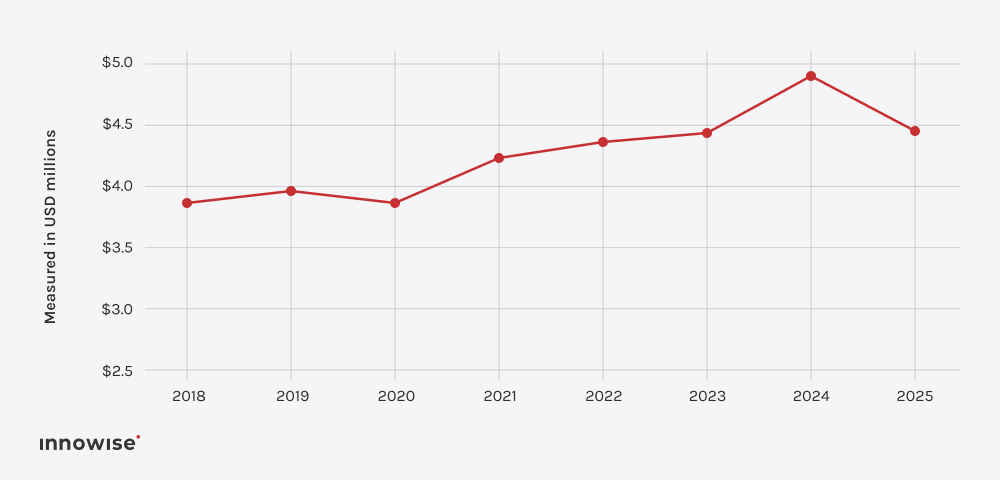
With ERP systems becoming more connected and accessible, they’re also more exposed to cyber threats. IBM’s 2025 report put the global average cost of a data breach at $4.4 million, which, while slightly lower than the previous year, is still an enormous hit for any business. It shows how critical it is to protect company data, customer information, and the ERP’s internal logic from being compromised.
The global average cost of a data breach fell
A continuación se describen algunas de las principales tendencias y medidas de seguridad que determinan la planificación de recursos empresariales en la actualidad:

IA y ML en seguridad

Las herramientas de IA y ML ayudan a detectar actividades inusuales y posibles infracciones en tiempo real. Pueden detectar patrones y amenazas mucho más rápido que los métodos de seguridad tradicionales, como cortafuegos, IDS o ACL.

Zero-trust security models

With a zero-trust model, nobody is trusted by default — whether they’re inside or outside the company. Every access request undergoes strict verification, reducing insider threats and enhancing overall security.

Cloud mejoras de seguridad

For cloud-based ERPs, technologies like shared responsibility models, Secure Access Service Edge (SASE), and Cloud Access Security Brokers (CASB) add extra layers of protection to keep data safe.

Microservicios y seguridad de las API

As ERPs become more modular, securing the APIs that connect all components is essential. Strong API security prevents unauthorized access and data breaches, ensuring that ERP systems and sensitive information remain protected.

Sostenibilidad y ESG

Sostenibilidad y ESG have become one of the biggest ERP market trends 2026. With new rules like Europe’s CSRD pushing for more transparency, businesses need clear, reliable data on how they’re performing.

Modern ERP systems help keep everything on track. They can record energy use, carbon emissions, and waste across departments and map it to standards like ESRS and GRI. Instead of juggling spreadsheets, teams get one view of their footprint that’s ready for both decisions and audits.

Outdated ERP systems can really hold businesses back, causing bottlenecks and making it tough to get the insights you need when it matters most. We bring in fresh ERP technology trends to tackle these issues head-on, smoothing out data flow, speeding up processes, and helping businesses make faster, smarter decisions.
Michael Labutin
Jefe del Departamento de ERP

Manténgase ágil con una solución ERP flexible que crece con su empresa.

La importancia de mantenerse al día con las tendencias futuras de ERP para las empresas

With tech moving at lightning speed, ERPs have grown from basic resource managers into strategic tools. They now play a central role in how companies push their digital transformation forward, especially in industries where a strong ERP foundation directly supports long-term growth. Keeping tabs on ERP industry trends is essential if you want to sharpen operations, trim expenses, and stay one step ahead of the competition.

Maximizar la eficacia

Con funciones de ERP inteligentes como la automatización basada en IA y el análisis predictivo, las empresas pueden agilizar los flujos de trabajo y prescindir de los pasos adicionales. La adopción de estas mejoras permite a las empresas centrarse en el crecimiento estratégico sin perder de vista las operaciones.

Reducir costes

Gracias a las modernas funciones de ERP, las empresas obtienen una visión de 360 grados de las operaciones para aprovechar al máximo todos los recursos. Estas herramientas ayudan a recortar gastos innecesarios, evitar errores costosos y mantener ágil la cadena de suministro, lo que da un sólido impulso a la rentabilidad.

Escalabilidad ERP para el futuro

As businesses grow, so do their needs. Scalable ERP systems make it easy to handle more data, add new features, and bring on extra users without missing a beat. Staying in sync with ERP software trends means you’re always ready to scale up and stay flexible as the market shifts.

Orientación al cliente

Los sistemas ERP actuales dan prioridad al cliente, con herramientas CRM integradas e información personalizada. Esta configuración ayuda a las empresas a conocer realmente a sus clientes, anticiparse a sus necesidades y ajustar sus ofertas a ellas. De este modo, puede adaptarse más rápidamente, hacer más felices a sus clientes, fidelizarlos y obtener una sólida ventaja en el mercado.

Conclusión

El futuro del ERP pasa por ser flexible y anticiparse. Mantenerse al día de las tendencias en software ERP, como las soluciones en la nube, la IA, los análisis avanzados y la creación de soluciones ERP personalizadas, le mantiene preparado para el éxito a largo plazo, sea cual sea el aspecto del mercado en el futuro.

FAQs

Los sistemas ERP cambian las reglas del juego de las empresas que intentan ser más sostenibles. Con información en tiempo real, puede controlar el consumo de energía, reducir los residuos y gestionar sus cadenas de suministro de forma más ecológica. Al conectar todos los departamentos, los sistemas ERP facilitan la reducción de la huella de carbono y la consecución de los objetivos de sostenibilidad.

Definitely. By 2026, ERP systems will be way more user-friendly. With new tech like AI and smarter design, vendors are making these systems easier to use — simpler navigation, personalized dashboards, and mobile setups. All these upgrades aim to get more people on board, boost productivity, and make ERP systems accessible to everyone on the team.

Staying up-to-date on trends in ERP keeps you in the game. New features can make your operations smoother, trim costs, and lead to smarter decisions. By staying in the loop, you can tap into the latest ERP tools to drive growth and roll with market changes without missing a beat.

Dirección de consultores ERP

Kiryl conoce SAP por dentro y por fuera. Es la persona a la que acudir cuando un cliente necesita no solo una implementación, sino una configuración inteligente que se adapte a sus procesos únicos, con un camino claro desde la complejidad a la claridad.

Índice

    Contáctenos

    Reserve usted una llamada o rellene usted el siguiente formulario y nos pondremos en contacto con usted cuando hayamos procesado su solicitud.

    Envíenos un mensaje de voz
    Adjuntar documentos
    Cargar archivo

    Puede adjuntar 1 archivo de hasta 2 MB. Formatos de archivo válidos: pdf, jpg, jpeg, png.

    Al hacer clic en Enviar, autoriza a Innowise a procesar sus datos personales de acuerdo con nuestra política de privacidad. Política de privacidad para proporcionarle información relevante. Al enviar su número de teléfono, acepta que nos pongamos en contacto con usted a través de llamadas de voz, SMS y aplicaciones de mensajería. Pueden aplicarse tarifas de llamadas, mensajes y datos.

    También puede enviarnos su solicitud
    a contact@innowise.com
    ¿Qué pasa después?
    1

    Una vez recibida y procesada su solicitud, nos pondremos en contacto con usted para detallarle las necesidades de su proyecto y firmar un acuerdo de confidencialidad. Proyecto y firmaremos un acuerdo de confidencialidad.

    2

    Tras examinar sus deseos, necesidades y expectativas, nuestro equipo elaborará una propuesta de proyecto con el alcance del trabajo, el tamaño del equipo, el tiempo y las estimaciones de costes.

    3

    Concertaremos una reunión con usted para hablar de la oferta y concretar los detalles.

    4

    Por último, firmaremos un contrato y empezaremos a trabajar en su proyecto de inmediato.

    flecha