Blockchain-based certificates of authenticity: secure storage and easy accessibility

Innowise has built a management system that allows artists or galleries to tokenize their artwork and issue blockchain-based certificates of authenticity, securely stored and accessible via QR codes.

Challenge

The art market is grappling with critical challenges surrounding the authentication of artworks, especially impacting artists. A significant issue is the lack of transparency in the provenance of artworks, which leads to artists’ creations being stolen or counterfeited. Artists often face difficulties in proving the authenticity and history of their work, making it harder to protect their reputation and receive fair compensation.

Traditional methods of creating and managing authenticity certificates can be complicated and time-consuming, resulting in increased administrative costs for artists and galleries. This inefficiency can discourage artists from seeking certification, reducing their ability to authenticate and protect their creations.

Solution

A system for tokenizing artwork and issuing blockchain-backed certificates of authenticity accessible through QR codes

Innowise has built a solution to let artists and galleries create certificates of authenticity for artworks that will be securely stored on the blockchain after undergoing the tokenization process. Our goal has been to simplify authentication and provide trust in digital and analog environments through modern blockchain and QR coding technologies.

We provided technical consultations to define the requirements for an art authenticity verification system, designed the UX/UI for artists and collectors, developed client and server apps for certificate management, and integrated ThirdWeb-audited smart contracts for secure provenance records.

Certificate generation

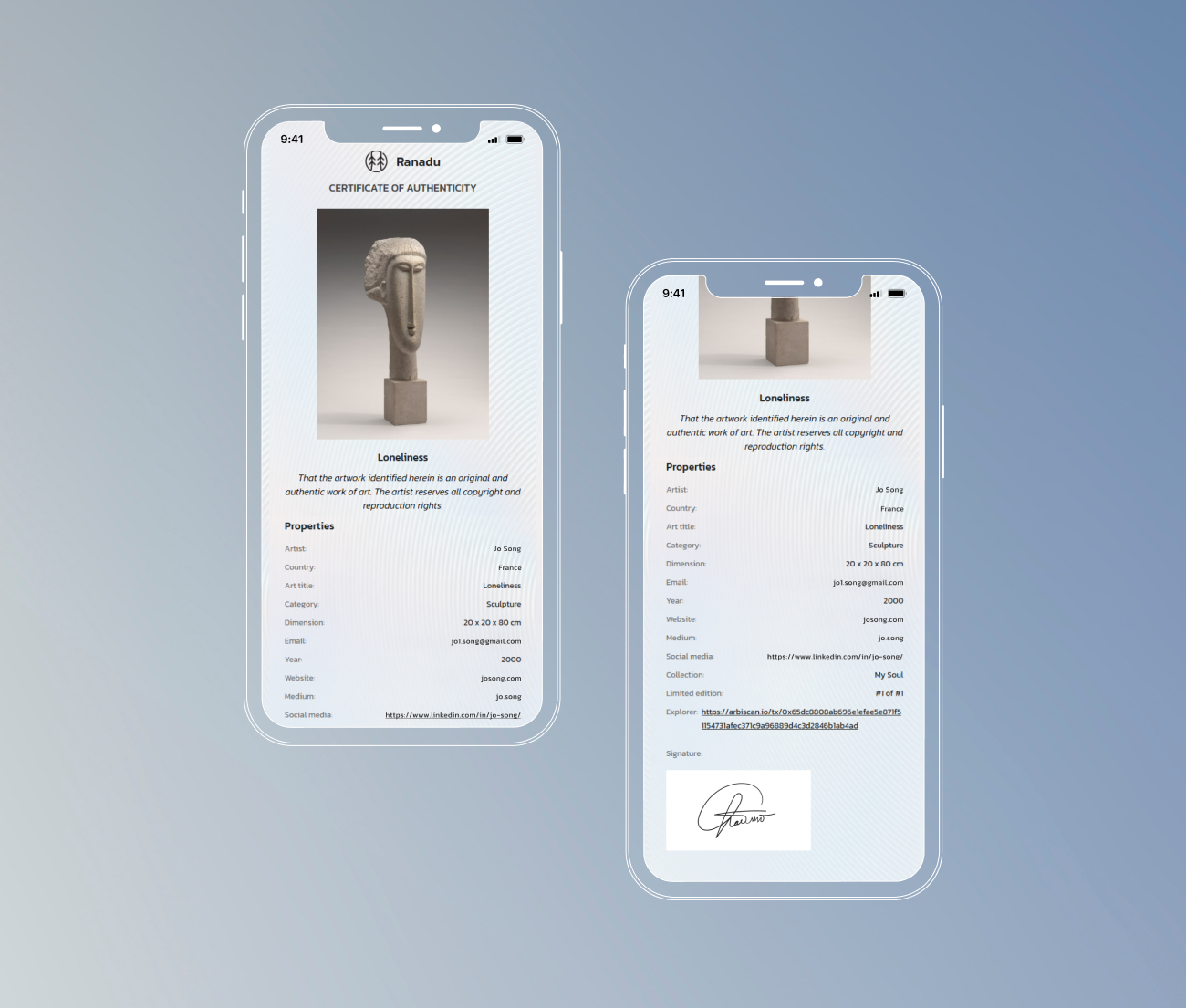
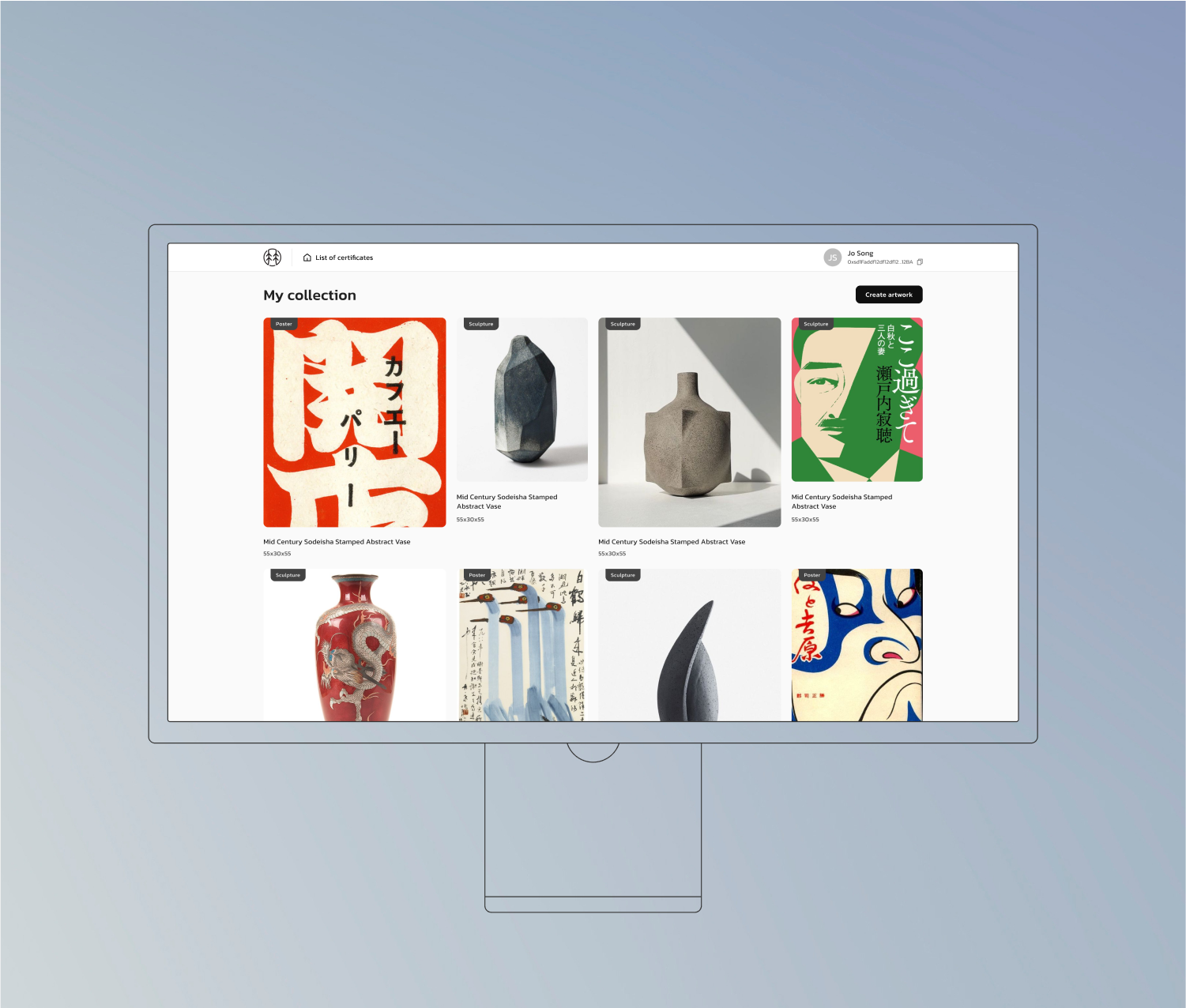
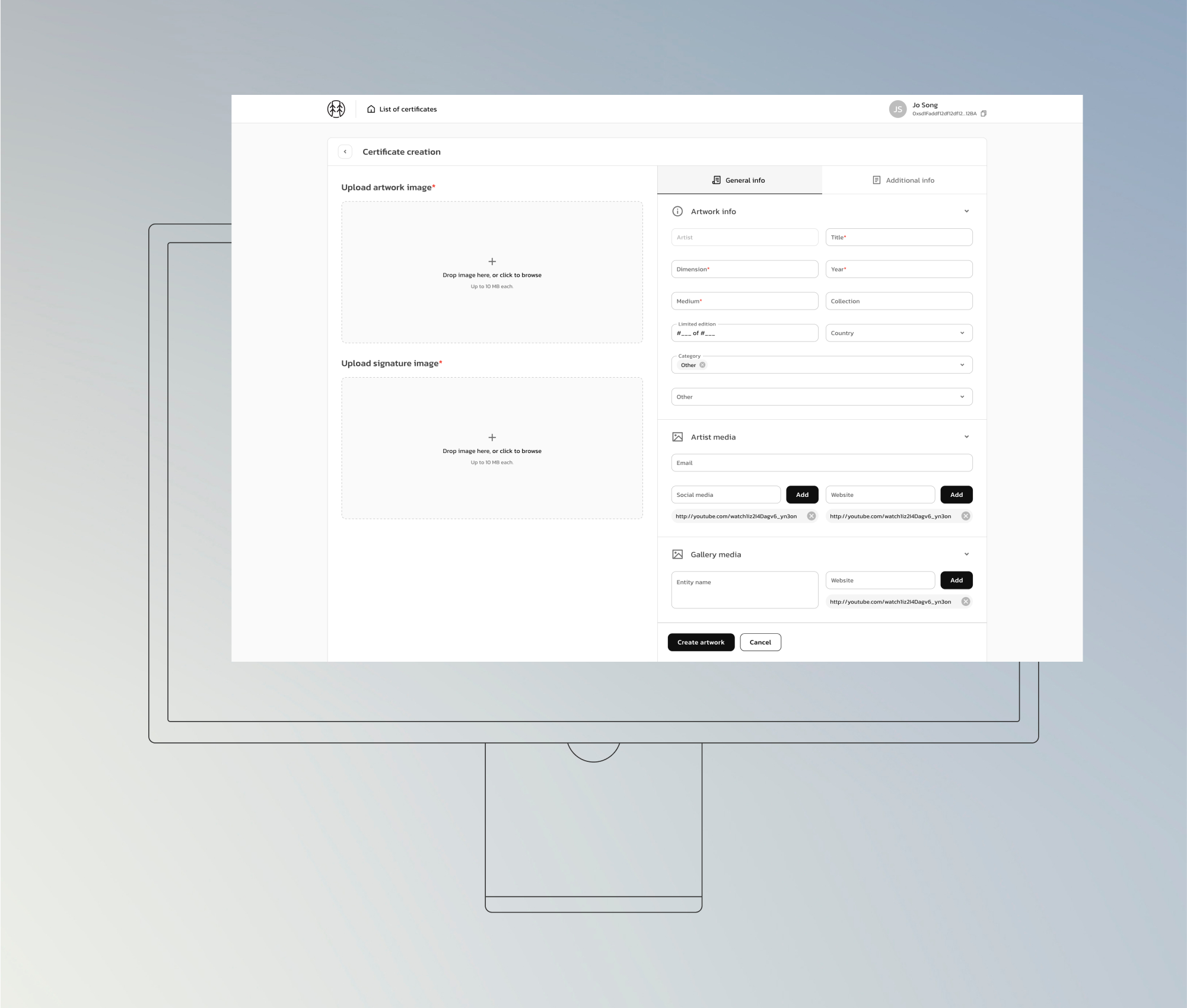
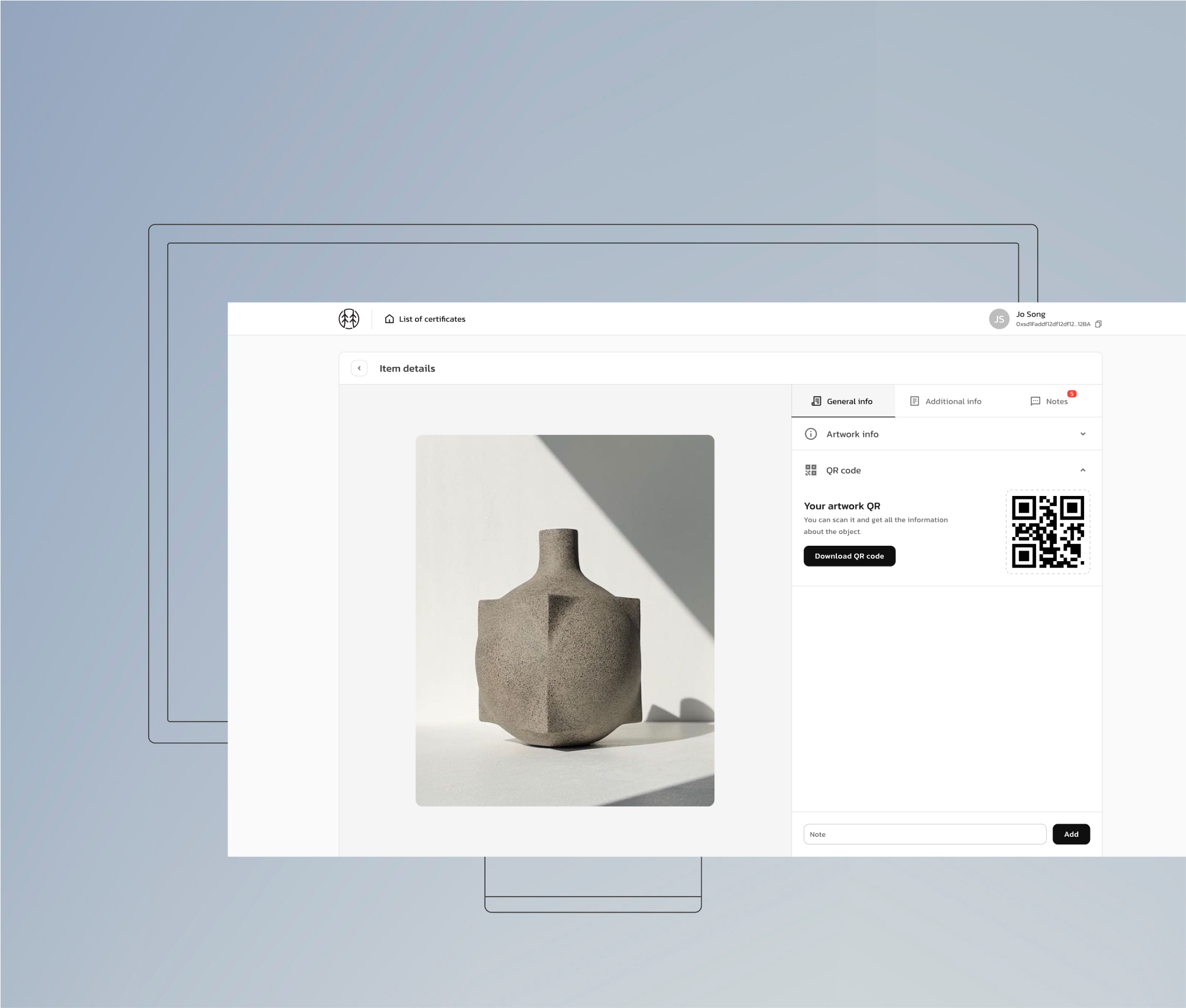
Users can upload photos and details of their artwork to the system and click the “Create” button to generate a certificate.

The certificate is then created and securely signed onto the blockchain.

An uploaded digital copy of the certificate holds essential significance as it is primed for subsequent processes, such as tokenization, which improves security, privacy, and data integrity.

Artworks tokenization

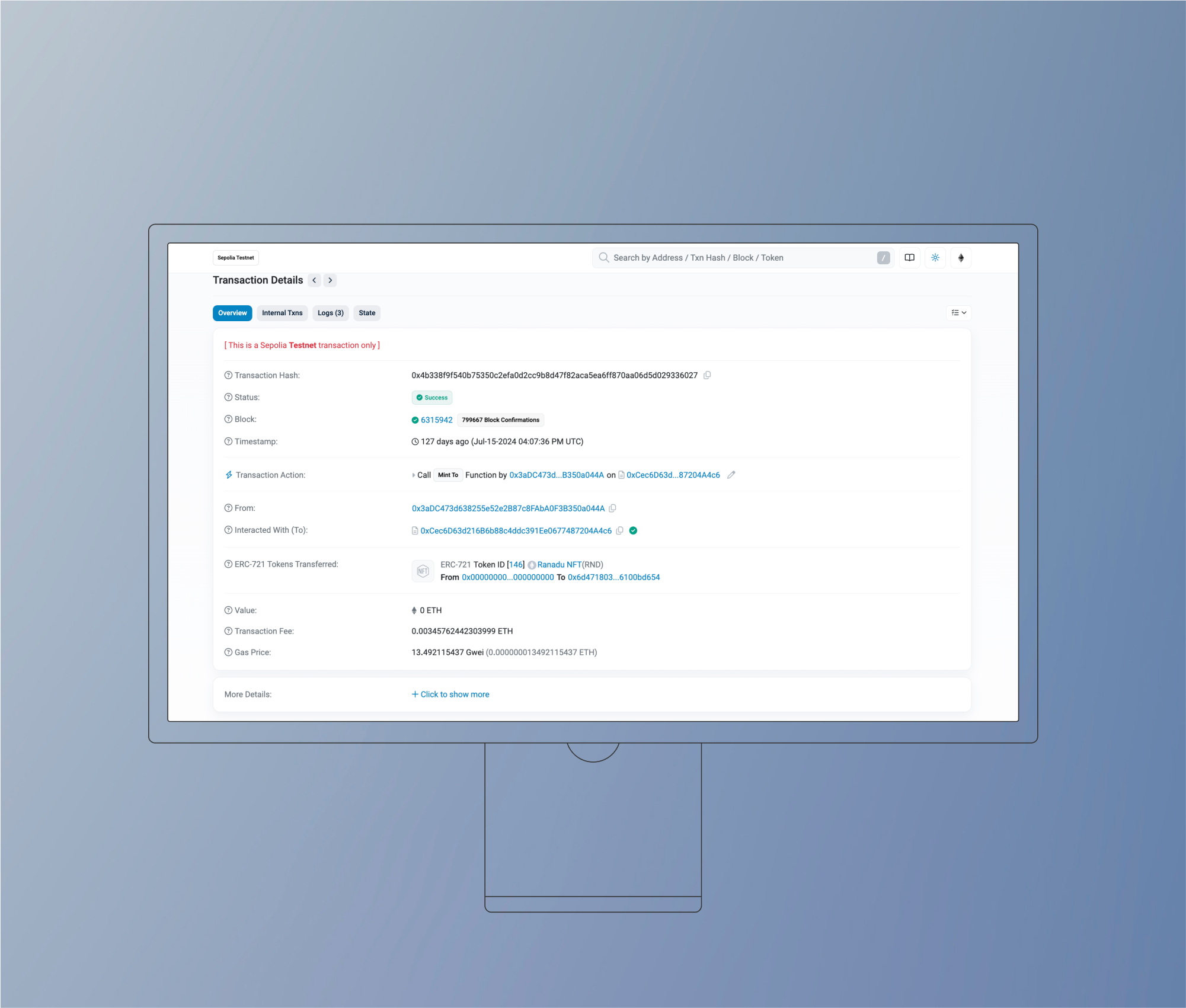
After generating the certificate, the system assigns a unique token to each artwork using standards like ERC-721 (for Ethereum), transforming every piece into a non-fungible token (NFT). 

The token details, including ownership and transaction history, are also recorded on the blockchain and can be easily viewed through a blockchain explorer. This provides complete transparency and allows anyone to verify the authenticity and provenance of the artwork.

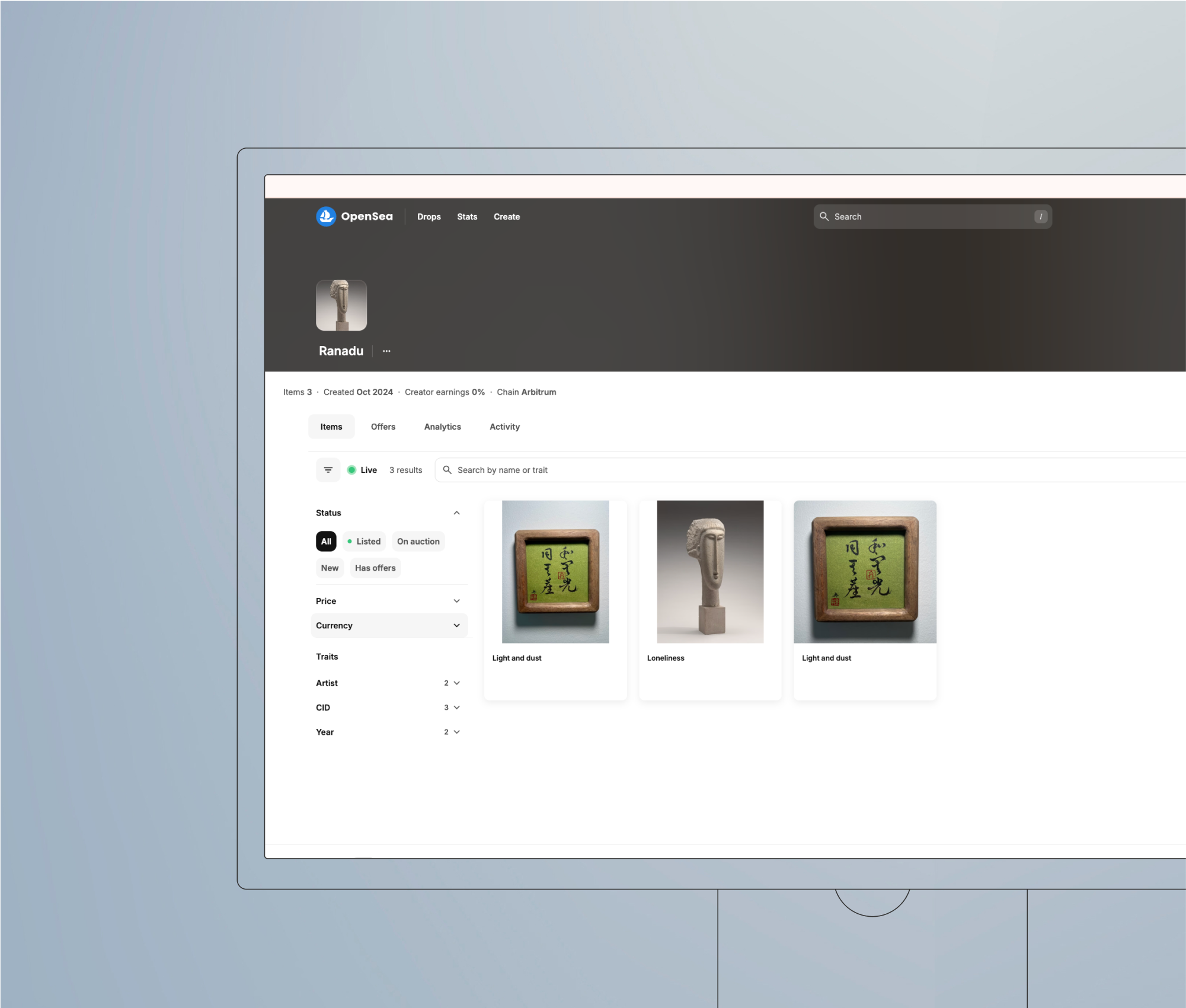
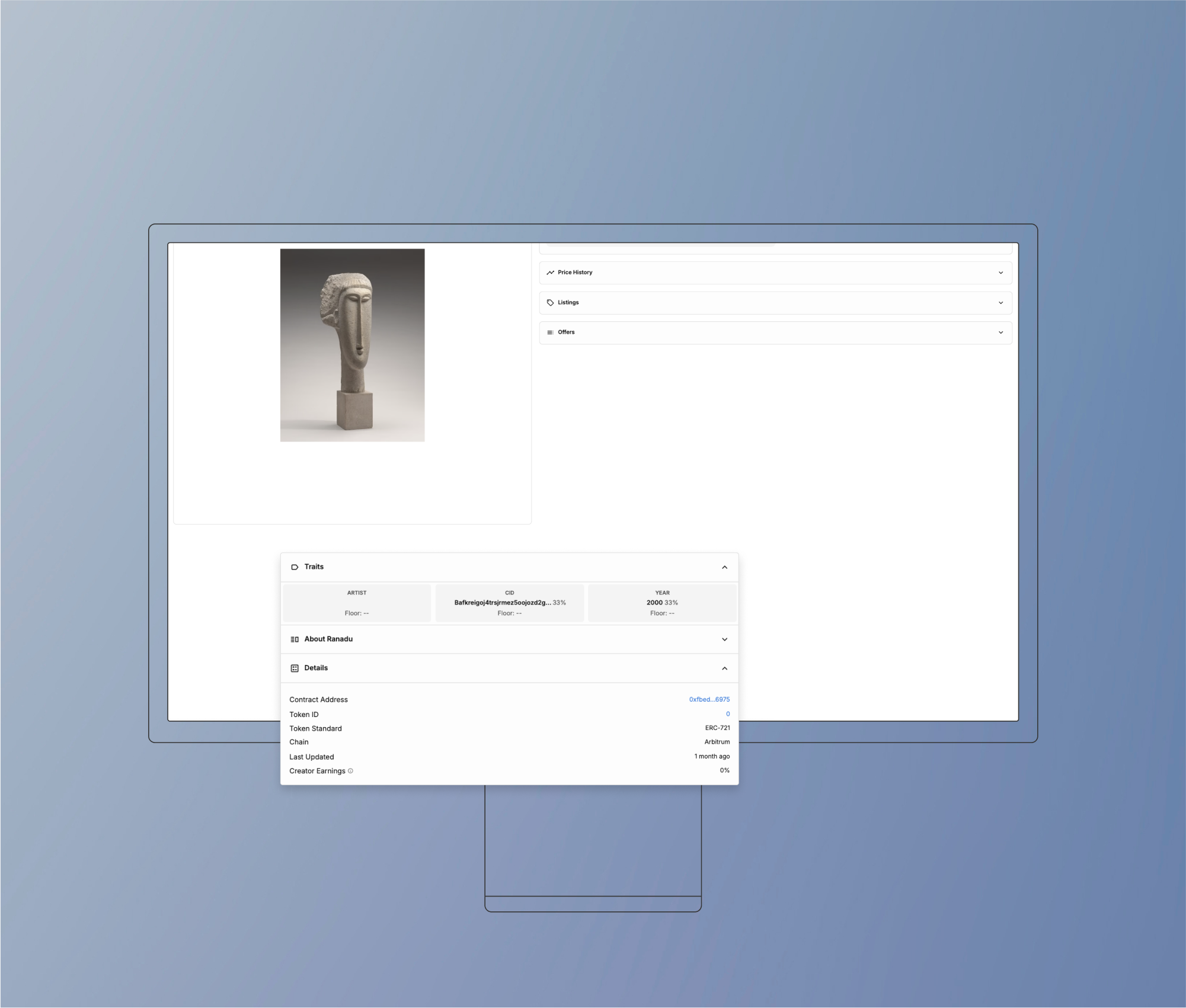
The certificate is also visible on OpenSea, one of the most popular NFT marketplaces. This visibility gives artists greater exposure to a global audience of collectors and buyers and simplifies authenticity verification — further increasing the artwork’s market potential and accessibility.

IPFS-backed certificate

We link an IPFS key to each certificate, which has brought significant benefits to our client. With IPFS, the certificate and artwork details are stored decentralized and securely, making them far less vulnerable to data loss or tampering. Even if centralized servers go down or get compromised, the data stays accessible and intact across the IPFS network.

This way, we add extra trust and reliability to the certificate, so its authenticity and permanence remain intact. It’s a smart way to future-proof and safeguard the artist’s work and its records.

Secure access to certificates

Users receive a QR code or link upon certificate release, which they can share to enable others to easily verify the artwork through a straightforward check on the website. This feature streamlines the verification process, strengthens security by restricting access to sensitive data, and provides a convenient way for owners to prove the authenticity of their artworks to potential buyers or collectors.

Technologies used in similar projects

Web
React, NX, Inversify, RxJs, Apollo-Client, GraphQL, Thirdweb
NestJS, Typescript, NodeJS, AWS, Redis, Mongodb, GraphQL, Web3, BitPay, Jest, BitBucket, Docker, Bitbucket Pipelines, Nginx, Websockets, Thirdweb, Mongoose
Solidity, OpenZeppelin, HardHat, Ethers, Mocha, Chai, Thirdweb

Typical team composition

1

Project Manager

1

Business Analyst

1

UI/UX Designer

2

Web3 Developers

1

QA Developer

Results

Thanks to blockchain technology, each artwork’s data can be tokenized, allowing artists and galleries to easily prove authenticity, eliminate doubts about provenance, and reduce the risk of fraud.

Beyond art, such projects could pave the way for blockchain-based verification models in other industries, such as luxury goods, collectibles, and even official documents. The platform’s core technologies — tokenization and secure blockchain storage — can be adapted to protect and verify a range of valuable assets. This scalability highlights the potential of blockchain not only to simplify art authentication but also to bring similar security and transparency benefits to other sectors.

Estimated project timeline
  • around 6 months

    Contact us

    Book a call or fill out the form below and we’ll get back to you once we’ve processed your request.

    Send us a voice message
    Attach documents
    Upload file

    You can attach 1 file up to 2MB. Valid file formats: pdf, jpg, jpeg, png.

    By clicking Send, you consent to Innowise processing your personal data per our Privacy Policy to provide you with relevant information. By submitting your phone number, you agree that we may contact you via voice calls, SMS, and messaging apps. Calling, message, and data rates may apply.

    You can also send us your request
    to contact@innowise.com
    What happens next?
    1

    Once we’ve received and processed your request, we’ll get back to you to detail your project needs and sign an NDA to ensure confidentiality.

    2

    After examining your wants, needs, and expectations, our team will devise a project proposal with the scope of work, team size, time, and cost estimates.

    3

    We’ll arrange a meeting with you to discuss the offer and nail down the details.

    4

    Finally, we’ll sign a contract and start working on your project right away.

    arrow