Wiadomość została wysłana.
Przetworzymy Twoją prośbę i skontaktujemy się z Tobą tak szybko, jak to możliwe.
Formularz został pomyślnie przesłany.
Więcej informacji można znaleźć w skrzynce pocztowej.
I remember when a “digital upgrade” in fashion meant adding a zoom button to product photos. That was THE innovation!
Fast forward a few years, and brands are building full-on virtual fashion showroom experiences where customers walk through 3D spaces, inspect fabric textures, compare outfits, and even check out — all without stepping into a store.
Now I want you to think about how people consume everything else. Netflix doesn’t hand you a static list and hope for the best, right? Spotify doesn’t expect you to dig through files. We’re used to platforms that learn from our clicks, guide our choices, and adapt instantly. Fashion shoppers expect the same energy. When they land on a website today, they want to explore, to feel present. That’s why the virtual fashion showroom moved from niche experiment to a serious business tool.
Virtual try-on technology alone — a core part of many digital showrooms — is projected to grow from roughly $9 billion in 2023 toward tens of billions by 2030 as brands use it to lift conversions and reduce returns.
So why are fashion brands moving budgets and strategy toward virtual spaces? Here’s what’s driving that decision.
A virtual fashion showroom increases selling capacity without increasing rent, staff, or travel costs. Physical showrooms limit you by square meters and geography. A digital fashion showroom runs 24/7 and presents the entire collection to buyers anywhere.
The logic is simple: when shoppers can rotate garments in 3D, inspect textures, compare outfits, and check out inside the same environment, fewer points of contact are needed, and decisions happen faster. Digital spaces extend physical retail yet dramatically reduce overheads.
A digital fashion showroom removes geographic barriers. Buyers from different regions can enter the same branded space without flights, visas, or showroom appointments. Collections become accessible across time zones, which increases exposure and shortens international sales cycles.
When access becomes global by default, growth stops relying on physical expansion.
Returns drain margins in fashion. Fit uncertainty and unmet expectations drive a large share of them. Detailed 3D visualization and virtual try-on tools can help with purchase confidence because shoppers see proportions, materials, and combinations before buying.
Clearer visualization reduces uncertainty. And reduced uncertainty, in its turn, lowers return rates and protects margins.
Online attention spans shrink every year. Static product grids struggle to hold focus. A virtual fashion showroom turns browsing into exploration, which increases time spent inside the brand environment.
When buyers stay longer, they see more. When they see more, the probability of conversion rises.
Even industry reports prove that immersive digital experiences increase customer engagement and strengthen brand perception in the fashion and luxury sectors.
A virtual fashion showroom gives brands control over presentation. Layout, lighting, sequence of collections, and storytelling become intentional rather than accidental. The environment mirrors the identity of the brand instead of relying on marketplace templates.
Control over the environment translates into stronger brand memory.
Wholesale traditionally depends on physical meetings, sample shipments, and follow-up negotiations. A VR showroom for fashion brands centralizes product data, pricing, and ordering inside one system.
When buyers can examine 3D samples, compare SKUs, review specifications, and place orders directly, the sales loop compresses. Fewer coordination steps reduce operational friction. That reduction improves cash flow timing and planning accuracy across the supply chain.
Faster decisions create predictable revenue cycles.
A virtual fashion showroom works when it exceeds pretty visuals. It combines spatial design, detailed product modeling, and direct commerce functionality inside one environment. The goal is simple — give shoppers enough depth and clarity to move from curiosity to purchase without leaving the moment.
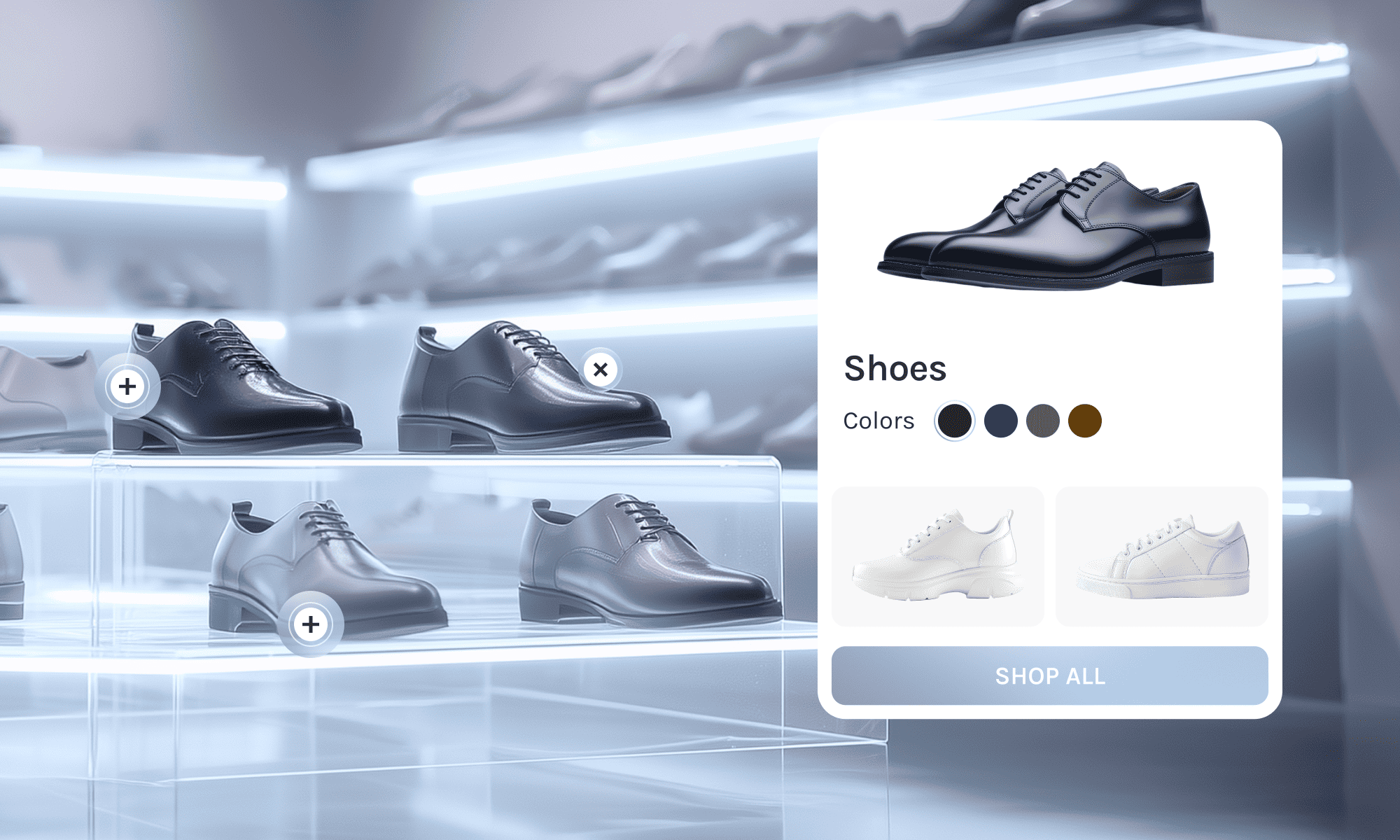
360-degree product views give shoppers control. Instead of relying on two or three studio photos, they can rotate garments, zoom into stitching, inspect fabric texture, and view silhouettes from every angle. That control builds confidence.
In fashion, hesitation often comes from uncertainty. How does the material fall? What does the back look like? How structured is the fit? When a digital fashion showroom allows full 3D inspection, those questions get answered instantly. The result is faster decisions and fewer abandoned carts.
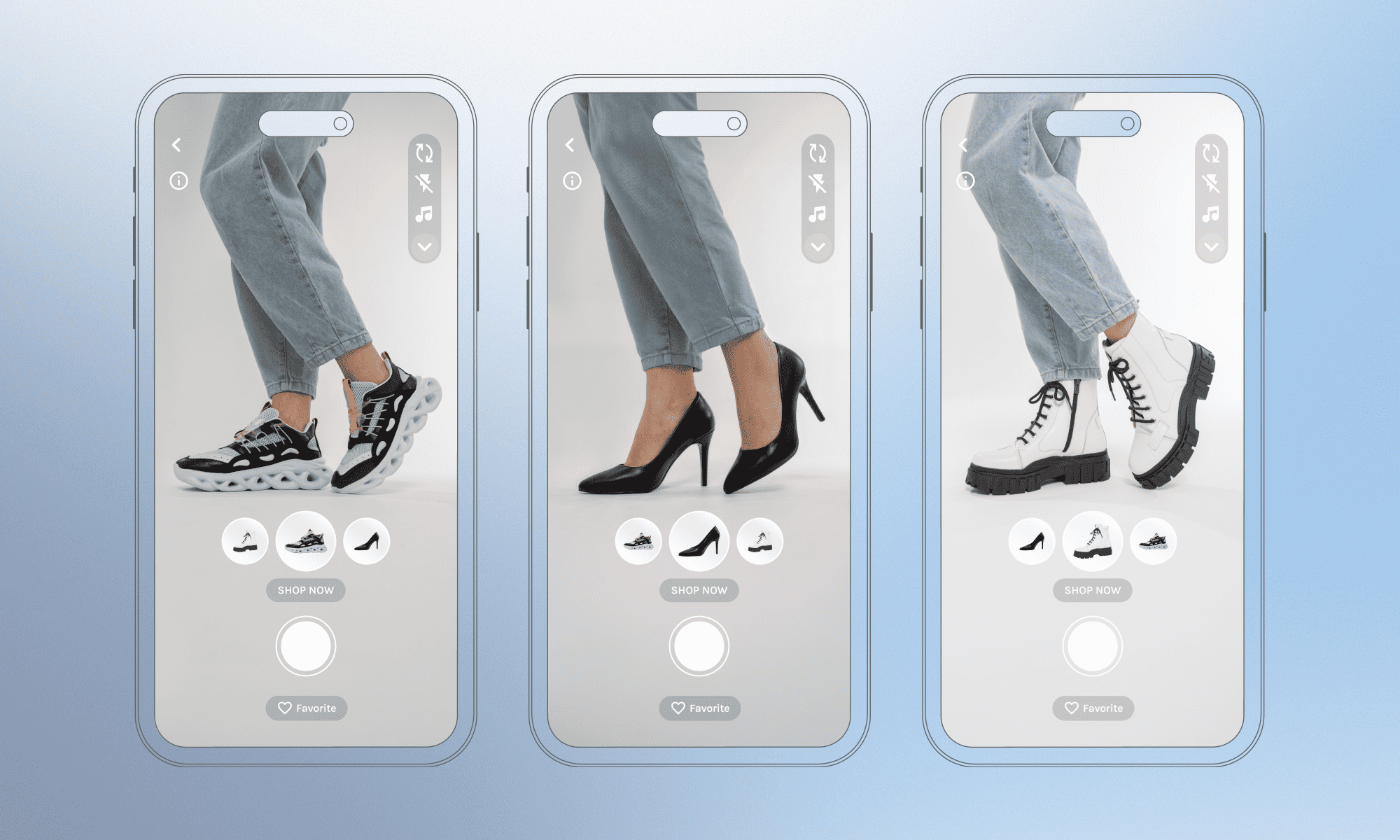
Virtual try-on adds context to the product. Shoppers see how garments sit on a body, how proportions work together, and how pieces combine into a full look. This shifts the decision from guessing to evaluating.
For brands, fit visualization reduces one of the biggest friction points in online fashion — uncertainty. When customers can preview drape, layering, and movement inside a digital fashion showroom, confidence rises and hesitation drops.
Wskazówka: Integrating AR technology can significantly enhance the virtual try-on experience. With AR, customers can superimpose garments onto their bodies in real-time. This gives them a more accurate sense of how clothes will look and fit. For example, I like how Tommy Hilfiger used the idea and introduced an AR try-on mirror in some of their stores:
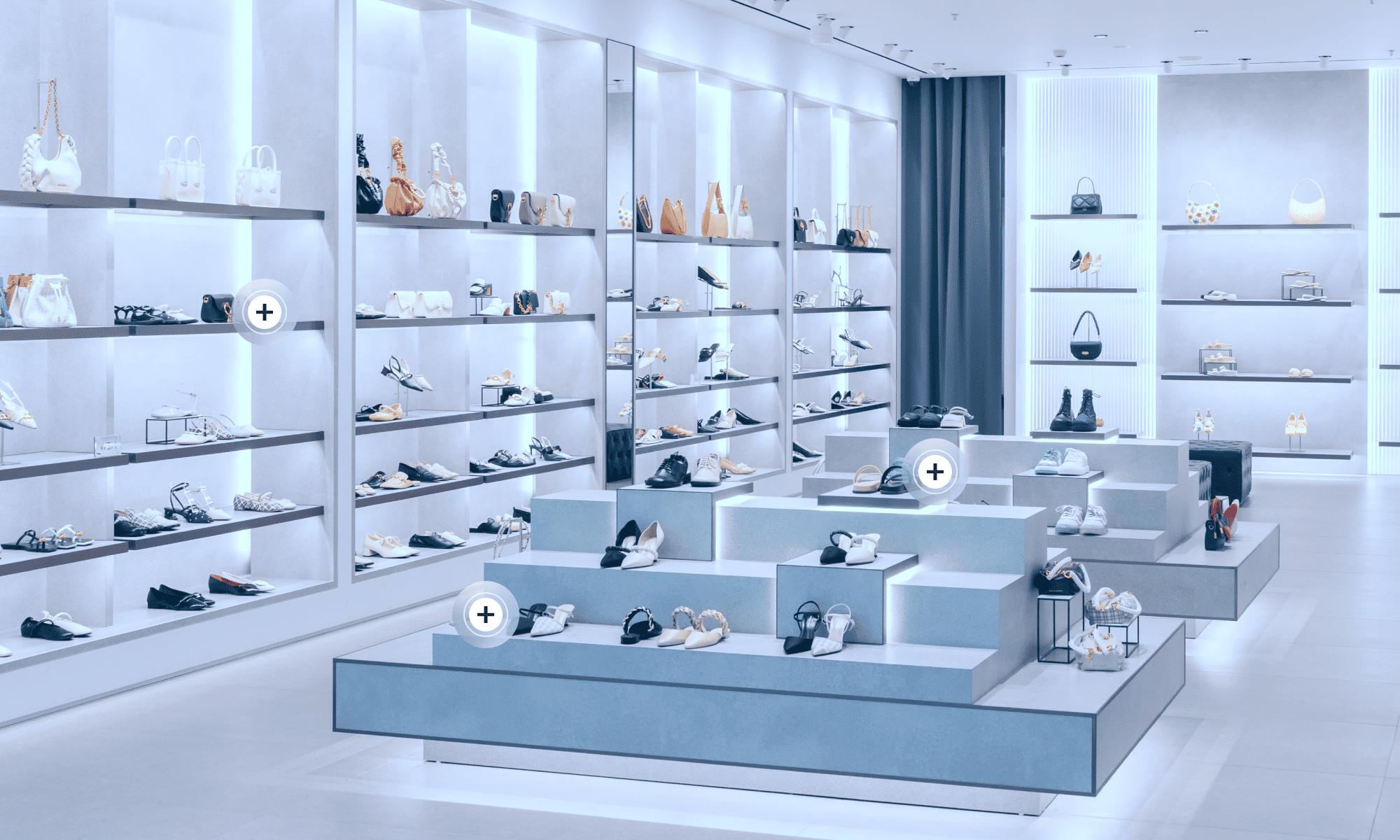
Navigation inside a virtual fashion showroom feels closer to walking through a curated space than scrolling through a catalog. Visitors move between collections, themed halls, or product zones in a way that mirrors physical retail.
That spatial flow encourages discovery. Instead of jumping between disconnected pages, shoppers explore naturally. Exploration increases exposure to more items, which increases cross-sell opportunities and average order value.
Here is how Chanel does it:
Chanel Virtual Retail Store: The Ultimate Metaverse Shopping Experience
A strong digital fashion showroom connects inspiration directly to purchase. Shoppers can add items to a wishlist, compare products, move them into a cart, and complete payment without leaving the environment.
This integration shortens the buying journey. Fewer redirects mean fewer drop-offs. When discovery and checkout live in the same space, the showroom shifts from brand experience to active sales engine.
Recommendation systems inside a VR showroom for fashion brands guide shoppers toward complementary pieces. When someone views a jacket, the system suggests matching footwear or accessories.
This mirrors how stylists work in physical boutiques. Coordinated suggestions increase basket size and help shoppers build complete outfits instead of single-item purchases. The showroom becomes both a presentation tool and a silent sales assistant.
In our projects, we typically implement these recommendation engines using AI models connected to inventory data and user interaction analytics. That allows the digital fashion showroom to adjust suggestions dynamically as visitors explore the space.
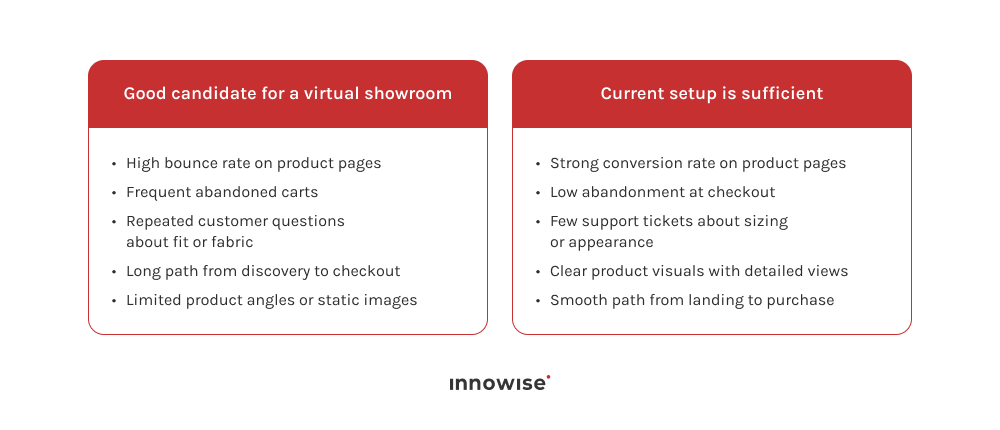
A virtual fashion showroom sounds exciting — futuristic, impressive, great for headlines. But not every brand needs one. For some, it’s a growth accelerator. For others, it’s an expensive distraction. So here is how to understand if you need a virtual showroom:
Start with your existing online journey. How long does it take a customer to move from discovery to checkout? How many clicks separate inspiration from purchase? Where do people drop off?
If your product pages rely on flat images, limited angles, and static descriptions, you may already see hesitation in analytics — high bounce rates, abandoned carts, repeat sizing questions. A digital fashion showroom makes sense when your current setup limits how well customers can understand, explore, and confidently choose your products.
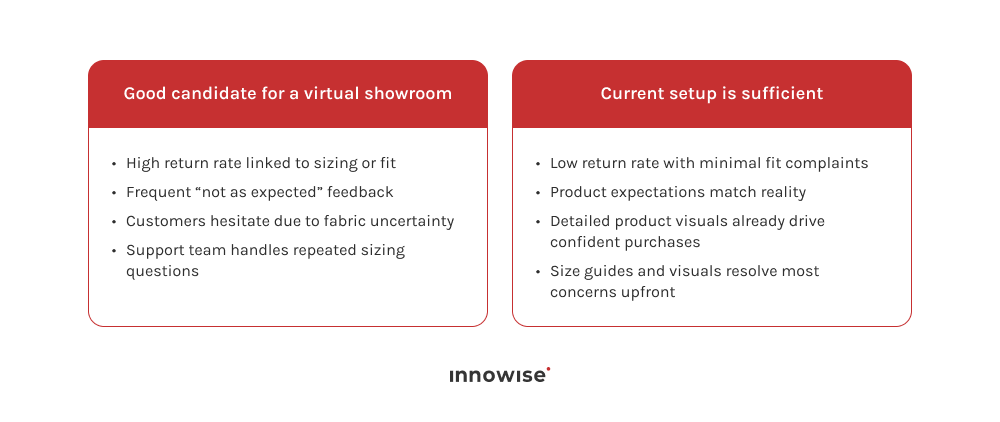
Look at your return data. If a large share of returns links to sizing, fit expectations, or product appearance, that signals a visualization gap. Customers often send items back because the garment looked different on a screen than it did in real life.
When uncertainty drives returns, a virtual fashion showroom with detailed 3D models or fit simulation can close that gap. The decision to invest becomes operational, not aesthetic.
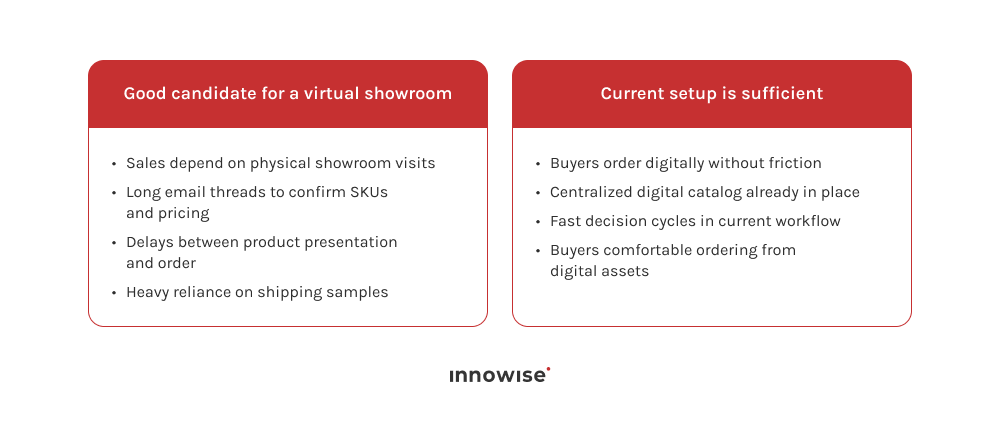
If you work with wholesale partners, examine how they review and order collections today. Do they depend on physical samples, in-person appointments, or long email exchanges to confirm SKUs and pricing?
When buying cycles stretch across multiple touchpoints, digitizing the experience can compress timelines. A VR showroom for fashion brands makes sense when wholesale coordination slows down revenue recognition.
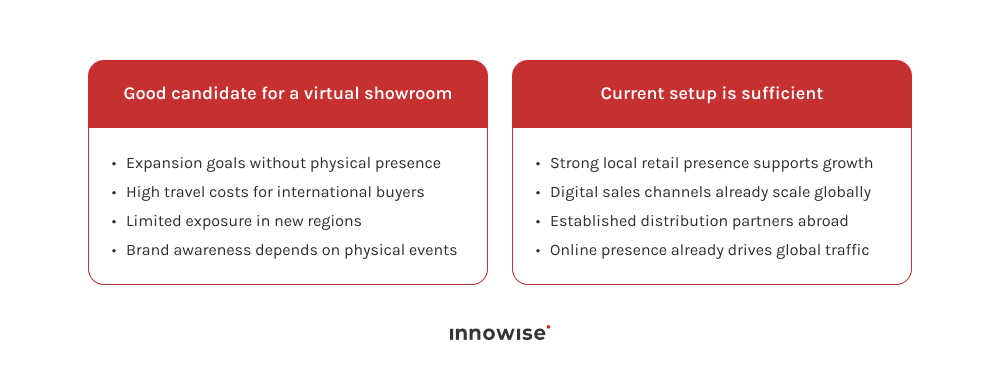
Expansion often stalls because physical presence requires capital and logistics. If your strategy includes entering new markets without opening new stores, digital infrastructure becomes central.
A digital fashion showroom supports cross-border visibility without building physical retail footprints. When growth goals outpace physical capacity, virtual space fills that gap.
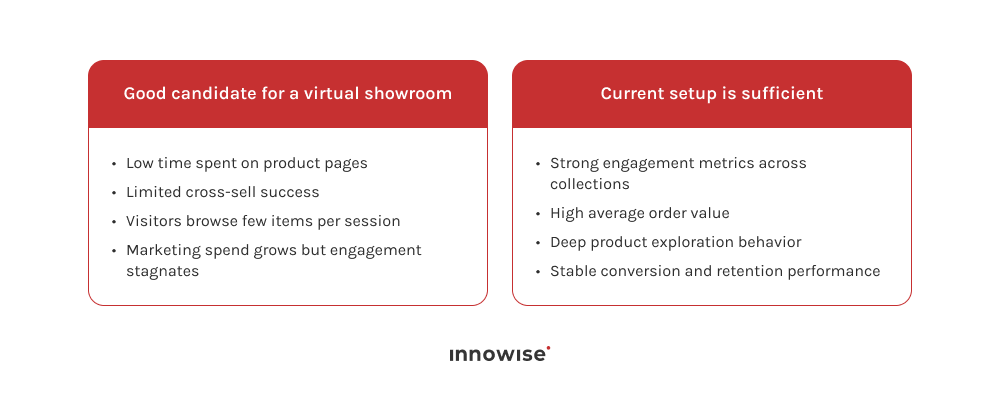
Time on site, product interaction depth, and repeat visits reveal whether customers feel engaged or just browsing quickly. If engagement metrics stay flat despite marketing investment, the format of the experience may be the issue.
A virtual fashion showroom introduces spatial interaction, curated storytelling, and deeper exploration. When standard eCommerce fails to hold attention, changing the format often shifts behavior.
Don’t rush to search for vendors just yet. Before that, you need to define what you want to sell better, faster, or at higher margins. Clear priorities will help you prevent overbuilding and keep your investment focused on measurable outcomes.
First, identify which products will benefit most from 3D visualization and spatial presentation. Complex garments with structure, layered outfits, footwear, or high-margin hero pieces usually deliver the strongest impact inside a digital fashion showroom. These items justify the cost of detailed 3D modeling and fit simulation.
Next, review performance data. Look at bestsellers, high-return SKUs, and products with strong engagement but low conversion. Those categories often reveal where additional visualization could influence buying decisions.
Launching with a focused selection — rather than the full catalog — will reduce production costs and allow you to test performance before scaling the VR showroom for fashion brands across all collections.
Selecting the right technology partner is everything. The showroom must align with your brand’s needs, not just dazzle with flashy features. Look for a partner that understands the fashion industry and can provide both the tech stack and expertise to build a showroom that blends your website, inventory systems, and eCommerce platform into a seamless experience. They should also have hands-on experience integrating AR/VR, 3D rendering, and AI recommendation systems for a fluid, end-to-end shopping experience.
Don’t underestimate the importance of a reliable tech partner who can scale with you. The right team will be agile enough to pivot as your needs evolve (whether that’s adding new features or improving the backend).
User experience can be fairly attributed as the deciding factor between purchase and pass. If a virtual showroom feels clunky or confusing, customers won’t stay long enough to complete a purchase. Focus on intuitive navigation. The more natural it feels to explore products, the better the conversion rate. Make sure the showroom environment is easy to load, simple to navigate, and includes interactive elements like zoom, rotation, and item comparisons.
Incorporate customer behavior insights when designing layouts. Ensure that high-demand collections are front-and-center and that there’s a clear path to checkout. Testing the showroom thoroughly with real users before launch can help identify friction points and improve user flow.
For a virtual fashion showroom to work effectively, it must neatly integrate with your existing eCommerce and inventory management systems. This gives you real-time data synchronization for product availability, pricing, and orders. Adding payment gateways also creates a linear, frictionless experience from exploration to purchase.
Backend integration keeps your virtual showroom in sync with reality. Stock levels, prices, product availability, and orders update in real time. That means customers never see items that are already sold out and never face pricing surprises at checkout.
This prevents overselling, reduces customer frustration, and protects revenue. When inventory and transactions stay accurate, operations run smoother and sales remain predictable.
Testing is key (it always has been). Before going live, aggressively test the showroom for bugs, glitches, and usability issues. Start with a small internal group, then expand to a wider audience. The feedback gathered during this phase will help refine the showroom and ensure the system can handle large numbers of visitors.
After launch, monitor user behavior closely. Track which areas of the showroom get the most attention, how long customers stay, and where they drop off. Use this data to continuously refine the user experience, update the showroom with new collections, and make adjustments based on real-world behavior.
Wskazówka: As immersive technologies evolve, think beyond the initial launch. Your virtual showroom can grow into a broader digital ecosystem — from AR-enhanced retail experiences and live digital launches to interactive brand communities. When planned strategically, it becomes a long-term engagement platform, not just a one-time sales tool.
A great virtual showroom won’t drive itself. You have to strategically promote it across all marketing channels: email, social media, paid ads, and in-store promotions. Use teasers, behind-the-scenes looks, or influencer partnerships to generate buzz. Emphasize the interactive, immersive nature of the experience and encourage visitors to explore.
Additionally, consider offering exclusive early access to certain products or discounts for showroom visitors to drive traffic and increase engagement.
The future of virtual fashion showrooms is about to get a whole lot more immersive. As technology advances, we’ll see AI-driven experiences that anticipate shoppers’ preferences in real-time, offering personalized recommendations and dynamic product displays. Expect more realistic virtual try-ons, where customers can see how clothes move and fit without ever stepping into a store. Augmented reality will further blur the lines between online and in-store shopping, allowing customers to interact with fashion in ways we haven’t yet imagined.
At Innowise, we’re already building these next-gen experiences. We keep up with trends, and, I dare say, even shape them. We design immersive commerce environments tied directly to business performance. Every feature supports clear goals: higher conversion, lower return rates, and faster revenue growth.


Wiadomość została wysłana.
Przetworzymy Twoją prośbę i skontaktujemy się z Tobą tak szybko, jak to możliwe.
Rejestrując się, wyrażasz zgodę na naszą Polityką Prywatności, w tym korzystanie z plików cookie i przekazywanie Twoich danych osobowych.