Die Macht des Data Mapping im Gesundheitswesen: Vorteile, Anwendungsfälle und zukünftige Trends. Mit der rasanten Expansion der Gesundheitsbranche und der sie unterstützenden Technologien wird eine immense Menge an Daten und Informationen erzeugt. Statistiken zeigen, dass etwa 30% des weltweiten Datenvolumens auf die Gesundheitsbranche entfallen, mit einer prognostizierten Wachstumsrate von fast 36% bis 2025. Dies zeigt, dass die Wachstumsrate weit über der anderer Branchen wie Fertigung, Finanzdienstleistungen sowie Medien und Unterhaltung liegt.

Die wichtigsten ERP-Trends 2026: Innovationen und Strategien für Unternehmenswachstum

Aktualisiert: Jan 23, 202610 Minuten Lesezeit

Kernpunkte

  • ERP market news today points to rapid rollouts of AI copilots, industry cloud packs, and tighter API security.
  • Strong ERP market growth highlights the importance of modern platforms for companies wanting to stay ahead of future trends in ERP.
  • Cloud-first is the new default. Companies are ditching on-premise systems for flexible, scalable, and cost-effective cloud ERP setups.
  • Zero Trust, API protection, and AI-powered threat detection are must-haves as ERP systems become more connected.
  • Sustainability takes center stage. Modern ERP solutions now track carbon footprints, resource use, and ESG compliance out of the box.

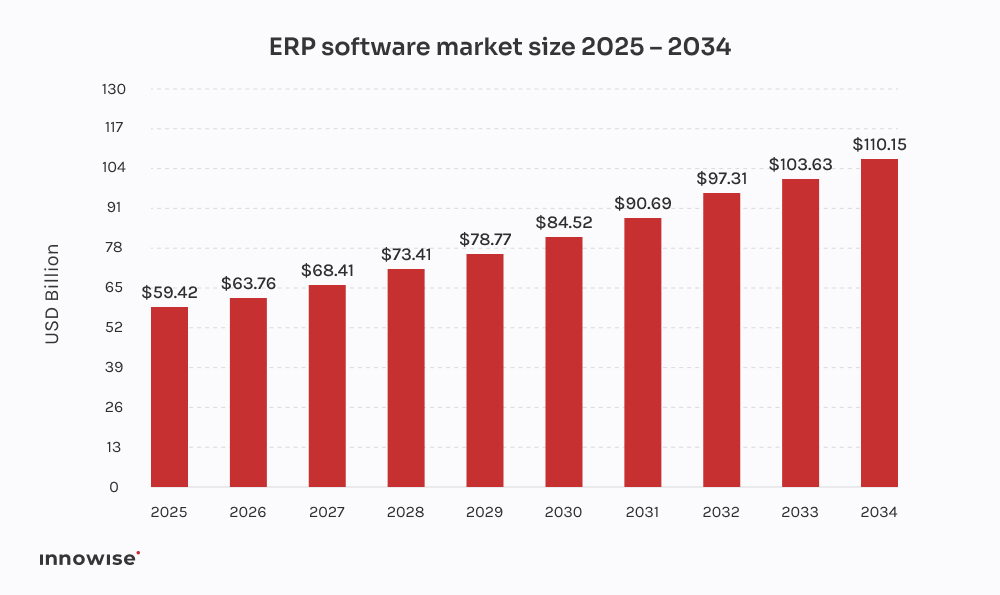
In 2025, the global ERP software market hit $59.42 billion and is projected to grow 7.1% per year through 2034. That surge in ERP market share shows just how crucial ERP is for streamlining operations, improving decision-making, and keeping up with fast-changing business demands.

ERP software market growth chart from 2025 to 2034 in USD billions
To stay relevant these days, modern ERP solutions are tapping into AI, big data, IoT, and other emerging tech. In this article, I’ll walk you through these ERP industry trends​ and explain why maßgeschneiderte ERP-Lösungen can sometimes handle real operational complexity better than a standard product.

Aktuelle Trends bei ERP-Systemen

From AI to IoT to blockchain, these ERP trends are already changing how these systems work. This year is set to bring even more automation, sharper forecasting, and efficiency that truly changes the game. And as every day grows more competitive, having that extra edge becomes crucial.

Cloud-basierte ERP Lösungen

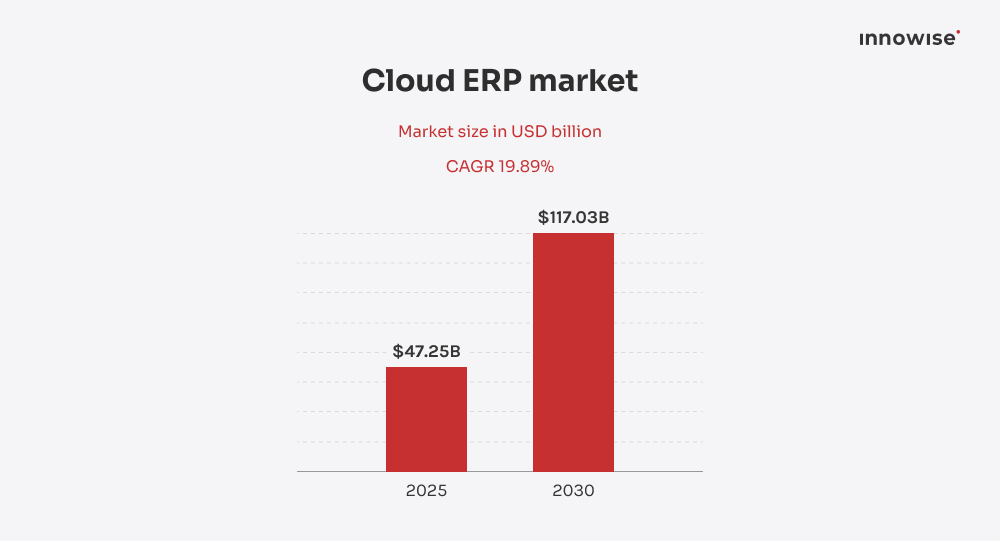
Cloud ERP solutions remain at the forefront of ERP trends 2026. It’s flexible, easy to scale, and doesn’t drain your budget with hardware or upkeep. The market reached around $47 billion in 2025 and is on track to hit $117 billion by 2030, growing fast at nearly 20% a year.

Cloud ERP market growth chart from 2025 to 2030 in USD billions

The main drivers for shifting infrastructure to the cloud ERP are the ability to slash maintenance costs and give your teams access to the system from anywhere. It keeps work flowing regardless of geography, creating always-on companies that stay connected and resilient through any disruption.

We’re also seeing businesses turning to multi-cloud and two-tier setups. The premise is simple enough: a strong core ERP runs at the center, while lighter cloud versions support regional offices or specific units. This setup keeps processes aligned across the company and gives local teams room to adapt to their own markets, currencies, and regulations.

Connected operations and IoT-driven real-time data

IoT gives ERP systems a live connection to what’s really happening on the ground. Machines, sensors, and warehouses feed data straight into the system, so teams always have the latest numbers in front of them instead of waiting for someone to update a spreadsheet.

For instance, a manufacturer can track equipment performance in real time, get alerts when something looks off, and schedule maintenance before a breakdown stops production. In logistics, connected warehouses update stock levels automatically, trigger restocks, and keep deliveries on schedule without manual checks.

With all that data coming in live, teams can react faster, spot problems early, and make decisions based on what’s happening right now.

AI-native ERP and GenAI copilots

ERP trends like AI and ML are changing systems by bringing deeper analysis, predictive insights, and automation to the table. Take SAP Business AI as a good example. It already includes over 200 AI-powered use cases and plans to double that by the end of 2025. Companies use them to forecast demand, manage inventory, streamline production, and improve customer service.

With natural language processing and machine learning, systems start to understand context and make better recommendations. Generative AI is quickly becoming a built-in feature, too. Gartner expects that by 2028, around 80% of ERP systems will include generative AI and predictive analytics as standard.

Composable and modular ERP architectures

One of the notable ERP software trends 2026 is composable ERP, which gives businesses room to move. Instead of running one big, rigid system, you build your setup from smaller modules that connect through APIs. Each piece handles its own task and can be added, replaced, or upgraded without breaking the rest.

Let’s say your company runs a solid ERP core for finance and supply chain. You might plug in a separate tool for e-commerce, another for ESG reporting, and a forecasting app that uses AI to predict demand. All of them talk to each other through defined connections, so you get a nice and steady workflow instead of scattered tools.

This modular setup helps you respond faster to change. You can try new software without long-term commitments, scale successful pilots, and retire what no longer fits.

Industry-specific and vertical cloud ERP

More businesses are choosing ERP systems built for their industry instead of trying to adapt a generic one. The market for these vertical solutions is growing fast, from about $169 billion in 2025 to nearly $549 billion by 2035.

These platforms come with ready-made workflows, reports, and compliance tools for specific fields like Fertigung, healthcare, logistics, or retail. Platforms such as Infor CloudSuite Healthcare or SAP’s industry cloud already include the terms, processes, and logic those teams use every day.

Most companies use these systems alongside a core ERP. The main system handles finance and shared operations, while the industry module takes care of the details like lab management, fleet tracking, or shop-floor control.

Blockchain für mehr Sicherheit und Transparenz

A big trend ERP teams are watching right now is integrating blockchain into ERP systems. It significantly enhances security and transparency in business operations. Industry leaders like SAP and Microsoft are already on board, using blockchain to protect sensitive data and keep critical info safe.

Dank ihres dezentralen und manipulationssicheren Designs macht Blockchain Transaktionen betrugssicher und fehlerfrei. Außerdem verbessert es das Identitätsmanagement, reduziert unbefugten Zugriff und garantiert die Produktauthentizität. Indem es die Schwächen traditioneller zentralisierter Datenbanken behebt, bringt Blockchain Vorteile – insbesondere für Branchen, in denen Compliance und Überprüfbarkeit nicht verhandelbar sind.

Erweiterte Datenanalyse und Big Data

Among the key ERP software trends, systems are getting a lot smarter. With advanced analytics and big data, modern ERP platforms now give businesses real-time insights that drive faster, more confident decisions. They crunch massive datasets fast, so you can predict demand spikes, optimize logistics, and even boost HR tasks. In healthcare, for example, they make patient scheduling and resource planning a breeze. For online retailers, it’s all about smarter pricing strategies and slashing inventory costs. This ERP system trend turns your system into a flexible, future-ready solution.

ERP-Sicherheitstrends und Cybersicherheitsmaßnahmen

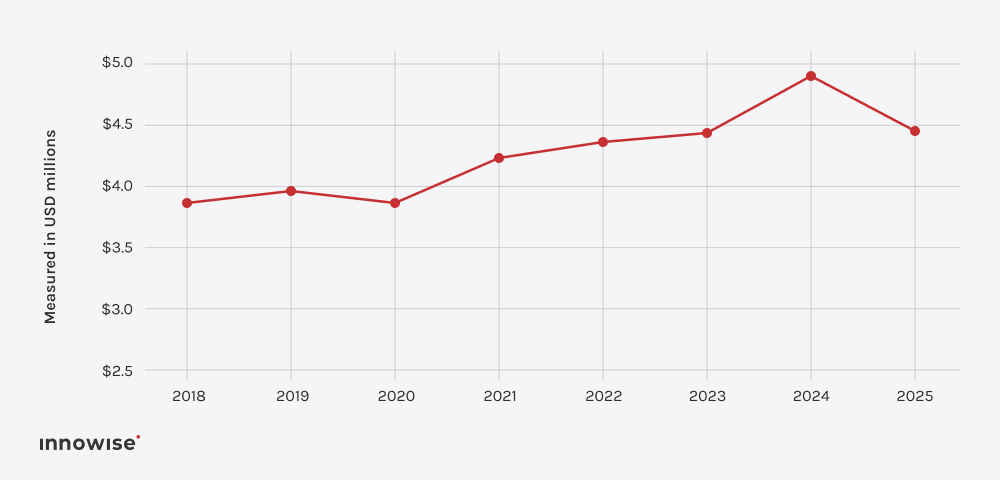
With ERP systems becoming more connected and accessible, they’re also more exposed to cyber threats. IBM’s 2025 report put the global average cost of a data breach at $4.4 million, which, while slightly lower than the previous year, is still an enormous hit for any business. It shows how critical it is to protect company data, customer information, and the ERP’s internal logic from being compromised.
The global average cost of a data breach fell
Hier ist ein Blick auf einige der wichtigsten Sicherheitstrends und -maßnahmen, die ERP heute prägen:

KI und ML in der Sicherheit

KI- und ML-Tools helfen dabei, ungewöhnliche Aktivitäten und potenzielle Verstöße in Echtzeit zu erkennen. Sie können Muster erkennen und Bedrohungen viel schneller erkennen als herkömmliche Sicherheitsmethoden wie Firewalls, IDS oder ACLs.

Zero-trust security models

With a zero-trust model, nobody is trusted by default — whether they’re inside or outside the company. Every access request undergoes strict verification, reducing insider threats and enhancing overall security.

Cloud-Sicherheits-Upgrades

For cloud-based ERPs, technologies like shared responsibility models, Secure Access Service Edge (SASE), and Cloud Access Security Brokers (CASB) add extra layers of protection to keep data safe.

Microservices und API-Sicherheit

As ERPs become more modular, securing the APIs that connect all components is essential. Strong API security prevents unauthorized access and data breaches, ensuring that ERP systems and sensitive information remain protected.

Fokus auf Nachhaltigkeit und ESG

Nachhaltigkeit und ESG have become one of the biggest ERP market trends 2026. With new rules like Europe’s CSRD pushing for more transparency, businesses need clear, reliable data on how they’re performing.

Modern ERP systems help keep everything on track. They can record energy use, carbon emissions, and waste across departments and map it to standards like ESRS and GRI. Instead of juggling spreadsheets, teams get one view of their footprint that’s ready for both decisions and audits.

Outdated ERP systems can really hold businesses back, causing bottlenecks and making it tough to get the insights you need when it matters most. We bring in fresh ERP technology trends to tackle these issues head-on, smoothing out data flow, speeding up processes, and helping businesses make faster, smarter decisions.
Michael Labutin
Leiter der ERP-Abteilung

Bleiben Sie flexibel mit einer flexiblen ERP-Lösung, die mit Ihrem Unternehmen wächst.

Warum es für Unternehmen wichtig ist, mit zukünftigen ERP-Trends Schritt zu halten

With tech moving at lightning speed, ERPs have grown from basic resource managers into strategic tools. They now play a central role in how companies push their digital transformation forward, especially in industries where a strong ERP foundation directly supports long-term growth. Keeping tabs on ERP industry trends is essential if you want to sharpen operations, trim expenses, and stay one step ahead of the competition.

Effizienz maximieren

Mit intelligenten ERP-Funktionen wie KI-gesteuerter Automatisierung und prädiktiver Analytik können Unternehmen ihre Arbeitsabläufe wirklich optimieren und zusätzliche Schritte einsparen. Durch die Einführung dieser Upgrades können sich Unternehmen auf strategisches Wachstum konzentrieren und gleichzeitig ihre Betriebsabläufe optimieren.

Kosten reduzieren

Dank moderner ERP-Funktionen erhalten Unternehmen einen 360-Grad-Überblick über alle Betriebsabläufe, um jede Ressource optimal zu nutzen. Diese Tools helfen dabei, unnötige Ausgaben zu senken, kostspielige Fehler zu vermeiden und die Lieferkette schlank zu halten – was die Rentabilität deutlich steigert.

ERP Skalierbarkeit für die Zukunft

As businesses grow, so do their needs. Scalable ERP systems make it easy to handle more data, add new features, and bring on extra users without missing a beat. Staying in sync with ERP software trends means you’re always ready to scale up and stay flexible as the market shifts.

Kundenorientierung

Bei den heutigen ERP-Systemen steht der Kunde im Mittelpunkt, mit integrierten CRM-Tools und personalisierten Einblicken. Diese Konfiguration hilft Unternehmen, ihre Kunden wirklich kennenzulernen, Bedürfnisse vorherzusehen und ihre Angebote entsprechend anzupassen. Auf diese Weise können Sie sich schneller anpassen, die Kundenzufriedenheit steigern, Loyalität aufbauen und sich einen soliden Vorsprung auf dem Markt verschaffen.

Zusammenfassung

In der Zukunft von ERP geht es darum, flexibel zu bleiben und vorauszudenken. Wenn Sie über Trends bei ERP-Software wie Cloud-Lösungen, KI, erweiterte Analysen und die Entwicklung benutzerdefinierter ERP-Lösungen auf dem Laufenden bleiben, sind Sie auf langfristigen Erfolg vorbereitet – egal, wie der Markt morgen aussieht.

FAQ

ERP-Systeme sind ein Wendepunkt für Unternehmen, die versuchen, nachhaltiger zu werden. Mit Echtzeit-Einblicken können Sie den Energieverbrauch im Auge behalten, Abfall reduzieren und Ihre Lieferketten umweltfreundlicher verwalten. Durch die Verknüpfung aller Ihrer Abteilungen machen es ERP-Systeme einfacher, Ihren CO2-Fußabdruck zu verringern und diese Nachhaltigkeitsziele zu erreichen.

Definitely. By 2026, ERP systems will be way more user-friendly. With new tech like AI and smarter design, vendors are making these systems easier to use — simpler navigation, personalized dashboards, and mobile setups. All these upgrades aim to get more people on board, boost productivity, and make ERP systems accessible to everyone on the team.

Staying up-to-date on trends in ERP keeps you in the game. New features can make your operations smoother, trim costs, and lead to smarter decisions. By staying in the loop, you can tap into the latest ERP tools to drive growth and roll with market changes without missing a beat.

Leitung von ERP-Beratern

Kiryl kennt SAP in- und auswendig. Er ist die erste Adresse, wenn ein Kunde nicht nur eine Implementierung, sondern eine intelligente Konfiguration benötigt, die zu seinen einzigartigen Prozessen passt - mit einem klaren Weg von der Komplexität zur Klarheit.

Inhaltsübersicht

    Contact form

    Anruf buchen oder füllen Sie das Formular aus. Wir kontaktieren Sie, sobald wir Ihre Anfrage bearbeitet haben.

    Sprachnachricht senden
    Datei beifügen
    Datei hochladen

    Sie können 1 Datei mit bis zu 2 MB anhängen. Gültige Dateiformate: pdf, jpg, jpeg, png.

    Mit dem Klicken auf Senden erklären Sie sich damit einverstanden, dass Innowise Ihre personenbezogenen Daten gemäß unserer Datenschutzrichtlinie verarbeitet, um Ihnen relevante Informationen bereitzustellen. Mit Angabe Ihrer Telefonnummer stimmen Sie zu, dass wir Sie per Sprachanruf, SMS oder Messaging-Apps kontaktieren. Es können Gebühren für Anrufe, Nachrichten und Datenübertragung anfallen.

    Sie können uns auch kontaktieren
    Jetzt contact@innowise.com
    Wie geht es weiter?
    1

    Sobald wir Ihre Anfrage erhalten und geprüft haben, melden wir uns bei Ihnen, klären erste Fragen und unterzeichnen bei Bedarf ein NDA, um die Vertraulichkeit zu gewährleisten.

    2

    Sobald wir Ihre Anfrage erhalten und geprüft haben, melden wir uns bei Ihnen, klären erste Fragen und unterzeichnen bei Bedarf ein NDA, um die Vertraulichkeit zu gewährleisten.

    3

    Wir vereinbaren einen Termin, um das Angebot gemeinsam zu besprechen und alle Details festzulegen.

    4

    Abschließend unterzeichnen wir den Vertrag und starten umgehend mit der Umsetzung Ihres Projekts.

    Pfeil