The power of data mapping in healthcare: benefits, use cases & future trends. As the healthcare industry and its supporting technologies rapidly expand, an immense amount of data and information is generated. Statistics show that about 30% of the world's data volume is attributed to the healthcare industry, with a projected growth rate of nearly 36% by 2025. This indicates that the growth rate is far beyond that of other industries such as manufacturing, financial services, and media and entertainment.

Top ERP trends 2026: innovations and strategies for business growth

Updated: Jan 23, 202610 min read

Key takeaways

  • ERP market news today points to rapid rollouts of AI copilots, industry cloud packs, and tighter API security.
  • Strong ERP market growth highlights the importance of modern platforms for companies wanting to stay ahead of future trends in ERP.
  • Cloud-first is the new default. Companies are ditching on-premise systems for flexible, scalable, and cost-effective cloud ERP setups.
  • Zero Trust, API protection, and AI-powered threat detection are must-haves as ERP systems become more connected.
  • Sustainability takes center stage. Modern ERP solutions now track carbon footprints, resource use, and ESG compliance out of the box.

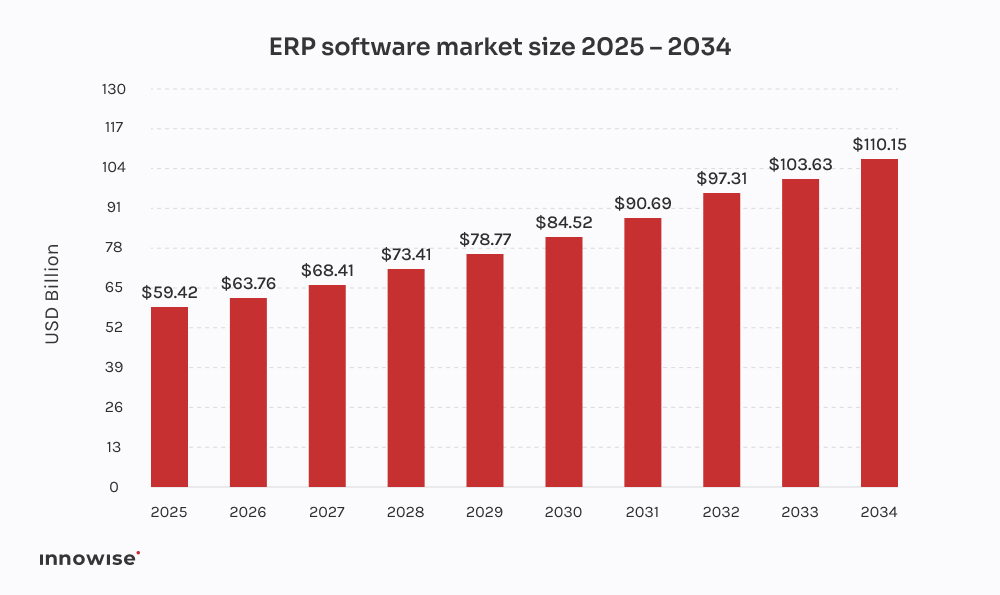
In 2025, the global ERP software market hit $59.42 billion and is projected to grow 7.1% per year through 2034. That surge in ERP market share shows just how crucial ERP is for streamlining operations, improving decision-making, and keeping up with fast-changing business demands.

ERP software market growth chart from 2025 to 2034 in USD billions
To stay relevant these days, modern ERP solutions are tapping into AI, big data, IoT, and other emerging tech. In this article, I’ll walk you through these ERP industry trends​ and explain why custom ERP solutions can sometimes handle real operational complexity better than a standard product.

Current trends in ERP systems

From AI to IoT to blockchain, these ERP trends are already changing how these systems work. This year is set to bring even more automation, sharper forecasting, and efficiency that truly changes the game. And as every day grows more competitive, having that extra edge becomes crucial.

Cloud-based ERP solutions

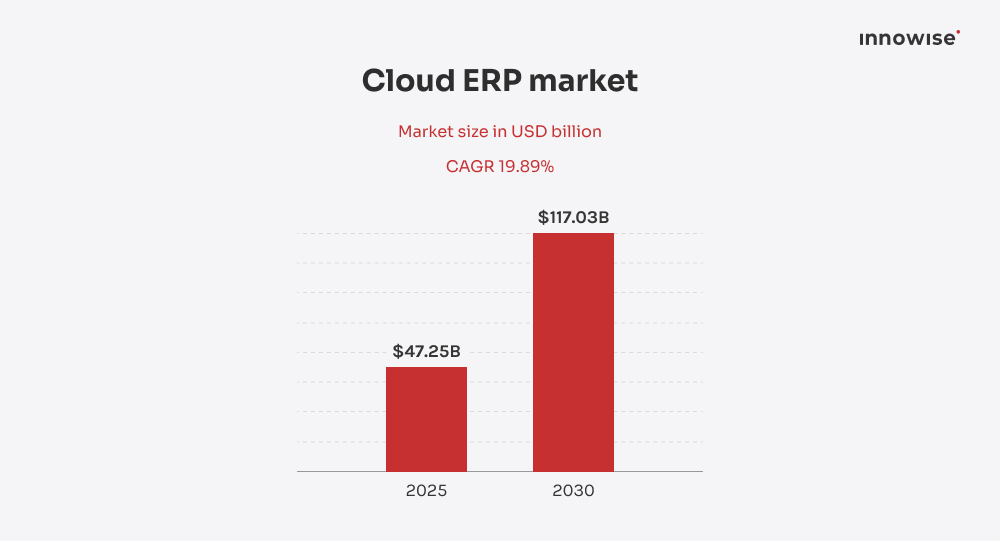
Cloud ERP solutions remain at the forefront of ERP trends 2026. It’s flexible, easy to scale, and doesn’t drain your budget with hardware or upkeep. The market reached around $47 billion in 2025 and is on track to hit $117 billion by 2030, growing fast at nearly 20% a year.

Cloud ERP market growth chart from 2025 to 2030 in USD billions

The main drivers for shifting infrastructure to the cloud ERP are the ability to slash maintenance costs and give your teams access to the system from anywhere. It keeps work flowing regardless of geography, creating always-on companies that stay connected and resilient through any disruption.

We’re also seeing businesses turning to multi-cloud and two-tier setups. The premise is simple enough: a strong core ERP runs at the center, while lighter cloud versions support regional offices or specific units. This setup keeps processes aligned across the company and gives local teams room to adapt to their own markets, currencies, and regulations.

Connected operations and IoT-driven real-time data

IoT gives ERP systems a live connection to what’s really happening on the ground. Machines, sensors, and warehouses feed data straight into the system, so teams always have the latest numbers in front of them instead of waiting for someone to update a spreadsheet.

For instance, a manufacturer can track equipment performance in real time, get alerts when something looks off, and schedule maintenance before a breakdown stops production. In logistics, connected warehouses update stock levels automatically, trigger restocks, and keep deliveries on schedule without manual checks.

With all that data coming in live, teams can react faster, spot problems early, and make decisions based on what’s happening right now.

AI-native ERP and GenAI copilots

ERP trends like AI and ML are changing systems by bringing deeper analysis, predictive insights, and automation to the table. Take SAP Business AI as a good example. It already includes over 200 AI-powered use cases and plans to double that by the end of 2025. Companies use them to forecast demand, manage inventory, streamline production, and improve customer service.

With natural language processing and machine learning, systems start to understand context and make better recommendations. Generative AI is quickly becoming a built-in feature, too. Gartner expects that by 2028, around 80% of ERP systems will include generative AI and predictive analytics as standard.

Composable and modular ERP architectures

One of the notable ERP software trends 2026 is composable ERP, which gives businesses room to move. Instead of running one big, rigid system, you build your setup from smaller modules that connect through APIs. Each piece handles its own task and can be added, replaced, or upgraded without breaking the rest.

Let’s say your company runs a solid ERP core for finance and supply chain. You might plug in a separate tool for e-commerce, another for ESG reporting, and a forecasting app that uses AI to predict demand. All of them talk to each other through defined connections, so you get a nice and steady workflow instead of scattered tools.

This modular setup helps you respond faster to change. You can try new software without long-term commitments, scale successful pilots, and retire what no longer fits.

Industry-specific and vertical cloud ERP

More businesses are choosing ERP systems built for their industry instead of trying to adapt a generic one. The market for these vertical solutions is growing fast, from about $169 billion in 2025 to nearly $549 billion by 2035.

These platforms come with ready-made workflows, reports, and compliance tools for specific fields like manufacturing, healthcare, logistics, or retail. Platforms such as Infor CloudSuite Healthcare or SAP’s industry cloud already include the terms, processes, and logic those teams use every day.

Most companies use these systems alongside a core ERP. The main system handles finance and shared operations, while the industry module takes care of the details like lab management, fleet tracking, or shop-floor control.

Blockchain for improved security and transparency

A big trend ERP teams are watching right now is integrating blockchain into ERP systems. It significantly enhances security and transparency in business operations. Industry leaders like SAP and Microsoft are already on board, using blockchain to protect sensitive data and keep critical info safe.

Thanks to its decentralized and tamper-proof design, blockchain makes transactions fraud-proof and error-free. It also steps up identity management, cutting down on unauthorized access and guaranteeing product authenticity. By fixing the weaknesses of traditional centralized databases, blockchain brings benefits — especially for industries where compliance and auditability are non-negotiable.

Advanced data analytics and big data

Among the key ERP software trends, systems are getting a lot smarter. With advanced analytics and big data, modern ERP platforms now give businesses real-time insights that drive faster, more confident decisions. They crunch massive datasets fast, so you can predict demand spikes, optimize logistics, and even boost HR tasks. In healthcare, for example, they make patient scheduling and resource planning a breeze. For online retailers, it’s all about smarter pricing strategies and slashing inventory costs. This ERP system trend turns your system into a flexible, future-ready solution.

ERP security trends and cybersecurity measures

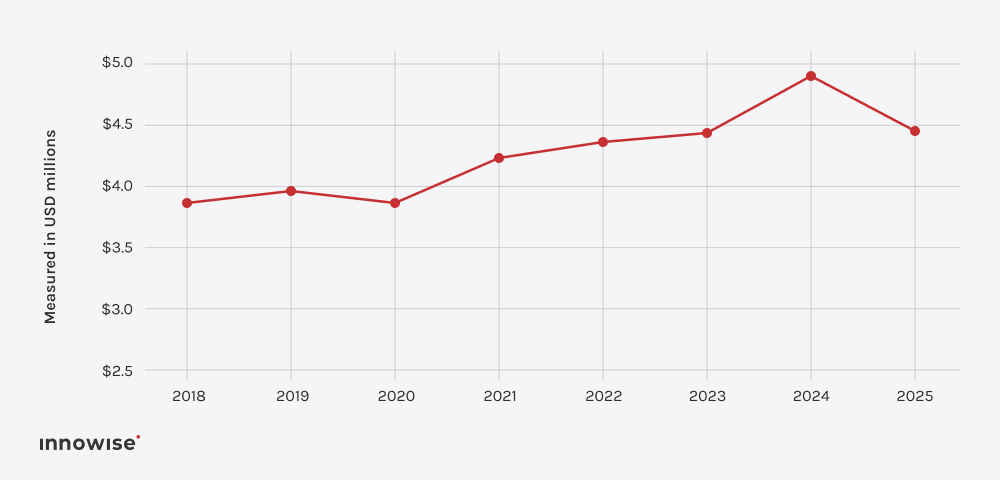
With ERP systems becoming more connected and accessible, they’re also more exposed to cyber threats. IBM’s 2025 report put the global average cost of a data breach at $4.4 million, which, while slightly lower than the previous year, is still an enormous hit for any business. It shows how critical it is to protect company data, customer information, and the ERP’s internal logic from being compromised.
The global average cost of a data breach fell
Here’s a look at some of the key security trends and measures shaping ERP today:

AI & ML in security

AI and ML tools help spot unusual activity and potential breaches in real time. They can pick up on patterns and catch threats way faster than traditional security methods like firewalls, IDS or ACLs.

Zero-trust security models

With a zero-trust model, nobody is trusted by default — whether they’re inside or outside the company. Every access request undergoes strict verification, reducing insider threats and enhancing overall security.

Cloud security upgrades

For cloud-based ERPs, technologies like shared responsibility models, Secure Access Service Edge (SASE), and Cloud Access Security Brokers (CASB) add extra layers of protection to keep data safe.

Microservices and API security

As ERPs become more modular, securing the APIs that connect all components is essential. Strong API security prevents unauthorized access and data breaches, ensuring that ERP systems and sensitive information remain protected.

Focus on sustainability and ESG

Sustainability and ESG have become one of the biggest ERP market trends 2026. With new rules like Europe’s CSRD pushing for more transparency, businesses need clear, reliable data on how they’re performing.

Modern ERP systems help keep everything on track. They can record energy use, carbon emissions, and waste across departments and map it to standards like ESRS and GRI. Instead of juggling spreadsheets, teams get one view of their footprint that’s ready for both decisions and audits.

Outdated ERP systems can really hold businesses back, causing bottlenecks and making it tough to get the insights you need when it matters most. We bring in fresh ERP technology trends to tackle these issues head-on, smoothing out data flow, speeding up processes, and helping businesses make faster, smarter decisions.
Michael Labutin
Head of ERP Department

Stay nimble with a flexible ERP solution that grows with your business.

The importance of keeping up with future ERP trends for businesses

With tech moving at lightning speed, ERPs have grown from basic resource managers into strategic tools. They now play a central role in how companies push their digital transformation forward, especially in industries where a strong ERP foundation directly supports long-term growth. Keeping tabs on ERP industry trends is essential if you want to sharpen operations, trim expenses, and stay one step ahead of the competition.

Maximizing efficiency

With smart ERP features like AI-driven automation and predictive analytics, businesses can really smooth out workflows and ditch the extra steps. Adopting these upgrades lets organizations zero in on strategic growth while keeping operations sharp.

Reducing costs

Thanks to modern ERP features, businesses get a 360-degree view across operations to make the most of every resource. These tools help trim unnecessary expenses, dodge costly errors, and keep the supply chain lean — giving profitability a solid lift.

ERP scalability for the future

As businesses grow, so do their needs. Scalable ERP systems make it easy to handle more data, add new features, and bring on extra users without missing a beat. Staying in sync with ERP software trends means you’re always ready to scale up and stay flexible as the market shifts.

Customer-centricity

Today’s ERP systems are all about putting the customer first, with built-in CRM tools and personalized insights. This setup helps businesses really get to know their customers, anticipate needs, and adjust offerings to match. This way, you can adapt faster, make customers happier, build loyalty, and get a solid leg up in the market.

Conclusion

The future of ERP is all about staying flexible and thinking ahead. Staying on top of trends in ERP software like cloud solutions, AI, advanced analytics, and building custom ERP solutions keeps you prepped for long-term success — whatever the market looks like tomorrow.

FAQs

ERP systems are a game-changer for businesses trying to be more sustainable. With real-time insights, you can keep an eye on energy use, cut down on waste, and manage your supply chains in a greener way. By linking up all your departments, ERP systems make it easier to shrink your carbon footprint and hit those sustainability goals.

Definitely. By 2026, ERP systems will be way more user-friendly. With new tech like AI and smarter design, vendors are making these systems easier to use — simpler navigation, personalized dashboards, and mobile setups. All these upgrades aim to get more people on board, boost productivity, and make ERP systems accessible to everyone on the team.

Staying up-to-date on trends in ERP keeps you in the game. New features can make your operations smoother, trim costs, and lead to smarter decisions. By staying in the loop, you can tap into the latest ERP tools to drive growth and roll with market changes without missing a beat.

Lead of ERP Consultants

Kiryl knows SAP inside and out. He’s the go-to when a client needs not just implementation, but smart configuration that fits their unique processes — with a clear path from complexity to clarity.

Table of contents

    Contact us

    Book a call or fill out the form below and we’ll get back to you once we’ve processed your request.

    Send us a voice message
    Attach documents
    Upload file

    You can attach 1 file up to 2MB. Valid file formats: pdf, jpg, jpeg, png.

    By clicking Send, you consent to Innowise processing your personal data per our Privacy Policy to provide you with relevant information. By submitting your phone number, you agree that we may contact you via voice calls, SMS, and messaging apps. Calling, message, and data rates may apply.

    You can also send us your request
    to contact@innowise.com
    What happens next?
    1

    Once we’ve received and processed your request, we’ll get back to you to detail your project needs and sign an NDA to ensure confidentiality.

    2

    After examining your wants, needs, and expectations, our team will devise a project proposal with the scope of work, team size, time, and cost estimates.

    3

    We’ll arrange a meeting with you to discuss the offer and nail down the details.

    4

    Finally, we’ll sign a contract and start working on your project right away.

    arrow