



iOS and VR meditation app suite for Grožio Planeta UAB

We built a set of meditation apps for Grožio Planeta UAB, helping users practice guided sessions on iOS and in VR.

Guided meditation

experience across iOS and VR

Monetization

through tiered subscription plans

airplane in the sky image
Industry Healthcare & life sciences
Region Lithuania
Client since 2021

Client overview

Summarize article with AI

The client is Grožio Planeta, a Lithuanian private limited liability company behind the Smart Meditation digital wellness platform. They distribute software and hardware globally, helping users tackle anxiety, stress, insomnia, and related issues with science-based methods.

Quote icon

What we appreciated most about working with Innowise was their transparency, responsiveness, and structured way of working. They kept us in the loop, communicated clearly, and adapted quickly to changes as the project progressed. Their developers worked smoothly with our in-house designer and remained flexible when we needed to shift priorities or adjust requirements.
Aleksandr Kassihin Director UAB “Grožio planeta”
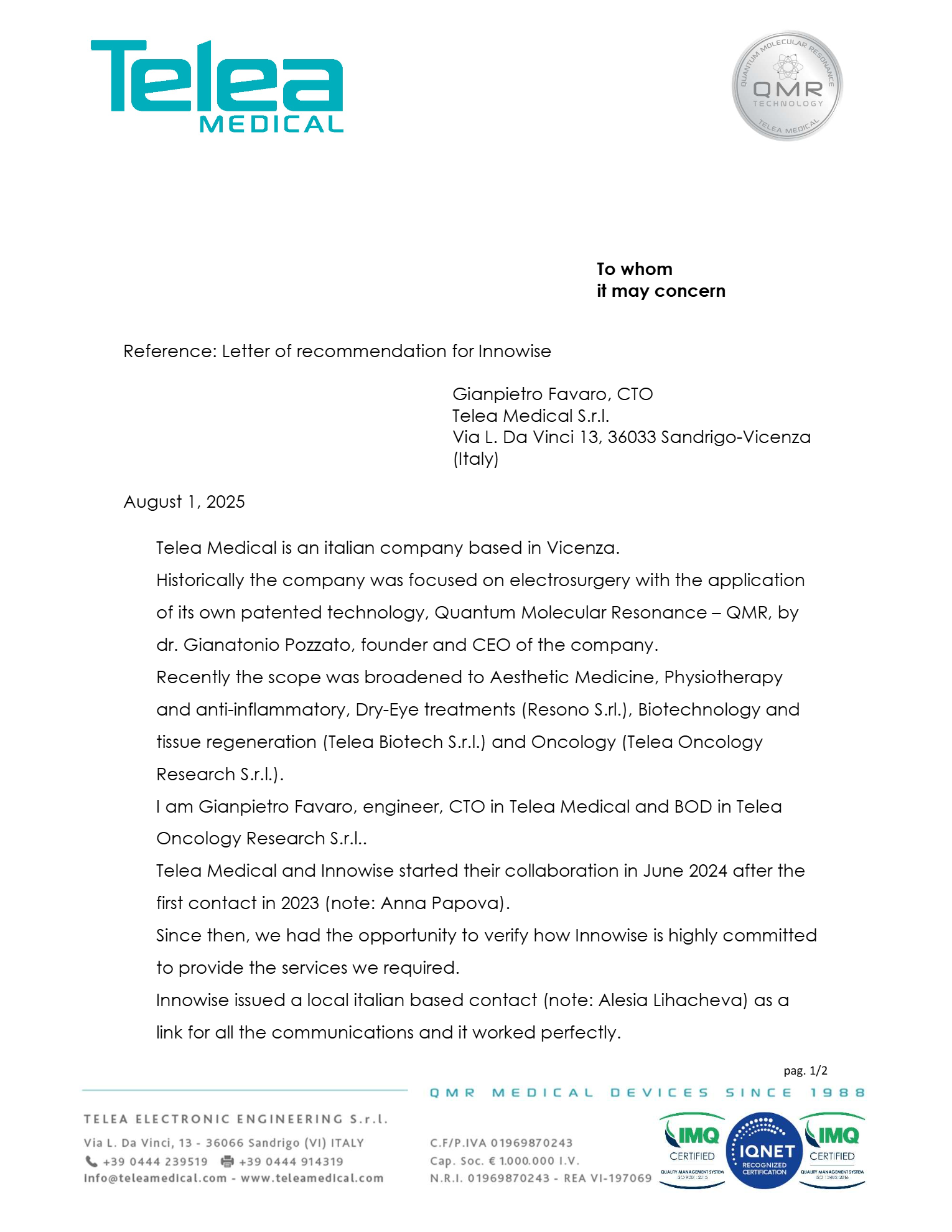
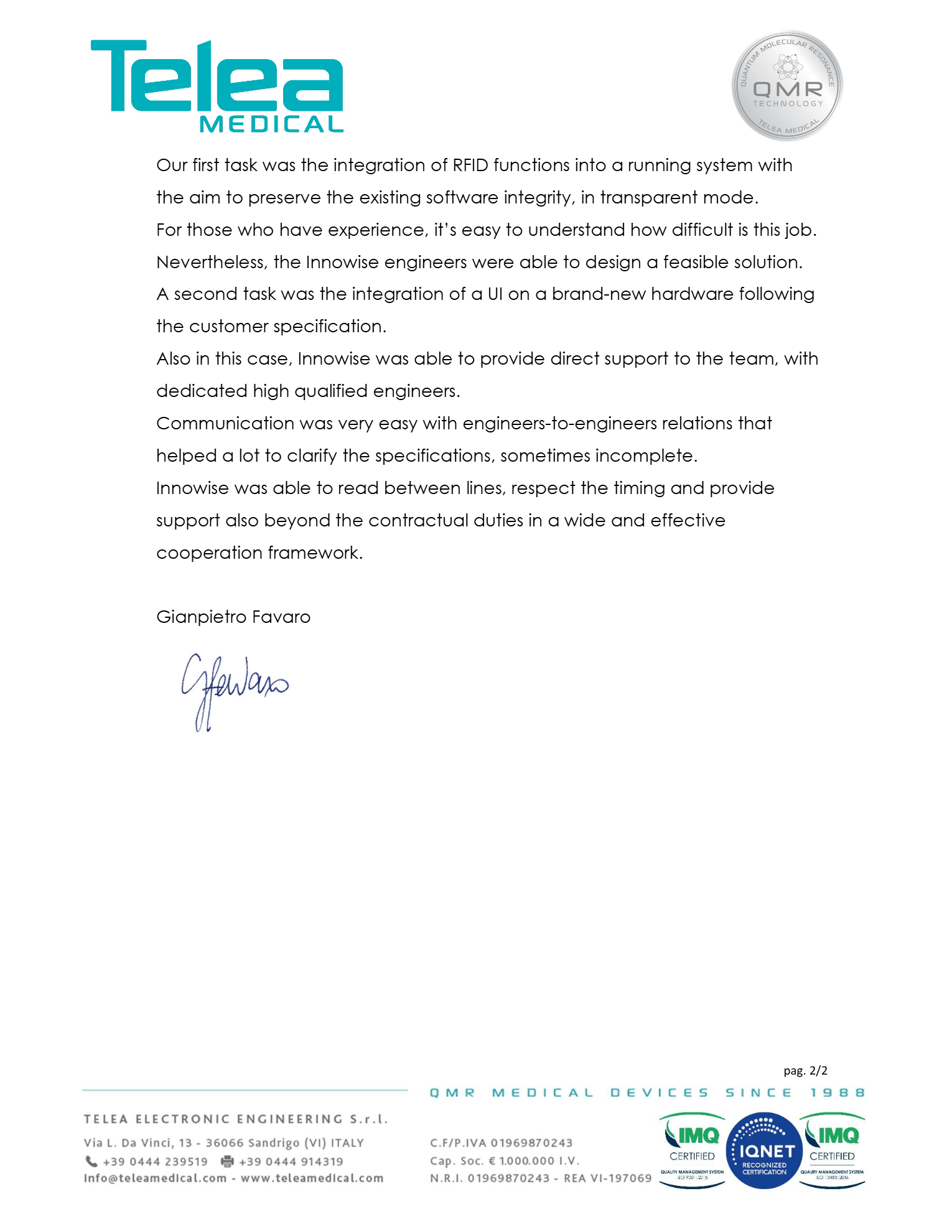
Letter of recommendation, Page 1 Letter of recommendation, Page 2

Challenge

Grožio Planeta was building Smart Meditation as a startup product, so requirements kept moving as the market and user expectations shifted. They needed a delivery partner who could keep up with change, stay close to the team, and rework priorities fast without dragging development.

Part of the work ran under the SmartMed initiative and was co-funded by the European Bank for Reconstruction and Development (EBRD). An EBRD representative stayed involved throughout, so the client had to deliver the agreed scope within the program and close that phase with every stakeholder on board.

The product also ran on two tracks. The iOS app was the main entry point, and the VR app became a second channel for the same meditation experience. Design stayed on the client side, so development had to match their design workflow and handoffs.

From a technical standpoint, our team was building two products from scratch. The iOS app was a native Swift build with a Python service behind it. The VR app was a Unity build for Oculus Quest 2. These platforms come with different limits and user flows, so we had to keep both tracks in sync.

Design came from the client. That made our delivery pace depend on design handoffs, so we kept building work and design delivery moving in parallel.

Access logic also had to be exact. The app needed a free version with unlimited-time access and limited features, plus three subscription plans with different trial periods: one month with a 3-day trial, six months with a 7-day trial, and one year with a 7-day trial.

On the VR side, content prep became its own workflow. The client delivered professionally shot 3D meditation animations, and we converted them for Oculus Quest 2, then played them with the meditation audio so users could follow the session while practicing.

Solution we delivered

Discovery & planning

Before development started, our BA ran a discovery phase to shape the product scope and reduce early risks. We reviewed competing meditation apps, gathered App Store and store listing requirements, and turned those inputs into a clear feature set and content structure for the iOS release.

In parallel, we assessed VR headset options. Our team compared different models for market position and the difficulty of adapting the VR app across devices, since the initial plan was not limited to Oculus.

Based on the discovery results, we prepared an effort estimate and wrote an SRS. After that, the project moved into development.

Solution design

On the mobile side, we built a client-server setup. The iOS app in Swift acts as the client and communicates with the backend via a REST API. The server side runs on Django and Django REST Framework, with Gunicorn as the application server and Nginx as the reverse proxy. PostgreSQL is used as the main database, with Redis supporting back-end operations. We packaged the backend in Docker and ran it with Docker Compose.

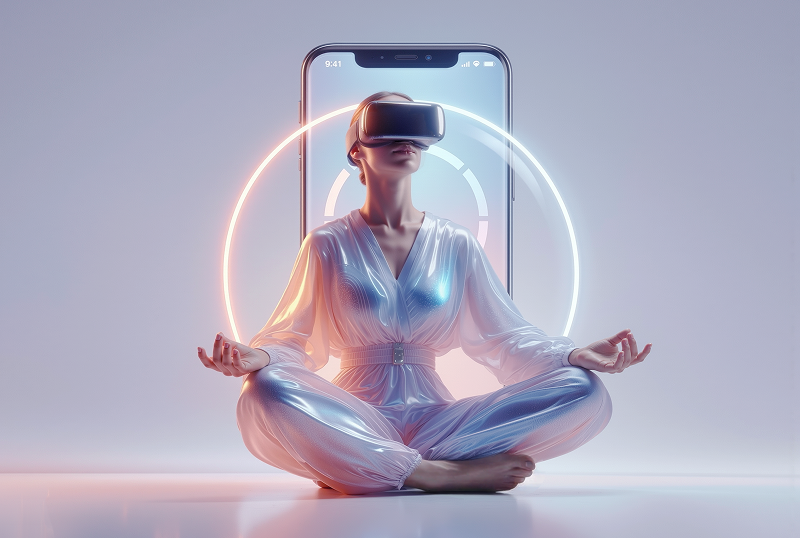
On the VR side, we developed a Unity application for Oculus Quest 2. The app is organized around themed meditation sessions and plays meditation audio together with 3D animation, so users can follow the practice while listening. The 3D content was provided by the client and converted into a format suitable for Oculus Quest 2.

Key functionality delivered

Content & user experience

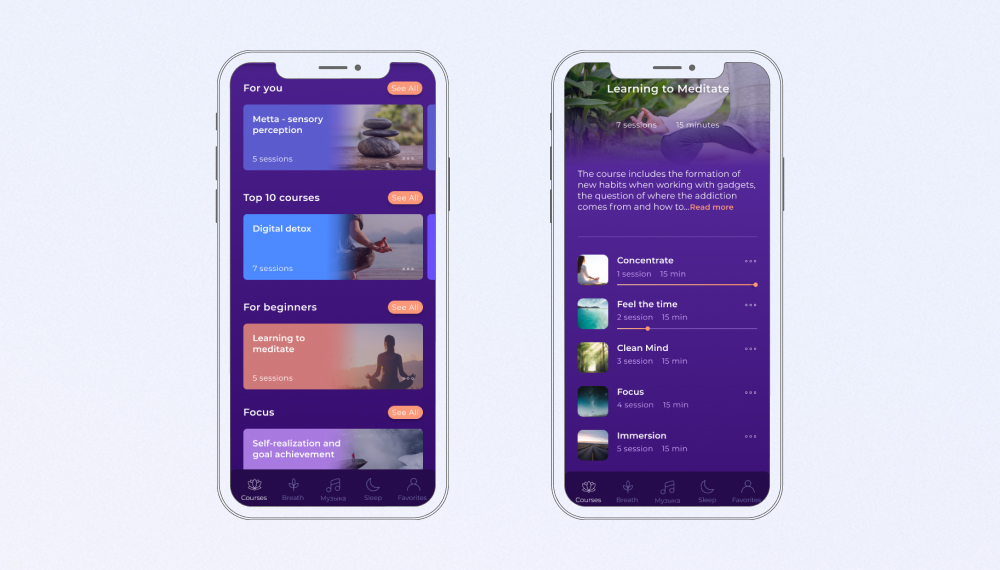
We built the iOS app around audio sessions, with meditations and affirmations as the main content. The library includes 10 meditation themes, over 100 meditations in 7 languages, and 1 breathing practice. Users choose a theme, pick a session, and press play, so navigation stays simple even with a large catalog.

The product also adds mental health and sleep support alongside meditation. It includes CBT tools, crisis support through an AI chat, and coaching exercises. For users focused on rest and recovery, guided sessions pair with sleep sounds and relaxation music.

Meditation mobile app UI with personalized learning tracks and guided session playlists

Access & subscriptions

Our team set up two access modes. Users can start on a free version with no time limit and restricted features, or they can get full access through a subscription.

We also built three subscription options with different trial periods to keep the upgrade path clear and consistent:

  • 1 month with a 3-day trial
  • 6 months with a 7-day trial
  • 1 year with a 7-day trial

Backend

We built a backend for the iOS app in a classic client-server setup and exposed it through a REST API. The Swift client calls the API, and the server returns meditation content, including themes, sessions, and languages, while enforcing access rules for the free tier and subscriptions.

On the server side, we used Django and Django REST Framework. PostgreSQL stores the core data, and Redis supports back-end operations. The app runs with Gunicorn behind Nginx, and we packaged the whole stack in Docker with Docker Compose to keep environments consistent from development to deployment.

Unity-based VR application

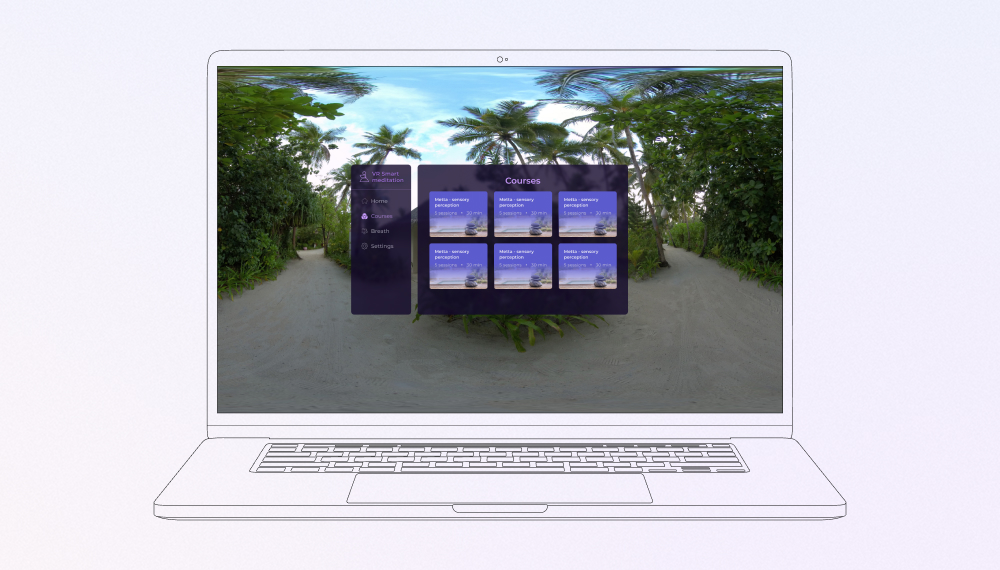
Our experts built a Unity VR app for Oculus Quest 2 focused on themed meditation sessions. We kept the structure intentionally simple: meditations sit in theme categories, users open one, pick a session, and start practicing. VR makes every extra step feel heavier than it does on a phone, and the calm fades quickly when people have to click through layers.

Each session runs as a paired experience. The app plays the meditation audio alongside a 3D animation, so users can listen and practice in real time, with visuals helping guide pacing and focus.

A significant feature of the VR application is its integration with a proprietary EEG sensor, which enriches the user’s meditation practice by providing real-time brain activity feedback.

The client supplied the 3D materials, captured with professional equipment. We converted the content into a format that runs on Oculus Quest 2 and prepared it for use inside the VR app.

VR meditation platform interface with immersive nature environment and guided courses

Delivery approach

We ran the project in Kanban to keep work moving while requirements changed and new priorities came in. We tracked tasks in Trello and kept day-to-day communication in Telegram, so the client always saw what we worked on, what came next, and where we needed input.

The client handled design, and we planned development around their handoffs. We moved the iOS app, the Django REST backend, and the Unity VR app forward in parallel to keep the mobile and VR tracks coordinated.

After launch, our team continued post-release support and maintenance for the iOS app, fixing issues and shipping updates as the product kept evolving.

Quote icon

When requirements change often, content structure and paywall rules usually break first. We kept the meditation library and subscription rules in one backend, and we verified every change against both apps so themes, sessions, and access stayed consistent.

Aleh Yafimau
Veronika Golovina Business analyst

Technologies

icon Swift
icon Django
icon Django REST Framework
icon PostgreSQL
icon Redis
icon Gunicorn
icon Nginx
icon Docker
icon Docker Compose
icon Unity (Oculus Quest 2)

Team

Icon 1
Project Manager
Icon 1
Business Analyst
Icon 1
Front-End Developer
Icon 1
iOS Developer
Icon 1
Unity Developer
Icon 1
Python Developer
Icon 1
QA Engineer
Innowise team

Result

Project duration
April 2021 - December 2023

Our team helped the client implement the Smart Meditation iOS product with a working backend and a VR companion app under an EBRD-funded program. By centralizing content and access rules on the server, we gave them a solid base to expand. They can add new meditations, languages, and themes without touching the app logic. Also, they can adjust pricing and trial setups without rebuilding the product each time.

That same backend later became the starting point for the Android version. The client reused the server-side, so the Android team could focus on the app itself instead of rebuilding the whole stack. This approach shortened the path to a multi-platform product and kept the experience aligned across devices.

Table of contents

Bring your meditation app to market

    Contact us

    Book a call or fill out the form below and we’ll get back to you once we’ve processed your request.

    Send us a voice message
    Attach documents
    Upload file

    You can attach 1 file up to 2MB. Valid file formats: pdf, jpg, jpeg, png.

    By clicking Send, you consent to Innowise processing your personal data per our Privacy Policy to provide you with relevant information. By submitting your phone number, you agree that we may contact you via voice calls, SMS, and messaging apps. Calling, message, and data rates may apply.

    You can also send us your request
    to contact@innowise.com
    What happens next?
    1

    Once we’ve received and processed your request, we’ll get back to you to detail your project needs and sign an NDA to ensure confidentiality.

    2

    After examining your wants, needs, and expectations, our team will devise a project proposal with the scope of work, team size, time, and cost estimates.

    3

    We’ll arrange a meeting with you to discuss the offer and nail down the details.

    4

    Finally, we’ll sign a contract and start working on your project right away.

    arrow