The power of data mapping in healthcare: benefits, use cases & future trends. As the healthcare industry and its supporting technologies rapidly expand, an immense amount of data and information is generated. Statistics show that about 30% of the world's data volume is attributed to the healthcare industry, with a projected growth rate of nearly 36% by 2025. This indicates that the growth rate is far beyond that of other industries such as manufacturing, financial services, and media and entertainment.

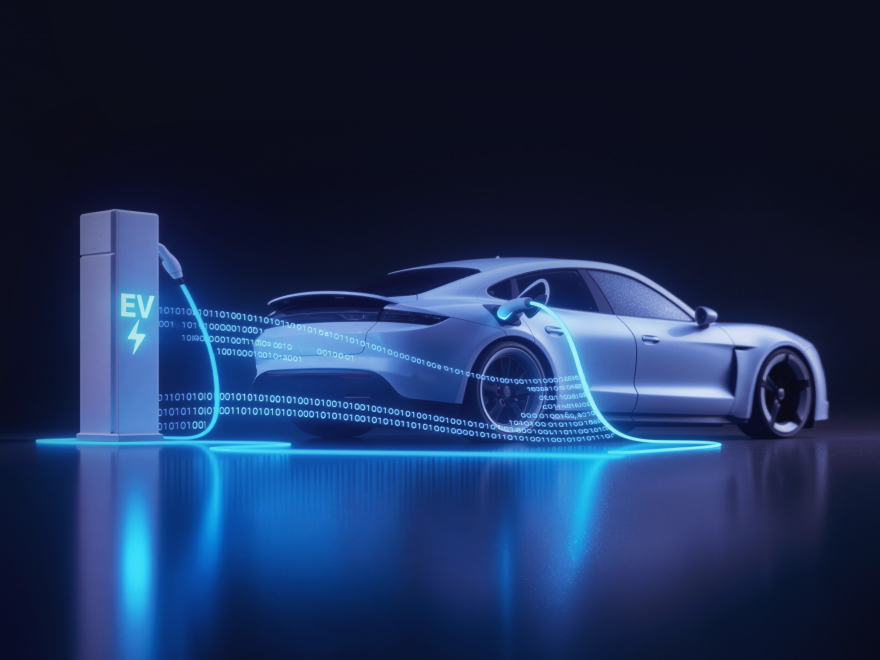
EV charging is a software problem: the key to scaling electric mobility

Mar 25, 2026 10 mins read

Key takeaways

  • Electric mobility is starting to feel the limits of a hardware-first approach. Being utilized at 8–20% in the EU, many stations remain unprofitable, which slows down further expansion.
  • Software improves EV charging economics by connecting assets, providing real-time operational visibility, and using data analytics to optimize station usage, energy costs, and network performance.
  • To become scalability-ready, the EV charging infrastructure needs to be transformed into a software-defined system with modular architectures, open protocols, and cloud platforms.

The need for the scalable, reliable, and efficient EV infrastructure has never been more pressing. While the number of public charging points has doubled globally over the past three years, exceeding 5 million, their average utilization remains stagnant at about 8–20% in the EU. Roughly the seventh charging attempt in the US fails. And all this occurs while the adoption must continue growing exponentially to meet the impending standards.

But these challenges don’t arise from insufficient power supply or EV demand; they primarily stem from payment, communication, and stability errors — software issues that are eroding driver trust. Hardware has reached its limits, and so software now drives the reliability of charging stations and defines how quickly and profitably electromobility can scale.

In this article, I’ll explore how EV charging infrastructure providers can break through this bottleneck to offer scalable, partner-friendly, and cost-efficient solutions.

EV charging infrastructure challenges: lessons from a hardware-centered strategy

Back in the early days of EV charging infrastructure, the goal was straightforward: just build it to make e-mobility work. Today, that’s no longer enough. This hardware-first approach brought about several critical issues that now hinder further EV adoption. What we are seeing now:

  • Idle stations. As many stations couldn’t communicate issues automatically, they went idle for days or even weeks before a driver reported them or a maintainer discovered them during a scheduled on-site check — even though the issue could often be fixed in minutes. In addition, the placement of the stations was also not always based on actual demand, contributing to low utilization.
  • Data deserts. Only 34% of EV charging stations across six major US interstates provide real-time status updates. This creates “data deserts”, stretches of highway hundreds of miles long where drivers have no way of knowing if a charger is working or available until they arrive.
  • Grid constraints. When charging multiple vehicles simultaneously, peak demand can strain local transformers and lead to high operational costs from demand charges. This is a coordination problem that can be solved through software capable of managing load on the electrical grid.
  • Failures and integration complexity. As the EV charging ecosystem comprises heterogeneous charging hardware, diverse vehicles, and proprietary charge point operator (CPO) software, miscommunication can occur. The result is freezing screens, failed charging sessions, and the dreaded charging error message, leaving drivers stranded.

The massive early adoption delivered powerful, safe, yet largely “dumb” EV charging stations. As early deployments often neglected the software “brain” of these systems, multiple stations remained static, with no visibility into status, errors, remote control, or communication with related systems. And I’m not talking about fancy innovations. I mean basic must-have features that simply help stations work reliably. Over time, the need for software-driven management naturally became clear.

Struggling with EV charging inefficiencies?

We help optimize costs and uptime through software that delivers real-time analytics and full control.

What is EV charging software and how it works

When you hear “EV charging software”, think of it as a multi-layer platform that connects cars, distributed chargers, users, and the backend network into a single management interface. It’s designed for remote control of charging processes, including station operations, charging sessions, payments, network performance, energy use, and more. Below are the key capabilities that make this possible.

Real-time monitoring

Since sensors already collect telemetry data from charging equipment, connecting them to a software platform enables real-time remote monitoring. Operators can track whether the station is available, charging, or faulted. They can also monitor electrical metrics, such as current, voltage, power, and energy dispensed, along with temperature and connectivity health. Combined with charger locations and live session data, these platforms serve as a dispatch hub, making all operations and errors transparent.

AI-based analytics

AI brings insights to charging management that help plan loads and maintenance in advance, and optimize large-scale networks. Machine learning (ML) algorithms analyze data streams from devices, networks, and users. Load-balancing algorithms dynamically distribute power across connected charging stations, while demand-forecasting models help optimize energy costs in real time. Equipment health data analysis enables predictive maintenance, and AI can even simulate network impacts and test energy management strategies before deployment.

Driver application

Driver apps become valuable when designed around the real charging journey. Interactive maps, real-time station availability, and transparent pricing help drivers choose where and when to charge, avoiding delays. The app also lets drivers control charging sessions and billing, and make secure payments. When drivers know exactly what they’ll pay and don’t run into payment issues, they trust the network and keep coming back.

EV charging software in the energy ecosystem

The real value of an EV charging platform comes from who and what it can talk to. Integrations define what data the platform can access and which systems it can influence. To expand these capabilities, we design platforms with multiple open protocols that make them hardware-agnostic and future-ready.

  • Charging hardware. Any charger compliant with the open charge point protocol (OCPP) can be supported. This allows the network to grow over time without vendor lock-in.
  • Other networks. Connections with fellow network operators via OCPI enable seamless roaming, so drivers can charge across different networks as easily as they move between stations.
  • The power grid. Integration with utility networks through OpenADR allows operators to participate in demand response programs and helps reduce load during peak periods.
  • Grid operators and site energy systems. Communication with distribution system operators (DSOs) and on-site energy management systems (EMS) through OSCP provides a 24-hour forecast of available grid capacity.
  • Third-party services. Station status can be shared via open APIs with mapping applications, fleet operators, and other services, improving network reliability and building user trust.

This variety of protocols makes energy a flexible asset. Only when your platform speaks the language of chargers, vehicles, grids, and utilities simultaneously can operators balance loads, cut operational costs, support renewables, and even earn from grid services.

Key use cases of EV charging software

EV charging software is designed to solve specific operational challenges. The most common use cases include the following:

Use caseCore featuresBusiness value
Data-driven infrastructure planning
  • AI-powered demand estimation and forecasting based on traffic patterns, population density, and current usage
  • Charger siting and sizing recommendations to maximize utilization and ROI
  • Grid-aware planning to identify locations with available capacity
  • Agent-based simulation of driver behavior and traffic flow to test different deployment scenarios
Smart investing in new charging stations, avoiding costly grid upgrades
Load optimization
  • Dynamic load balancing to intelligently distribute available power across active chargers in real time
  • Peak shaving and demand charge management
  • Demand response integration to automatically reduce charging load or shift it to off-peak hours
  • Energy arbitrage by storing low-cost energy (solar/off-peak) for use during peak pricing
Demand balancing, grid overload prevention, and reduced electricity costs
Operational control
  • Unified real-time dashboards for charger status, session data, and site health across a multi-vendor network
  • Remote session start, stop, and configuration
  • Remote diagnostics, troubleshooting, and restarting
  • Alerts and notifications in case of errors
24/7 performance visibility and extended station uptime
Predictive maintenance
  • AI-powered health scoring using historical and real-time data to predict component failure
  • Dynamic fault localization, pinpointing root causes for targeted fixes
  • Automated service ticketing integrated with CRM and field service management systems
Reduced downtime and maintenance costs
Billing, payments, and tariff optimization
  • Flexible pricing engines supporting time-of-use tariffs, demand-based pricing, session-based fees, and idle time penalties
  • Automated billing and invoicing, including reconciliation and detailed cost breakdowns
  • Granular cost visibility for data-driven pricing decisions
  • Roaming settlement automation for financial reconciliation between different operators
Maximized revenue per session and greater cash flow certainty
CX optimization
  • White-label mobile apps for station discovery, starting/stopping sessions, and payments
  • Smart charging scheduling for residential and workplace environments
  • Site congestion management with virtual queues, waitlists, and reservations
  • Personalized notifications about charging progress, promotions, or service updates
Stronger brand loyalty, leading to higher usage and retention

The software engineering depth your infrastructure needs

For the early-gen EV charging infrastructure to scale and adapt seamlessly, it should become software-first, and yes, this often requires substantial changes. To achieve this, software engineering teams develop custom software based on microservice architecture, open protocols, and cloud-based infrastructure. The engineering depth depends on what you expect to gain: a reporting tool or an intelligent energy management unit.

Software teams tackle core challenges that directly impact how operators run and grow their networks.

Managing complexity at scale

You need software engineering mastery to unite and coordinate thousands of chargers, backend servers, payment systems, and mobile apps, and scale systems without failures. Software teams build horizontally scalable platforms where gateways and event-driven microservices absorb traffic spikes during peak hours, while multi-tenant isolation ensures one operator’s volume doesn’t degrade performance for others. Full system observability and AI-based monitoring reveal hidden failures: open protocols integrate stakeholders (CPOs, eMSPs, utilities), while strong data integrity mechanisms prevent double-billing across millions of transactions. And this is only part of the picture.

Integrating with energy grids and utilities

To support stable communication, software engineering teams build a two-way coordination layer between EV charging networks and energy systems. They develop control algorithms that manage both grid-to-vehicle (G2V) charging and vehicle-to-grid (V2G) discharging. AI engineers get involved when charging patterns need optimization, demand response must be forecasted, or participation in utility programs is required. For instance, they help enhance battery management systems or predict demand response capacity.

Maintaining security and system resilience

By November 2027, charging infrastructure must fully comply with the Cyber Resilience Act, and software engineers are the ones who ensure the architecture is secure by design. Since EV systems combine OT and IT components with IoT elements, cyberattacks can affect power grids and distribution networks. Engineering teams implement public key infrastructure (PKI) aligned with the ISO 15118-20 standard. They design fault-tolerant systems with redundant communication paths, failover controllers, and backup power modules to prevent single points of failure.

Supporting long-term scalability and flexibility

Software engineering teams build for the long term by decoupling critical components like billing, device management, and energy optimization into independent microservices, so a surge in one area never impacts performance elsewhere. They abstract away hardware, making new charger integration a plug-in task. Because the entire platform is modular and API-driven, you can add revenue-generating features such as fleet management, roaming agreements, or V2G capabilities as opportunities arise, without disruptive redevelopment.

Scale EV charging networks sustainably

We build unified, AI-backed platforms to monitor, manage, and grow failure-free charging operations.

Implementation and modernization scenarios with Innowise

For those aiming to enhance their EV charging networks, we provide three scenarios:

1. Deploying software for existing EV charging stations

Innowise helps basic EV charging stations reach their best potential by integrating them with charge point management systems (CPMS) that connect existing chargers to cloud platforms. This is the shortest and most reliable path for monitoring, session management, diagnostics, and firmware updates. By integrating backend software via OCPP, we enable operators to manage user authentication, payment processing, and energy reporting, while making the network interoperable and adaptable without hardware changes.

2. Modernizing legacy charging networks

If your EV charging system uses outdated, proprietary solutions, we can modernize it for greater flexibility and interoperability with today’s EV ecosystem. We migrate legacy platforms to cloud-native architectures, upgrade communication protocols to OCPP, and integrate with third-party services, such as utility platforms, mobile apps, and roaming hubs. The upgraded infrastructure supports smart charging, remote device control, and advanced analytics — all at the software layer.

3. Scaling EV charging infrastructure across regions

To support scalability at the city, country, or continent level, we focus on making the platform both robust and adaptable. Software platforms created by Innowise can manage thousands of assets simultaneously thanks to distributed architectures, open-source components, regional data management systems, and API-based integrations that support local regulations, as well as payment and power grid requirements.

Conclusion

By now, it’s clear that the future of EV charging isn’t about more hardware. It’s about smarter, software-driven networks that make chargers, sessions, and energy flows work more efficiently. Want higher utilization, fewer failures, and simpler upgrades? Software is the key.

If striving to take infrastructure to the next level, Innowise can help. We deliver energy solutions and work with operators across cities, countries, and continents to assess existing systems, modernize legacy networks, and scale efficiently. Our goal is to help you make the right decisions for reliability and cost-effectiveness before investing in new hardware or expansion.

FAQs

Two reasons: bad placement and poor reliability. Operators usually don’t study the actual demand patterns before installation. Stations fail in roughly 15% of attempts, which makes drivers stop coming back.

By detecting failures before drivers do. Real-time monitoring catches early warning signs, such as intermittent connectivity or power anomalies, and triggers remote fixes. Proactive networks achieve more than 99% uptime.

The ability to pause or slow charging when the grid gets stressed. Software shifts power to cars that need it now, reduces it for those that don't, and prevents overloads without expanding physical infrastructure.

Yes, and without touching hardware. OCPP connects existing stations to modern platforms. For proprietary systems, retrofit modules translate legacy protocols. Even stations from bankrupt manufacturers can be revived with open-source controller replacements.

Because networks break differently at scale. A platform serving 100 stations fails in predictable ways; at 10,000, billing glitches and API latency become systemic. Engineers design for horizontal scaling, automated failover, and event queues. Otherwise, scaling multiplies failure points.

Dmitry Nazarevich

Chief Technology Officer

Dmitry leads the tech strategy behind custom solutions that actually work for clients — now and as they grow. He bridges big-picture vision with hands-on execution, making sure every build is smart, scalable, and aligned with the business.

Table of contents

    Contact us

    Book a call or fill out the form below and we’ll get back to you once we’ve processed your request.

    Send us a voice message
    Attach documents
    Upload file

    You can attach 1 file up to 2MB. Valid file formats: pdf, jpg, jpeg, png.

    By clicking Send, you consent to Innowise processing your personal data per our Privacy Policy to provide you with relevant information. By submitting your phone number, you agree that we may contact you via voice calls, SMS, and messaging apps. Calling, message, and data rates may apply.

    You can also send us your request
    to contact@innowise.com
    What happens next?
    1

    Once we’ve received and processed your request, we’ll get back to you to detail your project needs and sign an NDA to ensure confidentiality.

    2

    After examining your wants, needs, and expectations, our team will devise a project proposal with the scope of work, team size, time, and cost estimates.

    3

    We’ll arrange a meeting with you to discuss the offer and nail down the details.

    4

    Finally, we’ll sign a contract and start working on your project right away.

    More services we cover

    arrow