O poder da cartografia de dados nos cuidados de saúde: benefícios, casos de utilização e tendências futuras. À medida que o sector dos cuidados de saúde e as suas tecnologias de apoio se expandem rapidamente, é gerada uma quantidade imensa de dados e informações. As estatísticas mostram que cerca de 30% do volume mundial de dados é atribuído ao sector dos cuidados de saúde, com uma taxa de crescimento prevista de quase 36% até 2025. Isto indica que a taxa de crescimento é muito superior à de outras indústrias, como a indústria transformadora, os serviços financeiros e os meios de comunicação e entretenimento.

How to find and hire an app developer: a complete guide

Jan 8, 2026 10 min de leitura

Guide, Mobile development, Software development, IT Outsourcing

Preview. Learn how to hire app developers the smart way, from scoping and budgeting to pilots and contracts, with insider advice on cutting delivery risk, vetting technical maturity, and securing long-term success.

Principais conclusões

  • Successful hiring starts with clarity. Define what you’re building, why it matters, and the specific metrics for “success”.
  • The strongest developers combine technical skill, accountability, and communication. That balance keeps projects on track.
  • Test collaboration with a small, real task before committing to a long-term contract.
  • Protect your product from the start. Contracts, NDAs, and IP ownership are as critical as clean code.

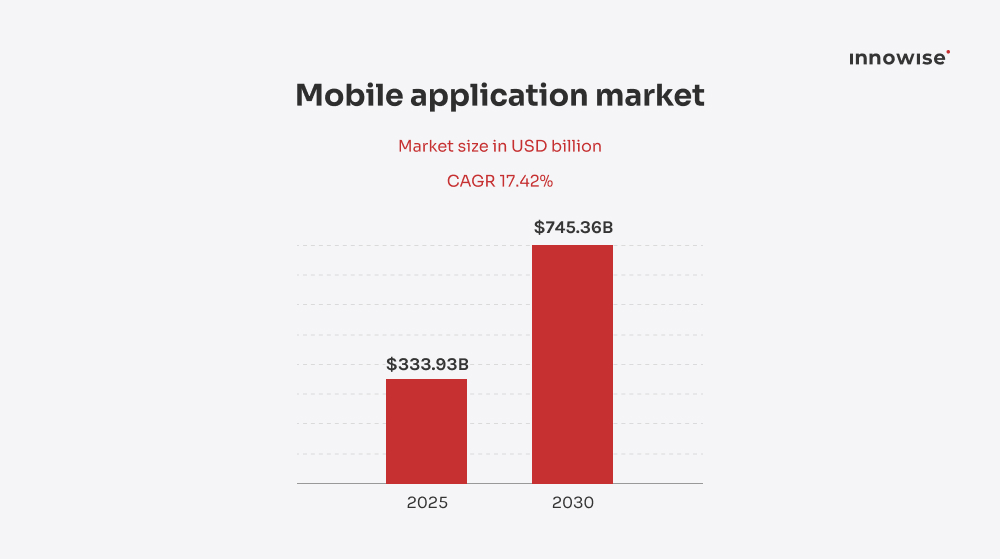
Mobile app usage continues to smash records, pushing past every other digital channel. In 2025, the global mobile app development market hit about $333,93 billion. By 2030, it’s expected to surpass $745,36 billion, growing exponentially at 17,42% each year.

Rapid growth and strong future potential in the mobile app development sector, driven by digital demand and innovation across industries.

Whatever your discipline, be it an ambitious entrepreneur chasing a bold idea or an established business leader looking to redefine your digital presence, you’re going to need skilled app developers to make it happen. The cold, hard truth is that this is much harder than it sounds. The market is saturated with varying degrees of skill (and compatibility), with developers claiming to be experts in every tech stack. No wonder 69% of global employers say they struggle to find app developers who possess both the technical expertise e the human skills necessary to match.

Cutting through that noise is feasible, but it takes a smart hiring strategy. In this guide, I’ll share battle-tested methods for hiring app developers who deliver the goods. You’ll learn what to look for, where to find the right people, and how to set up your hiring process so every part of your project starts on solid ground.

Surefire ways to successfully hire app developers

It all begins with clarity. Hiring well means you need to know exactly what you’re building, how much you’re ready to invest, and which technologies make sense for your goals. I’ve seen plenty of projects stall halfway through because the basics weren’t defined from the start. When you have a clear foundation, every next step (finding, vetting, and hiring the right person or team) gets a whole lot easier.

Here’s a brief overview, and then we’ll break down each stage in detail and look at what it really takes to find an app developer.

  1. I always suggest starting with a simple outline, which includes what the app should do, your budget range, and your preferred pilha tecnológica. If your audience is global, cross-platform makes sense. If your app depends on deep hardware integration, native iOS or Android might be the better call. These details shape your entire hiring strategy.
  2. Then it’s time to explore where the talent is. You’ve got freelance platforms like Upwork and Toptal, plus verified agencies listed on B2B directories such as Clutch or GoodFirms. And don’t underestimate your network. Positive referrals often lead to the best matches.
  3. When you’ve shortlisted a few promising candidates, dig into their portfolios and client reviews. I’ve interviewed hundreds of developers who can list every framework out there, but only a few can clearly explain how they solved real-world challenges or handled production issues. So go beyond the code: during interviews, assess both technical expertise and soft skills. Good communication, accountability, and a problem-solving mindset are what separate a capable developer from a great one.
  4. I also recommend starting small. A short test project will show you how they handle real tasks, stick to deadlines, and report progress. It’s often the quickest way to see if your collaboration will actually work.

Define your app’s scope and set a realistic budget

As tempting as it is to run out (open a browser) and start scouting developers, I’d advise pausing and getting crystal clear on what you’re building e how much you’re ready to spend. That early clarity will save you a ton of time, money, and unnecessary back-and-forth later.

Outline your requirements clearly

Jot down a straightforward list of must-have features, user roles, and any specific technologies or integrations you’re planning to include. Decide whether the app should run on iOS, Android, or both. A firm project brief that lays out your main goals and functionalities helps developers instantly get what you’re after and quote more accurately.

Determine your budget and timeline

Set a realistic budget range and timeline before you start reaching out to candidates. Factor in everything: design, coding, testing, deployment, app store fees, and long-term maintenance. Knowing your numbers helps you choose the right hiring setup, whether that’s a solo freelancer or a full-fledged development team. Also, it makes negotiations faster and smoother once you’re ready to sign the deal.

Fill critical roles fast and keep projects on schedule.

Choose the right hiring model: freelancer vs in-house vs agency

There’s no one-size-fits-all approach to hiring app developers. The right setup depends on your budget, project complexity, and the level of hands-on involvement you prefer during development. Here’s how each option plays out in real life.

Programadores freelance

Hiring freelance developers is often the most flexible and budget-friendly route, especially for smaller projects, quick MVPs, or when you just need short-term help from a specialist. You pay only for completed work, with no full-time salaries, benefits, or office overhead. Platforms like Upwork, Toptal, and Fiverr make it simple to find developers for nearly any tech stack.

That said, freelancers shine only when the scope is limited. One person usually can’t cover all aspects of a project, such as design, backend logic, QA, and deployment. Reliability can also be hit or miss. Some freelancers juggle multiple clients (which you can clarify), and I’ve seen scenarios where projects are put on the back burner mid-development in favor of a higher-paying gig. In their defense, freelancers have a lot to contend with, but for dedicated support, you’ll want to voice your expectations upfront. To lower that risk, check verified reviews, explore their previous work, and always start with a small paid test task before signing on.

Prós

  • Cost-effective. Freelancers are usually more affordable than full-time hires. You pay per project or milestone, and most platforms take only a small commission.
  • Alcance global. You can tap into a worldwide talent pool and find niche expertise that might be hard to source locally.
  • Flexible and fast. Onboarding is quick, and if collaboration doesn’t click, you can easily switch developers without major delays.
  • Pre-vetted talent. Platforms often claim to screen candidates to reduce hiring risk. Still, treat that as a first-pass filter and always run your own technical and delivery assessments before committing.

Contras

  • Inconsistent quality. Skill levels vary widely across the global market, so careful vetting is key.
  • Limited control. Freelancers often balance multiple projects, so communication or deadlines can slip if expectations aren’t crystal clear.
  • Reliability risks. There’s a chance a freelancer might slow down mid-project. Trial tasks and milestone payments help mitigate that.
  • Confidentiality concerns. IP protection is trickier with freelancers. Always sign NDAs and clearly define ownership in your contract.

In-house developers

If you’re wondering how to find developer talent for the long term, hiring in-house is easily the most direct route. You get full control and process-led integration with your company’s workflows. This approach is ideal when you’re building a long-term product, planning frequent updates, or need tight, day-to-day collaboration. Direct communication means faster decisions, and your team naturally develops a deeper understanding of your business goals and culture over time.

The downside? Cost and hiring time. A skilled mobile app developer in the U.S. earns around $130,000–$145,000 per year, while in Central and Eastern Europe, salaries average $32,000–$45,000. Add another 25–40% for benefits, taxes, and perks. Recruitment isn’t exactly a sprint either. On average, it takes up to 40 days to fill a technical role and usually involves significant HR effort for onboarding and retention.

Prós

  • Cultural alignment. In-house teams inherently share your company’s values and mindset, making communication second-nature and collaboration stronger.
  • Stronger teamwork. Working side by side, whether in person or remotely, boosts coordination and keeps productivity high (occasional office drama aside).
  • Direct control. You manage hiring, task distribution, and quality firsthand. Having your dev team under one roof makes it easier to spot issues early and stay on top of progress.

Contras

  • High salaries. Paying up to $145,000 (or even more) annually per developer can be a big stretch for startups or smaller businesses.
  • Extra costs. On top of salaries, you’ll need to budget for benefits, taxes, office rent, software licenses, and training. Easily another 25–40%.
  • Slow hiring process. Finding and interviewing the right people takes time. The average U.S. hiring cycle for tech roles is 21 to 40 days.
  • Retention challenges. The average tenure for mobile developers in the U.S. is, shockingly, less than a single year, so keeping top talent around means investing in engagement and career growth.

App development outsourcing companies

If you’re researching how to find app developer partners and lack an internal tech team, then working with an outsourcing company is often the most efficient route. A seasoned vendor brings a well-prepared team of developers, designers, QA engineers, and project managers who can take your product from idea to launch.

Agencies are ideal when speed, expertise, and scalability are top priorities. They manage the process, ensure quality, and can ramp up development fast. Outsourcing also provides cost flexibility, especially when working with teams in countries where rates are lower but the talent pool is equally strong.

Needless to say (but we will), vet the agency thoroughly. Review their portfolio, ask for references, and clarify how communication and reporting are handled. Time zone differences can be managed easily with overlapping working hours and consistent updates. A reliable partner will maintain transparency and fluent communication throughout the project. Many global companies, including major tech brands, rely on outsourcing to accelerate delivery while optimizing costs.

Common engagement models

Most mobile development companies offer a few ways to collaborate, depending on your goals and in-house resources.

Modelo Aumento da equipa Externalização de projectos
Team structure You hire as many remote mobile developers as needed. You get a complete, managed app development team.
Payment terms Pay a monthly fee per developer. No setup or management fees. Pay a fixed price or follow a time & materials model.
Gestão de projectos You manage the team directly and assign tasks yourself. The vendor’s certified project manager handles delivery.
Technical expertise required Yes. Your team leads the process. No. The vendor takes full responsibility for execution.

Some vendors, like Innowise, also offer hybrid setups. It’s a balanced model that combines dedicated engineers with managed delivery. This approach gives you hands-on control where it matters most while ensuring projects run efficiently from start to finish.

Prós

  • Proven expertise. Experienced teams know how to handle complex features, integrations, and performance challenges.
  • Long-term reliability. Reputable vendors take ownership of outcomes and usually offer post-launch support to keep your app stable.
  • Eficiência de custos. You avoid hiring costs, benefits, and office expenses. Payment goes toward actual work delivered with clear cost estimates.
  • Escalabilidade. You can quickly expand or reduce your team and bring in specialists at any stage, from UX to deployment.

Contras

  • Less direct control. You typically communicate through a project manager rather than individual developers.
  • Time zone differences. Coordination can be tricky, but it’s manageable with overlapping hours and consistent updates. If the company has distributed teams across multiple regions, like Innowise, time zone differences aren’t really a problem.
  • Cultural differences. Misunderstandings can happen when teams come from different backgrounds. Choosing vendors with strong communication standards helps minimize this risk.

Comparison of hiring models

To help you choose the setup that fits your goals, here’s a quick side-by-side look at freelancers, in-house developers, and outsourcing companies. It shows how they stack up in terms of cost, control, scalability, and overall suitability, so you can see at a glance which option makes the most sense for your project.

Critérios Freelancer In-house developer Agency/outsourcing company
Melhor para Small projects, prototypes, or short-term tasks Long-term product development and ongoing maintenance Full-scale app builds, or when you need multiple skill sets fast
Pontos fortes Flexible, affordable, and easy to hire quickly Full control, deep product understanding, consistent collaboration Complete team ready to start, structured delivery process, fast scaling
Trade-offs Quality and reliability vary, limited scalability High cost, slower recruitment, HR overhead Less direct oversight, needs clear communication, time-zone coordination
Speed to start Fast. Usually within days Slower. Often 4 to 8 weeks Fast. Typically 1 to 2 weeks
Nível de controlo Médio Elevado Médio a elevado
Escalabilidade Baixa a média Médio Elevado
Typical cost (USD) $30 – $120 per hour (Top tier $100 – $180) $130,000 – $145,000 per year (plus 25 – 40 % overhead ≈ $162,000 – $203,000 per year or $13,500 – $17,000 per month) $45 – $140 per hour (blended). For a 3 – 6 person team ≈ $30,000 – $90,000 per month

Where to find mobile app developers

Once you’ve nailed down your hiring model, it’s time to start looking for talent. The best places to search depend on what kind of setup you’re going for and what matters most (speed, quality, or budget). Here’s a quick rundown of where to hire software developers and what you can expect from each option.

Freelance marketplaces

If you’re exploring how to find an app designer or developer for a short-term or freelance project, start with established marketplaces. Sites like Upwork, Freelancer.com, Guru, Toptal, Lemon.io, e Fiverr host thousands of mobile developers ready for project-based work. You can post your project, review incoming proposals, or browse profiles by tech stack, experience, and hourly rate.

Platforms like Toptal pre-vet candidates for quality, which helps you skip some of the screening hassle. Since the talent pool is global, you’ll find a wide mix of skill levels and rates. Just make sure to check time zones and preferred communication styles before making your choice.

Job boards for full-time hires

When you need to find a programmer for your in-house team, traditional job boards and career platforms are the way to go. De facto, Glassdoor, LinkedIn, AngelList (especially strong for startups), and Stack Overflow Jobs are all solid options for finding experienced in-house developers.

LinkedIn deserves a special mention. With advanced filters, you can search by skills, location, or even past employers, then reach out directly. For junior or entry-level candidates, keep an eye on local university boards or regional tech meetups.

Hiring through job boards usually takes longer since you’ll be reviewing resumes, screening applicants, and running interviews, but it’s also the most dependable path to building a long-term, committed team.

Tech directories for agencies

If outsourcing sounds like the right move, start with trusted B2B directories that review and rate tech vendors. Platforms like Embreagem.co, Boas empresas, IT Firms, e DesignRush feature top app development companies with verified client feedback and performance data.

You can filter results by location, hourly rate, or industry focus to find a partner that fits your goals. Most listings include case studies, team size, and average project cost, so you gain a clear picture before you reach out.

Social networks and developer communities

Sometimes, good old networking does the trick. Posting on LinkedIn or X (Twitter) about your search may bring solid recommendations from your own circle. Online tech communities like Reddit’s r/forhire, r/Programming, or niche Discord servers are also great places to connect with developers directly. You’ll even find active job boards in certain Facebook e Slack groups for startups and devs.

The real secret to how to hire an app developer is engagement. Instead of dropping a job link and disappearing, start a conversation. Ask for suggestions or recommendations, you’ll often get better, more trusted leads from people who already know skilled professionals.

Personal referrals

If you’re still wondering how to find an app developer without diving into endless platforms or social media searches, go old-school. Referrals remain one of the fastest and most reliable ways to find an app developer. Ask colleagues, industry peers, or business partners if they can recommend someone they’ve worked with before. Your own employees or advisors might also have pertinent connections worth exploring.

A trusted referral can save weeks of searching and screening. Just remember to double-check that the developer’s skills align with your project. A personal recommendation is a great starting point, but it doesn’t replace proper technical vetting.

Cost to hire an app developer

How much does it cost to hire an app developer? It mostly depends on three things: where they’re based, how experienced they are, and what hiring model you choose. Below is an overview of average rates across key regions.

Região Junior ($) Mid-level ($) Senior ($) Principais considerações
North America (US, Canada) 75–125 125–190 190–275+ Highest TCO. Best for enterprise-grade, regulated projects requiring deep domain expertise and no time zone friction.
Western Europe (UK, Germany) 65–110 110–160 160–220 Excellent technical quality and regulatory alignment. Often seen as a premier alternative to US-based teams.
Central & Eastern Europe (Poland) 40–70 50–100 90–150 Widely considered the sweet spot for value. Offers a deep talent pool, strong communication skills, and high-quality code at a competitive price.
Latin America (Brazil, Mexico) 35–65 50–95 85–130 Strong time zone alignment with North America. A rapidly growing market with a focus on agile collaboration.
South & Southeast Asia (India, Vietnam) 25–45 35–75 65–110 Most cost-effective rates, but quality can vary. Best suited for well-defined projects with strong internal project management.

*Rates reflect 2025 averages from Glassdoor, Clutch, e Accelerance. Actual numbers vary depending on project size, scope, and engagement model.

Hidden and long-term costs

Hourly rates are only part of the equation. The real costs appear after the first line of code. Here are a few places where budgets tend to stretch:

  • Licensing and tools. Paid APIs, software licenses, or testing devices can quickly add up.
  • App store fees. Both Apple and Google charge annual developer fees and take a share of in-app revenue.
  • Maintenance. Plan to spend about 15–25% of your initial development budget each year on updates, bug fixes, and hosting.
  • Code quality debt. Cheap work often turns expensive later. Poorly structured code can lead to costly rewrites or performance issues down the line.
  • Developer turnover. Freelancers may move on, leaving you with onboarding costs and lost time when a new developer takes over.

When comparing options, look at the total cost of ownership. Paying a little more for a reliable, experienced team often saves thousands later in maintenance, stability, and peace of mind. As the saying goes, you really do get what you pay for.

How to evaluate and vet app developers

Once you’ve found a few promising candidates, it’s time to separate the strong developers from the average ones. A strong vetting process protects your budget, timeline, and sanity, and trust me, skipping it can turn a promising project into a slow-moving disaster.

Hard skills and coding proficiency

Start by verifying the developer’s technical foundation in the tech stack you need. For mobile apps, that usually means Swift or Objective-C for iOS, Kotlin or Java for Android, or cross-platform frameworks like Flutter or React Native for both.

During interviews, ask practical questions that reveal how they apply their knowledge. For instance, how they’ve handled API integrations, optimized database queries, or improved UI responsiveness. If you’re not technical, bring in someone who is (a consultant or trusted developer). Many companies also use coding tests or live coding sessions to see how candidates think and solve problems on the spot.

It’s worth asking about their experience with development tools like Xcode, Android Studio, and Git, and whether they follow best practices such as unit testing, code reviews, or CI/CD pipelines. These specifics help you understand whether they can build stable, maintainable, production-ready apps.

Portfolio and past projects

A developer’s past work says more than any resume ever will. Check their portfolio or GitHub for real examples of apps or features they’ve built. If you can, download a few of those apps and test them yourself. Are they intuitive? Do they look polished and run smoothly without glitches? That hands-on check reveals a lot about their attention to detail and overall quality standards.

Look for variety and relevance too. If they have built something similar to your app, such as an e-commerce checkout or GPS tracking, that is a huge plus. Developers who have already faced similar challenges can usually deliver faster and avoid rookie mistakes.

Also, pay attention to what’s not shown. Portfolios can look impressive yet leave out key details about the developer’s actual role. Ask clarifying questions about what they were personally responsible for in each project. Did they handle full-stack development, or focus on frontend, backend, or integration work only? Were they involved in architecture decisions or performance optimization? Clear answers will show whether their experience truly aligns with your project’s needs.

Soft skills and communication

Technical talent means little without solid soft skills. A great developer communicates clearly, manages time well, and works as part of a team. Since you’ll be collaborating closely, make sure they explain ideas simply and stay responsive.

During the interview, watch how they listen and ask questions. Genuine curiosity shows real engagement. Ask how they handle shifting priorities or tight deadlines to gauge time management and adaptability.

Look for people who keep learning and exploring new tech. Developers who dive into new frameworks or contribute to open-source projects tend to bring energy and fresh ideas. In the end, even the most talented coder can slow things down with poor communication or a bad attitude, so weigh soft skills just as heavily as technical ones.

Culture fit and attitude

Even the most talented developer can slow things down if their attitude clashes with your work style. If you already have an established equipa de desenvolvimento de aplicações móveis, bring them into the interview; they’ll quickly pick up on whether the candidate meshes well or not.

Ask behavioral questions such as describing a time they missed a deadline or explaining how they handled tough feedback on their code. Pay attention to how they describe the situation. You’re looking for accountability and problem-solving, not excuses or finger-pointing.

I, personally, always notice enthusiasm. Developers who light up while talking about a tricky project or technical challenge tend to go the extra mile when the project hits a complex phase.

Testing and trial assignments

Give shortlisted candidates a small, paid assignment that mirrors a real task from your project. It doesn’t have to be large; building a simple module, fixing a few bugs, or optimizing an existing feature is enough to see how they think, plan, and execute.

A test project shows their coding style, how they approach problems, and how clearly they document their work. If coding isn’t your area of expertise, have a consultant or trusted developer review the results with you.

You can also run a short paid trial period, such as a two-week sprint or a single pilot feature. This method works especially well for long-term hires or complex builds because it lets both sides test collaboration before making a full commitment.

“Strong app development starts with strong partnerships. The best results come from developers who understand both the technology and the business goals behind it. When expertise meets accountability, projects move faster, scale better, and create lasting value.”

Head of Mobile Development Department

How to vet an app development company

When you hire an app development company, you’re choosing a long-term business partner. That choice shapes how smoothly your project runs, how reliable the product is, and how much value you get from your investment. Choose well, and you’ll have a dependable team that delivers on time, within budget, and to specification. Get it wrong, and you risk missed deadlines, scope creep, and unfinished features. Careful vetting keeps your project steady and protects your investment from costly surprises.

  • Shortlist potential partners. Start with three to five agencies that fit your project’s goals and industry. Platforms like Clutch and GoodFirms, along with personal referrals, are great places to start. Focus on experience that matches your niche. For example, a team that mainly builds logistics apps might struggle in healthcare. If they don’t understand data security or regulatory standards well enough, you’ll likely face costly delays and rework.
  • Review portfolios and case studies. Look for detailed case studies that outline the problem, the solution, and the results. For instance, an agency that shows how they turned a small fitness MVP into a platform with tens of thousands of active users demonstrates real scaling experience. If their work is available publicly, test it yourself. Smooth navigation, clean design, and reliable performance reveal how much attention they give to quality. A buggy or slow app, on the other hand, is a clear red flag.
  • Check client reviews and testimonials. Visit Clutch or similar directories and look for patterns. Do clients praise clear communication and on-time delivery, or do they repeatedly mention delays, hidden costs, and missed expectations? If you’re still unsure, ask for direct client contacts. A quick chat with a past customer can give you a grounded view of what collaboration is actually like.
  • Interview the agency and ask detailed questions. Once you have a shortlist, set up meetings with each agency. Pay attention to how they handle your questions and explain their approach. Ask specifically about: 
    • Development methodology (Agile, Scrum, Kanban). Reveals how they handle feedback and keep delivery on track.
    • Team composition and experience level. A junior-heavy team may be a more affordable option, but it carries a higher risk of errors and delays.
    • Tools they use for collaboration (Jira, Slack, Trello). Shows how transparent and responsive their workflow will be.
    • Scope and delay management. Their process for handling changes tells you how they control budgets and timelines.
    • Testing and code review processes. A strong QA process prevents bugs, improves stability, and reduces long-term maintenance costs.

Also, discuss practical details such as time zone overlap, communication frequency, and ownership of code or IP. Reliable agencies answer directly, give real examples, and stay transparent about their process. If they dodge specifics or give vague answers, that’s your cue to walk away. Such an uncertainty only grows once the project starts.

Cut hiring time in half with vetted, ready-to-join talent.

Start with a pilot project before full commitment

When you think you’ve found the right developer or agency, it’s smart to test the waters before diving into a long-term contract. Many successful app projects start with a short pilot or proof of concept, a small, paid engagement that shows how collaboration works in practice.

  • Run a short trial. Set clear goals, a defined deadline, and a specific deliverable. This step will show you how the developer codes, organizes work, and manages feedback. A few weeks of hands-on collaboration can reveal more than any interview or portfolio ever will.
  • Make it a two-way test. A pilot also helps the developer understand your expectations, workflow, and communication style. Be open about this from the start. Experienced professionals usually appreciate the fairness of this approach since it gives both sides a chance to test compatibility.
  • Watch how they handle the process. Pay close attention to how they react to feedback, delays, or unexpected issues. If a bug appears, do they communicate early and suggest fixes, or go silent? These small moments often predict what long-term cooperation will look like.

If the pilot falls short, you part ways with minimal loss. If it works, you continue with confidence, knowing the partnership is proven and productive. Either way, you win.

Close the deal: legal and IP protection when hiring app developers

Hiring an app developer means trusting them with your ideas and intellectual property. To keep that trust secure, handle the legal and ownership side from the very beginning. Clear contracts, NDAs, and good security habits protect both your project and your peace of mind.

  • Use NDAs early. Before you share any details about your concept or business logic, ask the developer or agency to sign a non-disclosure agreement. It prevents them from using or revealing your confidential information. Most professionals expect this step, so it should never feel awkward.
  • Sign a clear contract. Every paid engagement should have a written contract that covers the essentials. Make sure it clearly states that once payment is made, all code, designs, and related materials belong to you. Include clauses for early termination, dispute resolution, and governing law. If you’re hiring internationally, specify jurisdiction and applicable law to avoid confusion later.
  • Secure IP transfer. When the project is complete, the developer should hand over everything: source code, design assets, documentation, and credentials. Confirm any open-source or third-party libraries used to prevent licensing issues down the road. If multiple freelancers are involved, include a clause that prevents them from reusing your code elsewhere. Ownership should always be clear and fully transferred to you.
  • Plan for taxes and compliance. When you work with contractors abroad, check your tax obligations and any reporting or withholding rules. Many countries have treaties to avoid double taxation, but it’s best to confirm upfront. Agencies usually handle their own taxes, though a quick verification prevents surprises. If your app collects user data, follow privacy laws like GDPR and include a Data Processing Addendum for any vendor managing personal data.
  • Protect your assets in practice. Sure, contracts are crucial. But everyday security practices matter just as much. Limit access to only what each developer needs, store code in private repositories, and manage credentials safely. Also, avoid sharing sensitive details before the NDA is signed.

Why hire app developers at Innowise

At Innowise, we’ve spent 19+ years helping companies build mobile apps that propel their business forward. With 3,500+ engineers and over 1,600+ completed projects, we know how to turn visions into viable, user-friendly products that perform reliably under real-world conditions.

Our developers work with every major mobile tech stack: Swift and Objective-C for iOS, Kotlin and Java for Android, and cross-platform frameworks like Flutter and React Native. The tech choice always depends on your goals. Some products need native speed, others benefit from faster rollout across both stores.

Our approach is simple yet effective. We keep communication transparent with regular check-ins, short demos, and clear owners. Every feature has a purpose and a metric. That’s how we ensure your apps are nice and steady and deliver long-term value.

Final thoughts on hiring the right app developer

There are plenty of ways to find a programmer for an app development project, from freelance marketplaces and professional tech communities to B2B review platforms and vendor directories. Whichever path you choose, take time to research each option, review portfolios and case studies, verify references, and ensure your collaboration is backed by clear, legally binding agreements.

Now that you know how to hire a programmer for an app, you’re already halfway there. If you’re looking for a partner with proven mobile expertise and a strong track record of delivering complex projects on time and at scale, our team is ready to help. Contact us to schedule a free consultation with our mobile app development experts.

FAQ

Rates vary by region, skill set, and project scope. Freelancers may charge hourly, while vendors often offer fixed or monthly models. Always align pricing with your project’s complexity and support needs.

Hiring freelancers or vendors typically takes a few weeks; full-time roles often take longer. Industry data shows an average of around 41 days to fill a tech position, depending on market and specialization.

Not always. If you’re just starting to explore how to find a programmer for an app, it’s fine to discuss your goals at a high level first. Once you’re ready to share sensitive details or assets, sign an NDA that covers confidentiality and IP ownership.

Include clear IP assignment or work-for-hire clauses in your contract. Restrict unlicensed third-party code and make sure your team has direct access to all source repositories under your organization’s control.

You can find app developers on freelance marketplaces like Upwork or Toptal, job boards such as LinkedIn or Indeed, and verified B2B directories like Clutch or GoodFirms. Referrals and tech communities on Reddit or Discord are also great places to connect with proven talent.

Dmitry lidera a estratégia tecnológica por trás das soluções personalizadas que realmente funcionam para os clientes - agora e à medida que crescem. Ele une a visão geral com a execução prática, garantindo que cada construção seja inteligente, escalável e alinhada com o negócio.

Índice

    Contactar-nos

    Marcar uma chamada ou preencha o formulário abaixo e entraremos em contacto consigo assim que tivermos processado o seu pedido.

    Envie-nos uma mensagem de voz
    Anexar documentos
    Enviar ficheiro

    Pode anexar um ficheiro com um máximo de 2MB. Formatos de ficheiro válidos: pdf, jpg, jpeg, png.

    Ao clicar em Enviar, o utilizador autoriza a Innowise a processar os seus dados pessoais de acordo com a nossa Política de privacidade para lhe fornecer informações relevantes. Ao enviar o seu número de telefone, o utilizador aceita que o possamos contactar através de chamadas de voz, SMS e aplicações de mensagens. Poderão ser aplicadas tarifas de chamadas, mensagens e dados.

    Pode também enviar-nos o seu pedido
    para contact@innowise.com
    O que é que acontece a seguir?
    1

    Assim que recebermos e processarmos o seu pedido, entraremos em contacto consigo para necessidades do seu projeto e assinar um NDA para garantir a confidencialidade.

    2

    Depois de analisarmos os seus desejos, necessidades e expectativas, a nossa equipa elaborará uma proposta de projeto proposta de projeto com o âmbito do trabalho, dimensão da equipa, tempo e estimativas de custos.

    3

    Marcaremos uma reunião consigo para discutir a oferta e acertar os pormenores.

    4

    Por fim, assinaremos um contrato e começaremos a trabalhar no seu projeto imediatamente.

    seta