Your message has been sent.
We’ll process your request and contact you back as soon as possible.
The form has been successfully submitted.
Please find further information in your mailbox.
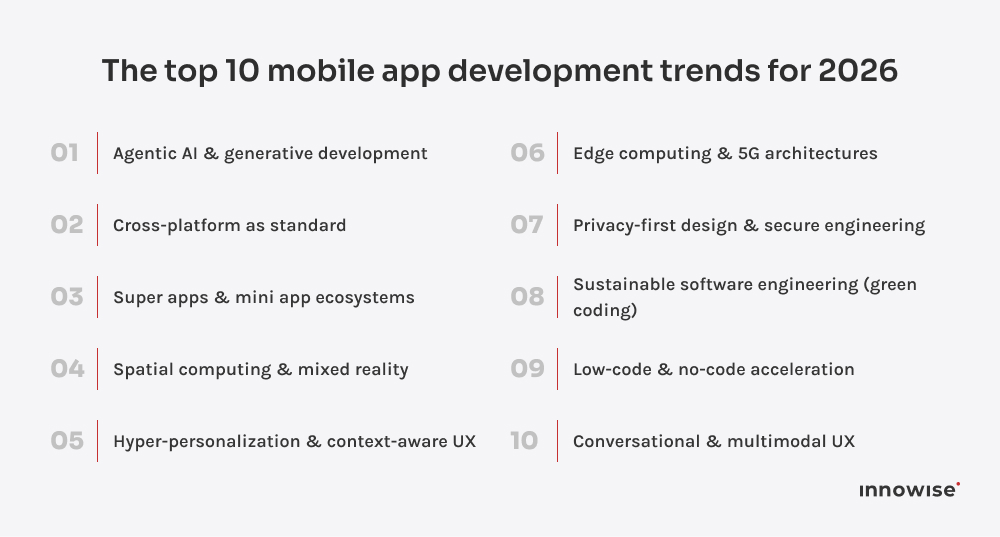
The current trends in mobile app development show a clear pattern: teams are building faster, smarter, and with a sharper focus on experience. 2026 is the year of refinement: cleaner workflows, more automation, and tools that finally keep up with developer instincts. These are the ten areas where real progress happens right now.

The first on the list of top mobile app development trends is AI agents, of course. Every serious mobile team now runs with at least one AI agent in the mix. It reads the repo, fixes dependencies before they pile up, and keeps Kotlin, Swift, and Flutter codebases aligned and consistent. The setup feels smooth: clean commits, no last-minute chaos, everything tracked and aligned.
Design-to-code workflows finally feel civilized. You drop a Figma link or exported layout, the agent drafts the layout, maps it to your component library, and sends a ready-to-review branch. CI/CD reports roll straight into Slack. Nobody waits for builds or digs through error logs.
Telemetry is where it gets fun. The AI system parses live data, spots crash clusters, and points straight to the commit that caused them. It’s like having an obsessive debugger who never sleeps and actually enjoys it.
The effect across teams feels steady and predictable: faster cycles, fewer regressions, calmer developers. McKinsey details measurable productivity improvements from genAI-based tools in software development. I dare say, agentic AI now feels less like a trend and more like the backbone of modern mobile development.
When you hear “one codebase for iOS and Android,” it doesn’t just sound efficient. It is efficient. In 2026, mobile teams are committing to frameworks like Flutter, React Native, and Kotlin Multiplatform because they’re smart investments. According to a state-of-the-art review in 2025, cross-platform mobile application development has already reached significant traction across developer sentiment, community usage, and the job market.
And yes, performance trade-offs still exist, but they shrink with each release of the frameworks. Support for multi-device and multi-screen experiences is quickly becoming a core expectation, with teams planning architectures that scale across phones, tablets, wearables, desktops, and even in-car systems.
In short: if your mobile roadmap includes scaling across platforms, reaching larger user segments, and keeping your dev budget sane, cross-platform development isn’t optional.
Everyone used to talk about super apps like they were an “Asian market phenomenon.” That era is over. In 2026, Western tech is finally catching up. Instead of simple product bundling, companies are stitching together cross-domain services that never used to live under one roof. Think messaging platforms with built-in payments, social feeds that double as marketplaces, or mobility apps that also handle food delivery, event tickets, and insurance. Everything now lives inside one app.
The real story sits in the infrastructure. Modern super apps run modular micro-frontends stitched together through secure APIs and message queues. Each “mini app” operates independently, but the parent platform controls authentication, data, and payment layers. The structure feels more like a lightweight OS than a single product.
This setup solves a headache most product leads know well: feature sprawl. Instead of maintaining six disconnected apps, teams extend one ecosystem. A new service drops in as a micro-module with its own release cycle and analytics stream. Users experience continuity, and developers ship faster with less risk of breaking everything else.
Business outcomes scale accordingly. Engagement jumps because users stay inside the same ecosystem longer. Monetization options multiply, and cross-selling becomes seamless when payments, messaging, and discovery already live in the same interface. The model also opens white-label partnerships: third-party mini apps slot into existing platforms without heavy integration costs.
According to Statista, WeChat passed 1.3 billion active users by 2024, and Western ecosystems are learning fast from that playbook. Financial institutions, retailers, and telecom operators now run internal pilot programs for “mini app frameworks” that mimic the same model: native-level UX, independent deployments, unified data governance.

For teams planning a 2026 roadmap, super apps are less a trend and more a survival strategy. Users expect convenience, and platforms that deliver it become ecosystems instead of apps.
Developers finally get to build for a world that extends past the screen. Spatial computing now sits at the center of serious mobile roadmaps as the next user interface layer.
The hardware isn’t fully there yet, but it’s getting close. Apple Vision Pro, Meta Quest 3, and a wave of fairly lightweight AR glasses make it possible to experiment with immersive interfaces, even if the experience still feels a bit early and niche. Instead of rewriting everything from scratch, developers can now reuse large parts of their mobile logic and assets across devices through shared SDKs and cross-platform tooling. Even as most AR headsets still operate as standalone systems.
For mobile teams, this changes the whole design logic. The interface stops living in pixels and starts living in space. Think dashboards pinned to a user’s desk, real-time navigation overlaid on streets, remote maintenance guides that blend video, 3D models, and AI narration. React Native AR, Unity MARS, and Apple’s RealityKit 2 now handle these layers with actual production stability. No experimental flags required.
Spatial experiences also shift how teams test and measure UX. Eye-tracking, gesture capture, and real-time depth mapping give product designers new metrics to optimize engagement. The same analytics stack that once tracked screen taps now measures attention vectors and object interaction time.
Industries moving first? Healthcare, logistics, and education. Training simulations and remote diagnostics already deliver measurable ROI. A PwC report on immersive tech estimates productivity boosts of over 26% for field and technical roles when AR-guided workflows replace traditional manuals.
For mobile developers, spatial computing feels like discovering a bigger canvas. Apps no longer compete for screen space; they compete for presence.
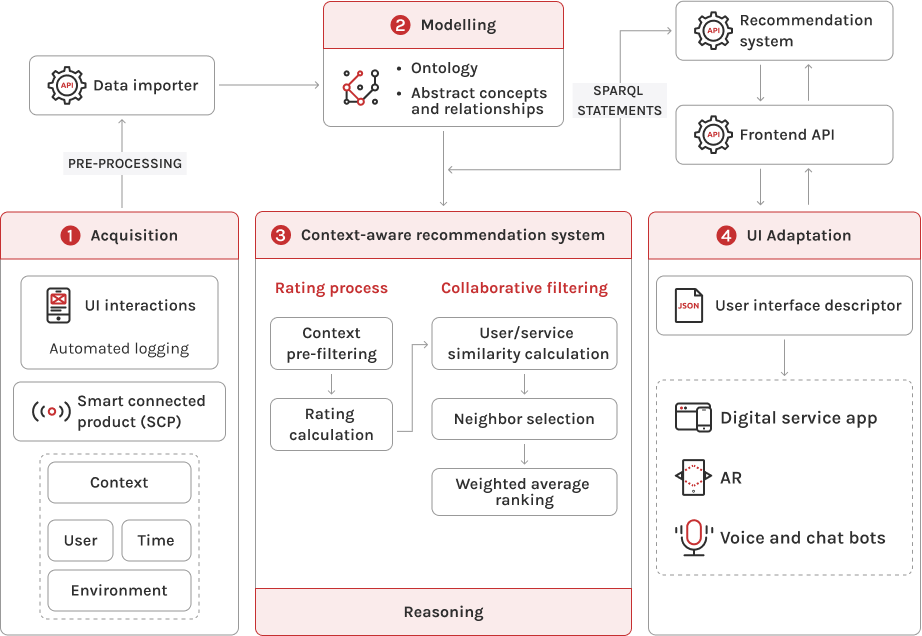
Personalization used to mean “users see different banners.” In 2026, it means the app changes itself. Layouts, navigation, timing, even microcopy — everything adapts to what the user is doing, where they are, and what’s happening around them.
It’s all about context. Motion sensors, geolocation, and calendar data feed into models that adjust app behavior on the fly. A finance app notices you’re in another country and offers currency insights before you open the converter. A wellness app reads heart-rate data and dims the interface when your pulse spikes. It’s personalization you feel.
Under the hood, the shift comes from lightweight on-device models. Instead of cloud inference, the intelligence runs locally. Faster, private, and battery-efficient. Both Android and iOS frameworks (Core ML, Android ML Kit) now support real-time context inference without server calls, so personalization doesn’t trade performance for privacy.
The design process changes, too. Instead of static user journeys, teams build adaptive states: “if/then” UX logic that reacts to intent. It’s part psychology, part engineering. When done right, context-aware interfaces quietly remove friction: fewer clicks, better timing, more relevance.

For businesses, this is retention math. Users stick around when the product feels tuned to them. Salesforce’s 2024 Connected Customer report shows that 61% of customers expect companies to anticipate their needs, and most will move on when interactions don’t adapt to their context.
The smartest teams now prototype these adaptive flows directly in Figma using AI plugins that simulate environmental variables: movement, location cues, time-of-day habits, even predicted intent. The result is a new design discipline: one that treats UX as a living system rather than a fixed layout.
In short, static interfaces belong to the past. Context wins because it respects attention.
If there’s one thing developers hate, it’s waiting for the cloud to catch up. That’s where edge computing quietly changes the game. In 2026, real-time is table stakes, and that’s only possible when apps process data closer to the user.
The idea is simple: stop sending everything halfway across the planet. Instead, push compute tasks to edge nodes: 5G base stations, local gateways, or even the user’s own device. The result? Lower latency, smoother streaming, and way less battery drain.
What used to require heavy cloud infrastructure now runs in milliseconds. Logistics apps track fleets live without lag. AR apps render motion at 90fps without motion sickness. Industrial IoT dashboards run predictive analytics straight from field sensors instead of waiting on the cloud.
According to Statista, the global edge computing market is expected to hit $317 billion by 2026, growing at more than 18% CAGR. That’s not a niche thing anymore. That’s the new backbone of mobile performance.
5G sits right on top of it. Ultra-low latency networks (as low as 1 ms) unlock features like instant cloud gaming, real-time translation, and multi-camera video calls that used to be fantasy in 4G days. Developers are now architecting apps around “edge-native” principles, keeping critical logic close to the device while syncing long-term data to the cloud asynchronously.
It’s the architecture that feels invisible to users but transforms performance. Apps open faster, stream smoother, and stay more reliable in weak connectivity zones. That’s a competitive edge in the most literal sense.
Let’s be honest: users have trust issues and for good reason. Every app wants data; few explain what happens to it. In 2026, privacy-first design stopped being a compliance checkbox and became a core part of product strategy.
Developers are now baking security into the build, not patching it later. Zero-trust architectures and privacy-preserving models are standard in serious mobile projects. That means no blanket access to APIs, no shared tokens across services, and no “we’ll encrypt it later” plans.
Modern stacks rely on secure enclaves, differential privacy, and federated learning to keep data local while still training smarter systems. For example, Apple’s Private Relay and Google’s Privacy Sandbox both set the tone: keep identifiers anonymous, keep computation on-device, and still deliver targeted functionality.
A 2025 Gartner report listed “privacy-enhancing computation” among the top 10 enterprise security trends, and it’s trickled down fast to mobile development. Teams are embedding these concepts directly into SDKs and CI/CD workflows:
But security now extends beyond code. UX design plays a role, too. Transparent consent flows, contextual permission prompts, and clear data usage dashboards have become UX deliverables. Users stay longer when they trust what’s happening behind the scenes.
For mobile teams, that trust translates into revenue protection. A single data-leak PR disaster can burn months of acquisition spend. Privacy-first apps not only stay compliant — they stay desirable.
Every tech conference in 2026 has at least one panel on sustainability. And for once, it’s not just lip service. Energy efficiency has moved from “nice-to-have” to an actual KPI. Teams track their apps’ power draw, optimize APIs, and design for lower compute waste.
Why now? Two reasons: cost and conscience. Cloud bills exploded, and carbon reporting regulations got serious. When you pay for every gigabyte transferred and every watt burned, you start caring about optimization again.
Developers are now thinking in joules per feature. Heavy animations, constant polling, oversized libraries — all fair game for refactoring. Frameworks like Flutter 3.19 and React Native 0.76 added profiling tools that visualize CPU load and battery impact in real time. Back-end teams tune API calls for batch processing instead of chatty, energy-draining loops.
Even AI inference got a sustainability makeover. Instead of running massive models on the cloud, teams use quantized, distilled, or edge-optimized versions. Same functionality, less energy burn. And if that sounds small, remember this: mobile apps collectively consume billions of kilowatt-hours a year. Efficiency at scale is impact at scale.
Companies are also setting measurable goals, not just “we care about the planet” banners. Google Play and the App Store now highlight apps with lower energy footprints and efficient resource use. That visibility directly affects installs and retention.

Multiple studies prove that consumers prefer brands that act sustainably, and digital products are no exception. Green engineering has become part of brand identity.
So when someone says “sustainable coding,” it’s not about turning off the lights in your office. It’s about building systems that don’t waste energy, money, or attention. Efficient code is modern design.
Remember when low-code platforms were just toy builders for marketers? Those days are gone. In 2026, they’re serious productivity tools, and teams use them without apology.
Power Apps, Mendix, and OutSystems are turning non-developers into productive contributors, while dev teams plug these tools straight into CI/CD pipelines to handle internal dashboards, quick MVPs, and even production-grade workflows.
Speed no longer means cutting corners. It means focusing engineers where they matter most. Visual dev handles routine CRUD; custom code handles scale, security, and edge cases. Everyone wins.
There’s also a new layer on top: AI-assisted low-code. Tools now autocomplete functions, suggest UI layouts, and generate integration scripts from plain text prompts. It’s not replacing developers; it’s removing the grunt work that no one misses.
Companies that master this hybrid model ship faster, experiment more, and waste less engineering time on “plumbing.” In a market where the first mover usually wins, that’s a competitive advantage worth quantifying.
Low-code isn’t the future. It’s the workflow you already need to stay in the game.
Touchscreens are still here, but they’re no longer running the show. Voice, gestures, and glance-based interactions are stepping into the spotlight, quietly rewriting what “user interface” even means.
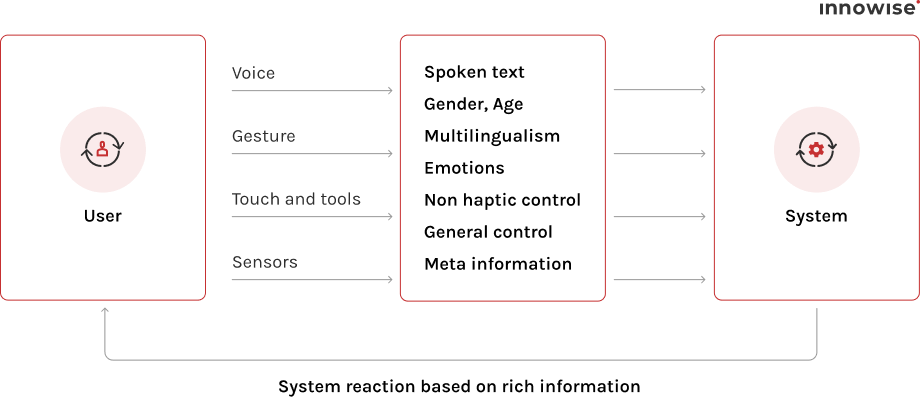
In 2026, users expect to talk to apps, not just tap them. Voice assistants handle in-app navigation, message dictation, and even form filling without breaking context. Think of it as the UI finally learning to listen. Apple’s eye-tracking in iOS 18, Android’s multimodal APIs, and on-device speech models like Whisper Edge are making this seamless enough for daily use.

For developers, it means designing for input diversity. Commands come through microphones, cameras, and sensors, not just fingers. A fitness app reads gestures during a workout; a delivery app confirms actions with a quick “yes” spoken aloud. Accessibility improves too, since multimodal UX naturally adapts to different abilities and environments.
The real power sits in orchestration. When voice, touch, and motion blend into one interaction model, friction disappears. A user can start a booking with a voice command, adjust details by gesture, and confirm with a tap. All inside the same flow.
According to Global Market Insights, the multimodal interface market is growing at over 16% CAGR through 2032, driven by AI assistants and spatial computing adoption. That growth tells you everything: people no longer want apps that wait for input, they want ones that keep up.
For product teams, the takeaway is simple: design for conversation, not just consumption. The next generation of mobile UX feels human because it sounds human.
Mobile app development in 2026 feels like an orchestration of precision and creativity. AI copilots speed up delivery, edge-native systems handle real-time workloads, and privacy-first design keeps trust at the center. Every piece from code to UX works together to create products that feel seamless and alive.
The best teams build with intent. They start cross-platform, automate routine tasks, personalize experiences deeply, and code with efficiency in mind. Every feature earns its place, every release feels deliberate.
For anyone planning their next product cycle, 2026 is a year to build with clarity. Focus on ecosystems, intelligence, and long-term value. That mindset turns good apps into benchmarks for the industry.


Your message has been sent.
We’ll process your request and contact you back as soon as possible.
By signing up you agree to our Privacy Policy, including the use of cookies and transfer of your personal information.