Lämna dina kontaktuppgifter, så skickar vi dig vår översikt via e-post
Jag samtycker till att mina personuppgifter behandlas för att skicka personligt marknadsföringsmaterial i enlighet med Integritetspolicy. Genom att bekräfta inlämningen samtycker du till att få marknadsföringsmaterial
Tack!
Formuläret har skickats in framgångsrikt. Ytterligare information finns i din brevlåda.
Innowise är ett internationellt företag för utveckling av programvara med full cykel som grundades 2007. Vi är ett team av IT-proffs som utvecklar programvara för andra proffs över hela världen.
Innowise är ett internationellt företag för utveckling av programvara med full cykel som grundades 2007. Vi är ett team av IT-proffs som utvecklar programvara för andra proffs över hela världen.
Virtuella modevisningar förändrar online-shopping genom att erbjuda uppslukande, interaktiva upplevelser.
AI-drivna rekommendationer och 3D-provningar minskar returer och ökar konverteringarna.
De ökar ditt varumärkes räckvidd globalt utan behov av fysiska butiker.
Virtuella showrooms ökar engagemanget genom att låta kunderna utforska produkterna på djupet.
På Innowise skapar vi anpassade virtuella showrooms som anpassar sig till ditt varumärkes behov och driver försäljning.
Jag minns när en “digital uppgradering” inom mode innebar att man lade till en zoomknapp på produktfoton. Det var innovationen!
Några år senare har varumärken börjat skapa virtuella modevisningar där kunderna går igenom 3D-utrymmen, inspekterar tygstrukturer, jämför outfits och till och med checkar ut - allt utan att gå in i en butik.
Nu vill jag att du tänker på hur människor konsumerar allt annat. Netflix ger dig inte en statisk lista och hoppas på det bästa, eller hur? Spotify förväntar sig inte att du ska gräva igenom filer. Vi är vana vid plattformar som lär sig av våra klick, vägleder oss i våra val och anpassar sig direkt. Modeshoppare förväntar sig samma energi. När de landar på en webbplats idag vill de utforska och känna sig närvarande. Det är därför det virtuella showroomet för mode har gått från att vara ett nischat experiment till att bli ett seriöst affärsverktyg.
Därför investerar varumärken i virtuella modevisningar
Enbart tekniken för virtuella provningar - en central del av många digitala showrooms - beräknas växa från cirka $9 miljarder 2023 till tiotals miljarder fram till 2030 eftersom varumärken använder det för att öka konverteringen och minska returerna.
Så varför flyttar modemärken budgetar och strategier till virtuella utrymmen? Här är vad som driver det beslutet.
Öka försäljningen utan att öka de fysiska omkostnaderna
Ett virtuellt showroom för mode ökar försäljningskapaciteten utan att öka hyres-, personal- eller resekostnader. Fysiska visningslokaler begränsas av kvadratmeter och geografi. Ett digitalt showroom fungerar 24/7 och presenterar hela kollektionen för köpare var som helst.
Logiken är enkel: när kunderna kan rotera plagg i 3D, inspektera texturer, jämföra outfits och checka ut i samma miljö behövs färre kontaktpunkter och besluten fattas snabbare. Digitala utrymmen förlänger den fysiska detaljhandeln och minskar samtidigt omkostnaderna dramatiskt.
Utöka den globala räckvidden utan att öppna nya butiker
Ett digitalt showroom för mode tar bort geografiska barriärer. Köpare från olika regioner kan gå in i samma varumärkesutrymme utan flyg, visum eller möten i showroomet. Kollektioner blir tillgängliga över tidszoner, vilket ökar exponeringen och förkortar internationella säljcykler.
När tillgången blir global som standard slutar tillväxten att vara beroende av fysisk expansion.
Minska returerna genom bättre produktvisualisering
Avkastning dränerar marginalerna inom mode. Osäkerhet om passform och ouppfyllda förväntningar ligger bakom en stor del av dem. Detaljerad 3D-visualisering och virtuella provningsverktyg kan hjälpa till att öka köptroheten eftersom kunderna ser proportioner, material och kombinationer innan de köper.
Tydligare visualisering minskar osäkerheten. Och minskad osäkerhet sänker i sin tur returgraden och skyddar marginalerna.
Öka engagemangstiden och köparens uppmärksamhet
Uppmärksamhetstiden på nätet krymper för varje år. Statiska produktgallerier har svårt att hålla fokus. Ett virtuellt modeutställningsrum förvandlar bläddring till utforskning, vilket ökar den tid som spenderas i varumärkesmiljön.
När köpare stannar längre ser de mer. När de ser mer ökar sannolikheten för konvertering.
Även branschrapporter visar att uppslukande digitala upplevelser ökar kundengagemanget och stärker varumärkesuppfattningen inom mode- och lyxsektorerna.
Stärkt varumärkespositionering genom kontrollerade miljöer
En virtuell modevisning ger varumärkena kontroll över presentationen. Layout, belysning, kollektionssekvens och storytelling blir avsiktliga snarare än oavsiktliga. Miljön speglar varumärkets identitet i stället för att förlita sig på marknadsplatsens mallar.
Kontroll över miljön leder till ett starkare varumärkesminne.
Kortare beslutscykler för grossistledet
Partihandel är traditionellt beroende av fysiska möten, provleveranser och uppföljande förhandlingar. Ett VR-showroom för modemärken centraliserar produktdata, prissättning och beställning i ett och samma system.
När inköpare kan undersöka 3D-prover, jämföra SKU:er, granska specifikationer och lägga order direkt, komprimeras försäljningskedjan. Färre samordningssteg minskar den operativa friktionen. Denna minskning förbättrar kassaflödestiming och planeringsnoggrannhet i hela leveranskedjan.
Vilka funktioner har virtuella utställningslokaler
Ett virtuellt showroom för mode fungerar när det är mer än bara snygga bilder. Det kombinerar rumslig design, detaljerad produktmodellering och funktioner för direkthandel i en och samma miljö. Målet är enkelt - att ge kunderna tillräckligt med djup och tydlighet för att gå från nyfikenhet till köp utan att lämna ögonblicket.
360-graders produktvyer för total transparens
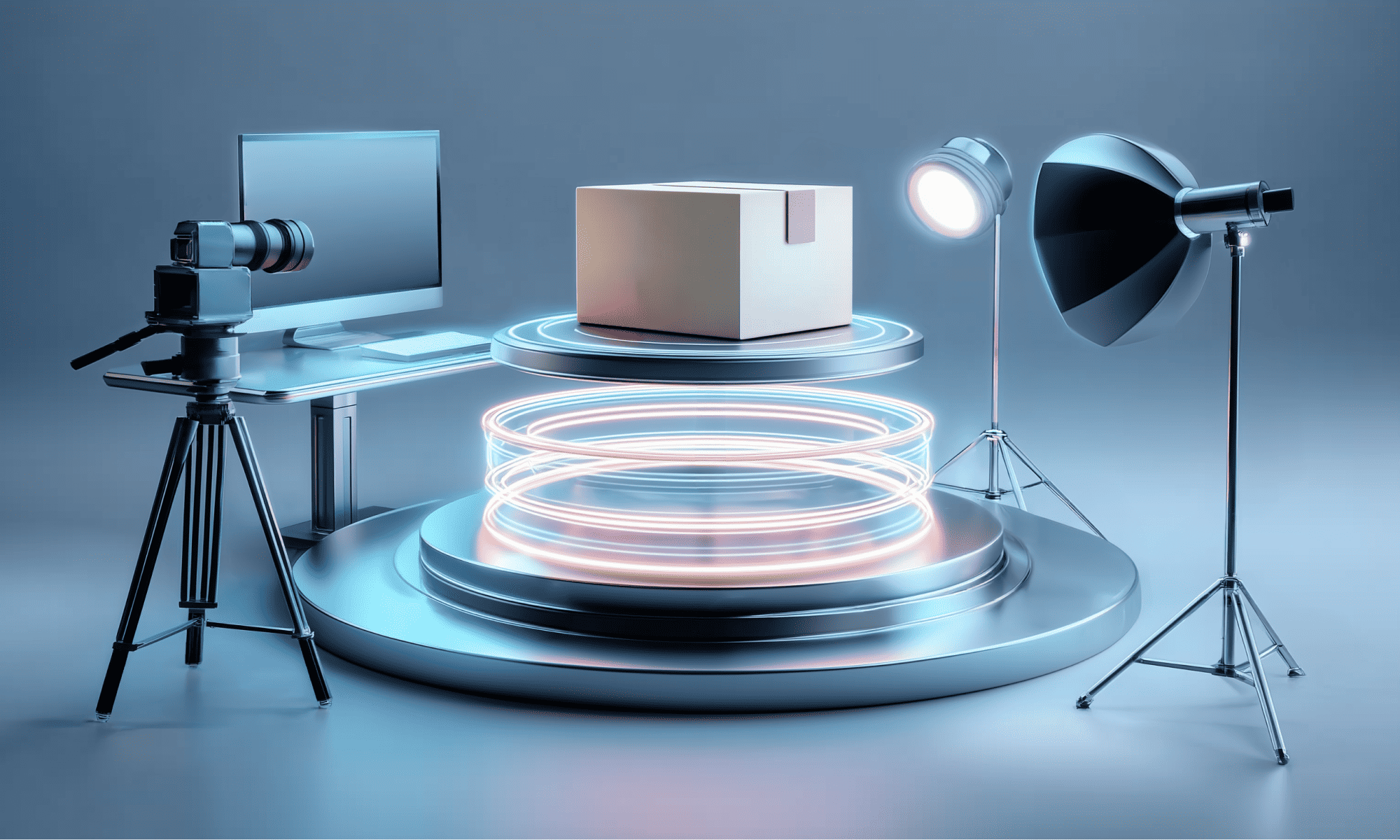
360-graders produktvyer ger kunderna kontroll. Istället för att förlita sig på två eller tre studiobilder kan de rotera plaggen, zooma in på sömmarna, inspektera tygstrukturen och se silhuetter från alla vinklar. Den kontrollen skapar förtroende.
Inom mode kommer tvekan ofta från osäkerhet. Hur faller materialet? Hur ser baksidan ut? Hur strukturerad är passformen? När ett digitalt showroom för mode tillåter full 3D-inspektion får du svar på dessa frågor direkt. Resultatet blir snabbare beslut och färre övergivna kundvagnar.
Virtuell provning och visualisering av passform
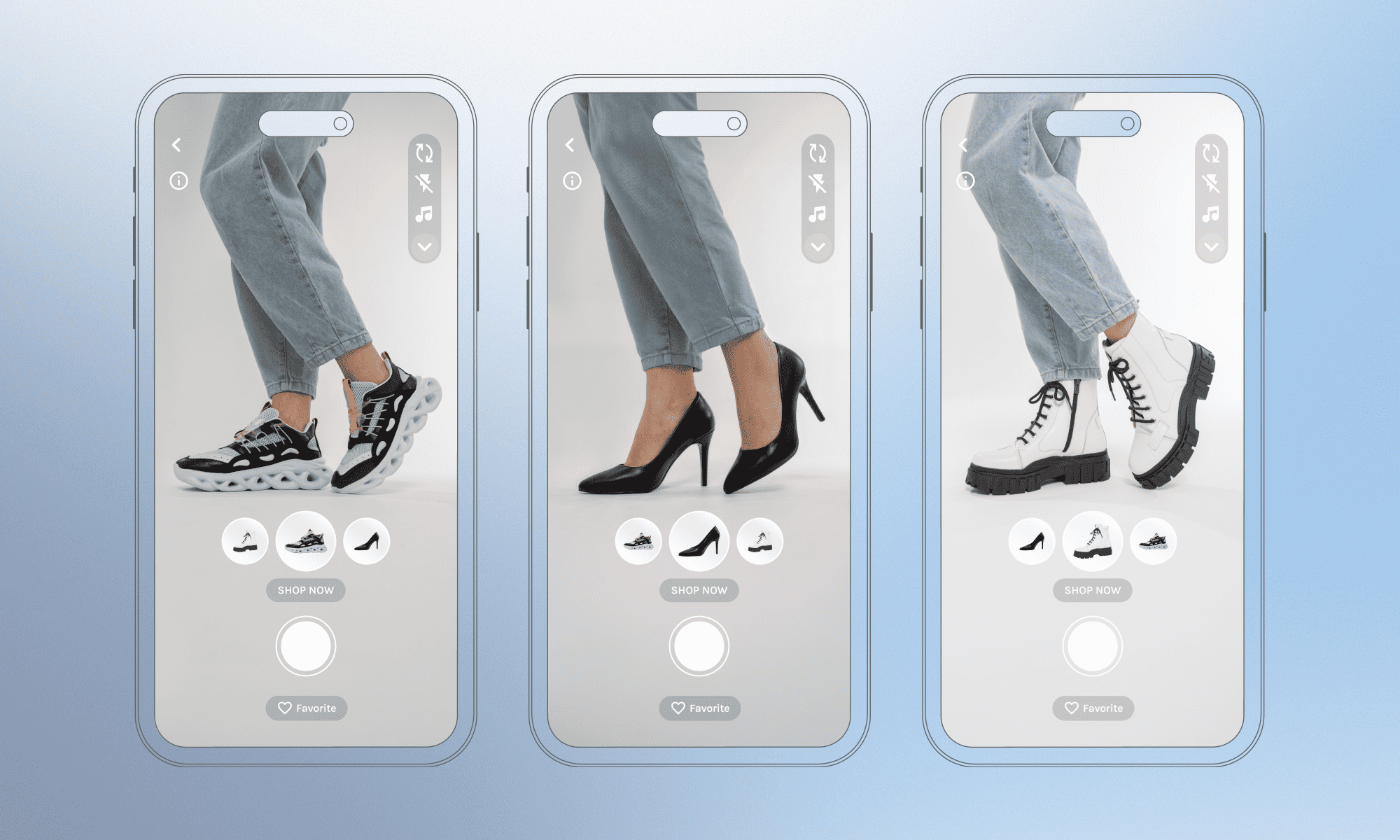
Virtuell provning ger ett sammanhang till produkten. Kunderna ser hur plaggen sitter på kroppen, hur proportionerna fungerar tillsammans och hur plaggen kombineras till en hel look. Det gör att beslutet går från att gissa till att utvärdera.
För varumärken minskar visualisering av passform en av de största friktionspunkterna inom online-mode - osäkerhet. När kunderna kan förhandsgranska drapering, lager och rörelse i ett digitalt modeutställningsrum ökar självförtroendet och tveksamheten minskar.
Tips:Integrering av AR-teknik kan avsevärt förbättra den virtuella provningsupplevelsen. Med AR kan kunderna lägga plaggen på sina kroppar i realtid. Det ger dem en mer exakt uppfattning om hur kläderna kommer att se ut och passa. Jag gillar till exempel hur Tommy Hilfiger tog fasta på idén och införde en AR-provningsspegel i några av sina butiker:
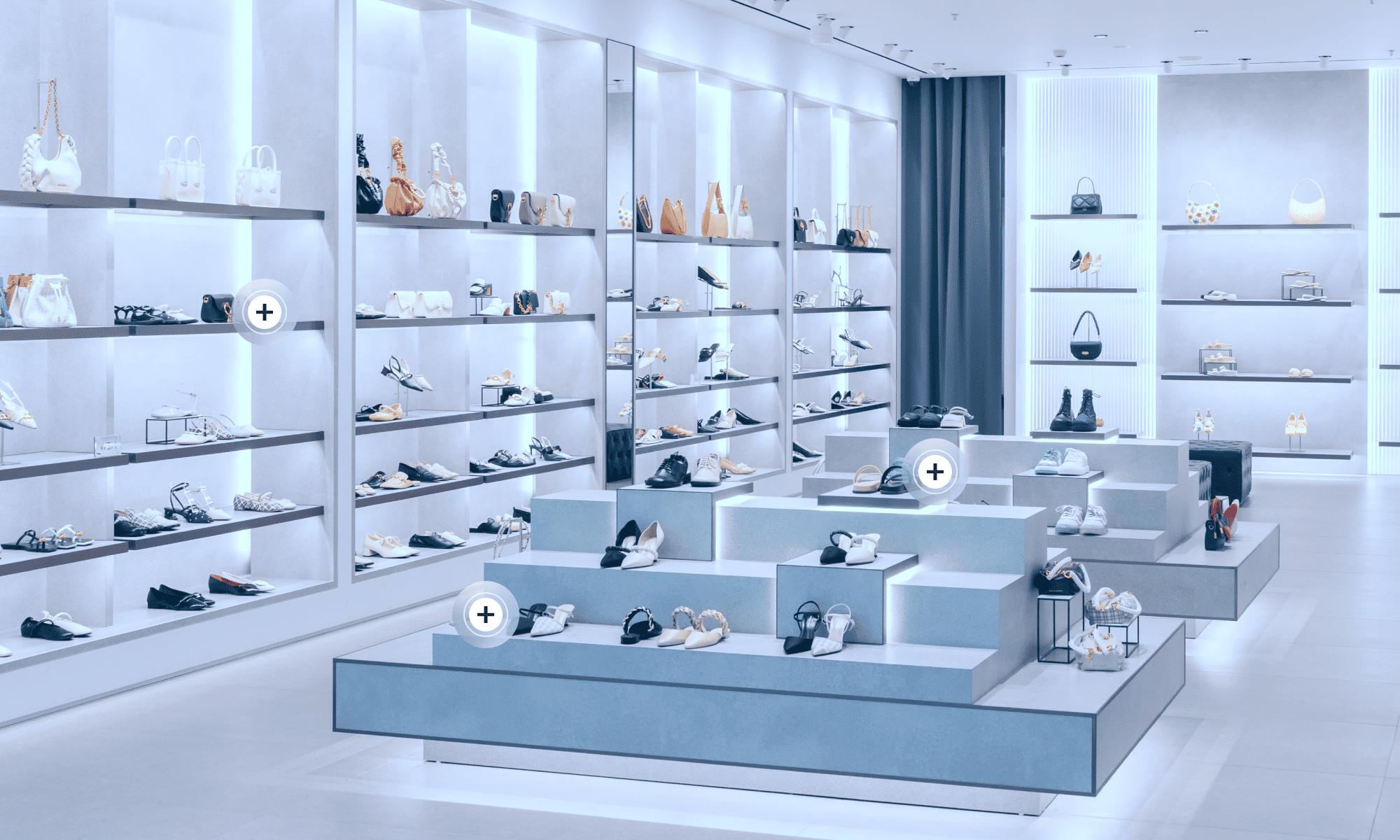
Att navigera i ett virtuellt showroom för mode känns närmare att gå genom ett kurerat utrymme än att bläddra i en katalog. Besökarna rör sig mellan kollektioner, temahallar eller produktzoner på ett sätt som speglar den fysiska detaljhandeln.
Det rumsliga flödet uppmuntrar till upptäckter. Istället för att hoppa mellan olika sidor utforskar kunderna på ett naturligt sätt. Utforskandet ökar exponeringen för fler artiklar, vilket ökar möjligheterna till korsförsäljning och det genomsnittliga ordervärdet.
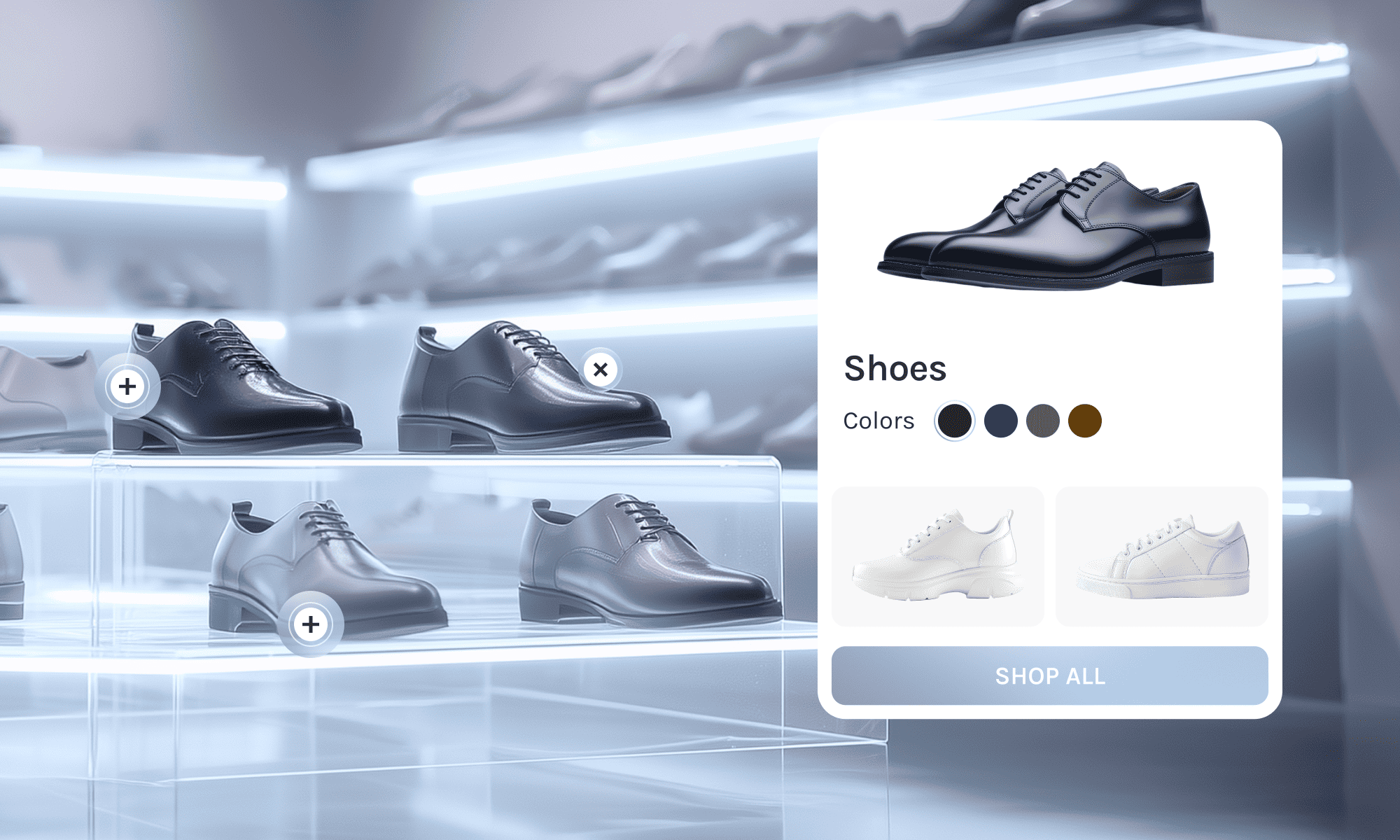
Ett starkt digitalt showroom för mode kopplar inspiration direkt till köp. Kunderna kan lägga till artiklar på en önskelista, jämföra produkter, flytta dem till en kundvagn och slutföra betalningen utan att lämna miljön.
Denna integration förkortar köpresan. Färre omdirigeringar innebär färre avhopp. När upptäckt och utcheckning sker i samma utrymme går showroomet från varumärkesupplevelse till aktiv försäljningsmotor.
Rekommendationssystem och korsförsäljningslogik
Rekommendationssystem i ett VR-showroom för modemärken guidar kunderna till kompletterande plagg. När någon tittar på en jacka föreslår systemet matchande skor eller accessoarer.
Detta är en spegelbild av hur stylister arbetar i fysiska butiker. Samordnade förslag ökar korgstorleken och hjälper kunderna att skapa kompletta outfits istället för att köpa enstaka varor. Showroomet blir både ett presentationsverktyg och en tyst säljassistent.
I våra projekt implementerar vi vanligtvis dessa rekommendationsmotorer med hjälp av AI-modeller som är anslutna till lagerdata och analys av användarinteraktion. Det gör att den digitala modevisningen kan justera förslagen dynamiskt när besökarna utforskar utrymmet.
Vi designar och bygger produktionsklara virtuella showrooms som är integrerade med din handelsplattform, dina analys- och lagersystem
Hur du förstår om ditt varumärke verkligen behöver det
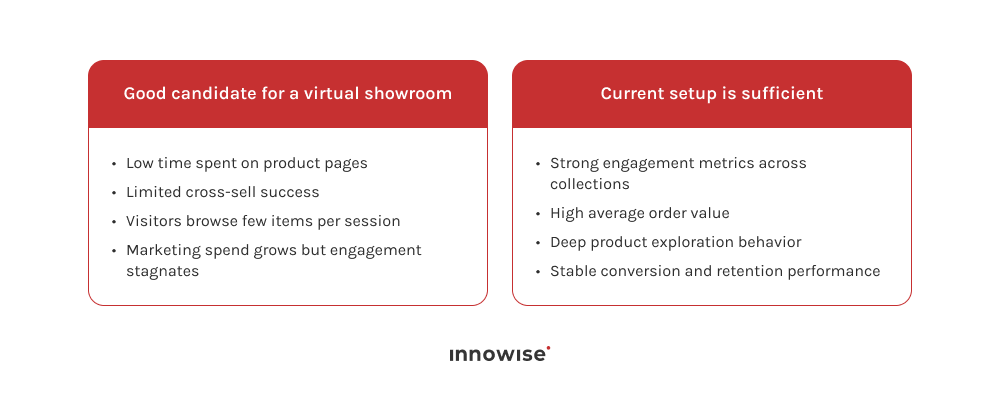
En virtuell modevisning låter spännande - futuristisk, imponerande och bra för rubrikerna. Men det är inte alla varumärken som behöver ett sådant. För vissa är det en tillväxtaccelerator. För andra är det en dyr distraktion. Så här gör du för att förstå om du behöver ett virtuellt showroom:
1. Bedöm din nuvarande shoppingupplevelse
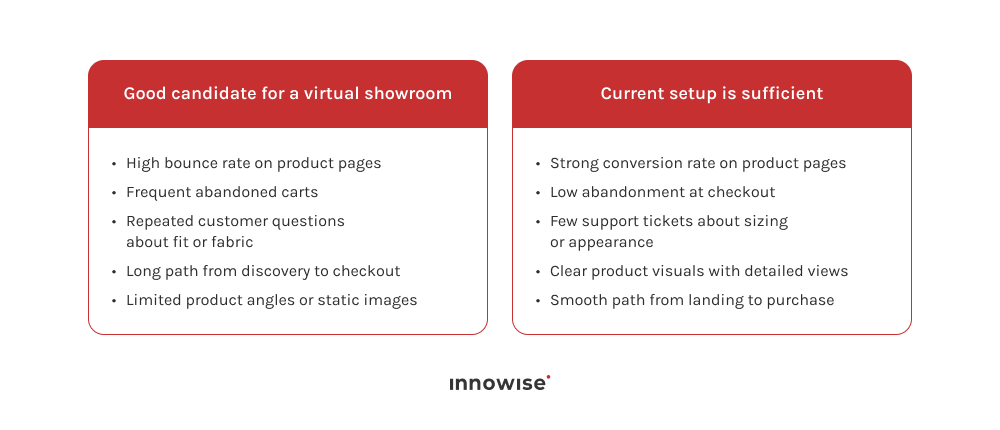
Börja med din befintliga resa online. Hur lång tid tar det för en kund att gå från upptäckt till kassan? Hur många klick skiljer inspiration från köp? Var hoppar folk av?
Om dina produktsidor är beroende av platta bilder, begränsade vinklar och statiska beskrivningar kan du redan se tveksamheter i analyserna - höga avvisningsfrekvenser, övergivna kundvagnar, upprepade storleksfrågor. Ett digitalt showroom för mode är meningsfullt när din nuvarande installation begränsar hur väl kunderna kan förstå, utforska och tryggt välja dina produkter.
2. Utvärdera din returfrekvens och dina passformsrelaterade klagomål
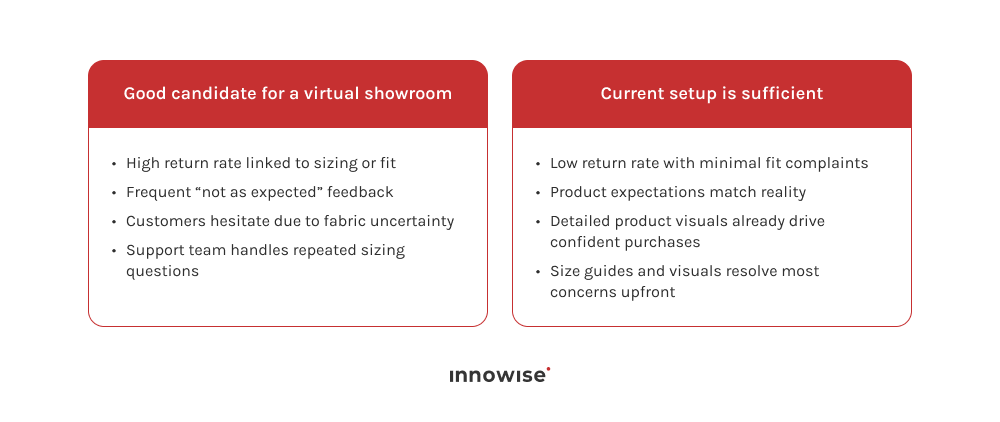
Titta på dina returdata. Om en stor andel av returerna är kopplade till storlek, förväntad passform eller produktens utseende, signalerar det ett visualiseringsgap. Kunder skickar ofta tillbaka varor för att plagget såg annorlunda ut på en skärm än i verkligheten.
När osäkerheten påverkar avkastningen kan ett virtuellt modeutställningsrum med detaljerade 3D-modeller eller simulering av passformen minska skillnaden. Beslutet att investera blir operativt, inte estetiskt.
3. Analysera hur grossistköpare interagerar med dina kollektioner
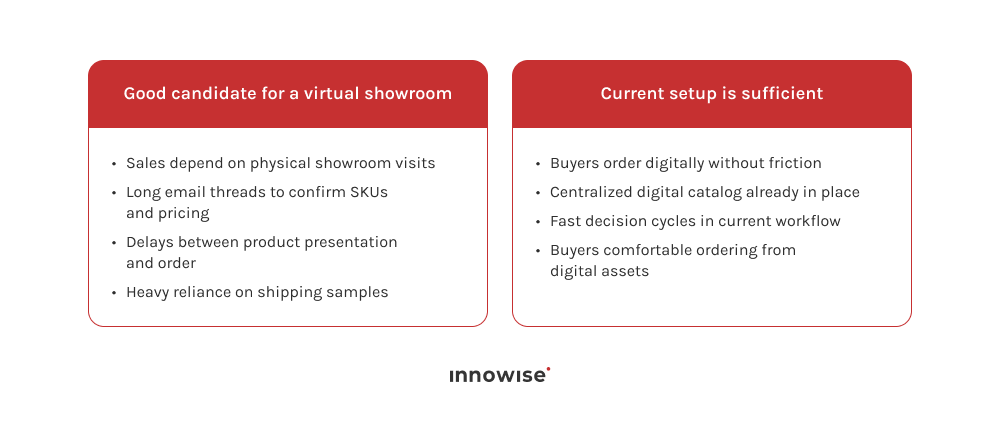
Om du arbetar med grossistpartners bör du undersöka hur de granskar och beställer kollektioner idag. Är de beroende av fysiska prover, personliga möten eller långa mejlväxlingar för att bekräfta SKU:er och prissättning?
När köpcyklerna sträcker sig över flera kontaktpunkter kan digitaliseringen av upplevelsen komprimera tidslinjerna. Ett VR-showroom för modevarumärken är meningsfullt när grossistkoordinering bromsar intäktsredovisningen.
4. Se över dina internationella tillväxtplaner
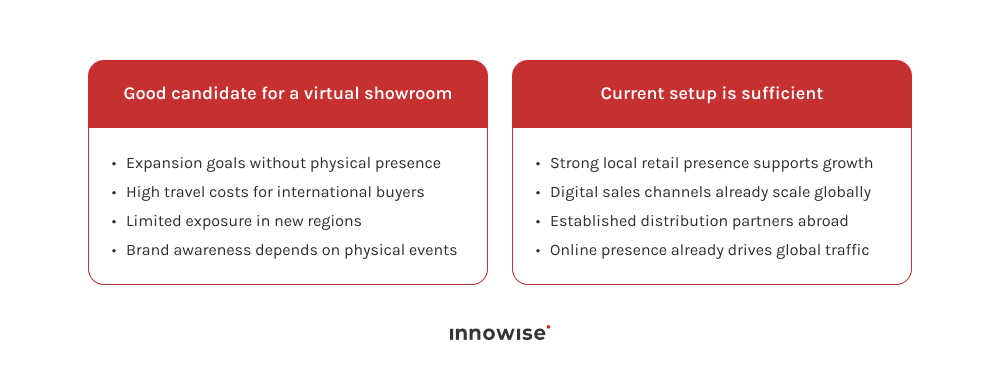
Expansionen stannar ofta av eftersom fysisk närvaro kräver kapital och logistik. Om din strategi innebär att du ska ta dig in på nya marknader utan att öppna nya butiker blir den digitala infrastrukturen central.
Ett digitalt showroom för mode gör det möjligt att synas över gränserna utan att bygga upp fysiska butiker. När tillväxtmålen överskrider den fysiska kapaciteten fyller virtuella utrymmen luckan.
5. Mät engagemang utöver enkla sidvisningar
Tid på webbplatsen, djup i produktinteraktionen och upprepade besök avslöjar om kunderna känner sig engagerade eller bara surfar snabbt. Om mätvärdena för engagemang förblir oförändrade trots marknadsföringsinvesteringar kan det vara upplevelsen som är problemet.
Ett virtuellt modeutställningsrum introducerar rumslig interaktion, kuraterad storytelling och djupare utforskning. När vanlig e-handel inte lyckas fånga uppmärksamheten kan man ofta ändra beteendet genom att ändra formatet.
Hur man implementerar ett virtuellt showroom
Skynda dig inte att söka efter leverantörer ännu. Innan dess måste du definiera vad du vill sälja bättre, snabbare eller med högre marginaler. Tydliga prioriteringar hjälper dig att förhindra överbyggnad och hålla din investering fokuserad på mätbara resultat.
Steg 1: Utvärdera din produktkatalog och prioritera
Identifiera först vilka produkter som kommer att dra mest nytta av 3D-visualisering och rumslig presentation. Komplexa plagg med struktur, lager-på-lager-plagg, skor eller hero pieces med höga marginaler ger vanligtvis den starkaste effekten i ett digitalt modeutställningsrum. Dessa artiklar motiverar kostnaden för detaljerad 3D-modellering och passformssimulering.
Granska sedan resultatdata. Titta på bästsäljare, SKU:er med hög avkastning och produkter med starkt engagemang men låg konvertering. Dessa kategorier avslöjar ofta var ytterligare visualisering skulle kunna påverka köpbesluten.
Att lansera med ett fokuserat urval - snarare än hela katalogen - minskar produktionskostnaderna och gör att du kan testa prestanda innan du skalar upp VR-showroomet för modemärken i alla kollektioner.
Steg 2: Välj rätt teknikpartner
Att välja rätt teknikpartner är avgörande. Showroomet måste anpassas till ditt varumärkes behov, inte bara blända med flashiga funktioner. Leta efter en partner som förstår modebranschen och kan tillhandahålla både den tekniska stacken och expertisen för att bygga ett showroom som blandar din webbplats, dina lagersystem och din e-handelsplattform till en sömlös upplevelse. De bör också ha praktisk erfarenhet av att integrera AR/VR, 3D-rendering och AI-rekommendationssystem för en smidig shoppingupplevelse från början till slut.
Underskatta inte betydelsen av en pålitlig teknisk partner som kan skala med dig. Rätt team kommer att vara tillräckligt smidigt för att kunna svänga i takt med att dina behov utvecklas (oavsett om det handlar om att lägga till nya funktioner eller förbättra backend).
Steg 3: Fokusera på användarupplevelse och navigering
Användarupplevelsen kan med fog sägas vara den avgörande faktorn mellan köp och pass. Om ett virtuellt showroom känns klumpigt eller förvirrande kommer kunderna inte att stanna kvar tillräckligt länge för att slutföra ett köp. Fokusera på intuitiv navigering. Ju mer naturligt det känns att utforska produkterna, desto bättre blir konverteringsgraden. Se till att showroom-miljön är lätt att ladda, enkel att navigera och innehåller interaktiva element som zoom, rotation och artikeljämförelser.
Beakta insikter om kundbeteende när du utformar layouter. Se till att de mest efterfrågade kollektionerna är i centrum och att det finns en tydlig väg till kassan. Genom att testa showroomet noggrant med riktiga användare före lanseringen kan man identifiera friktionspunkter och förbättra användarflödet.
Steg 4: Implementera integration med e-handels- och lagersystem
För att ett virtuellt showroom för mode ska fungera effektivt måste det integreras med dina befintliga e-handels- och lagerhanteringssystem. Detta ger dig datasynkronisering i realtid för produkttillgänglighet, prissättning och beställningar. Genom att lägga till betalningsgateways skapas också en linjär, friktionsfri upplevelse från utforskning till köp.
Backend-integration håller ditt virtuella showroom synkroniserat med verkligheten. Lagernivåer, priser, produkttillgänglighet och beställningar uppdateras i realtid. Det innebär att kunderna aldrig ser artiklar som redan är slutsålda och aldrig får prisöverraskningar i kassan.
Detta förhindrar överförsäljning, minskar kundfrustrationen och skyddar intäkterna. När inventarier och transaktioner är korrekta fungerar verksamheten smidigare och försäljningen förblir förutsägbar.
Steg 5: Testa, lansera och iterera
Testning är nyckeln (det har det alltid varit). Innan du går live, testa showroomet aggressivt för buggar, glitches och användbarhetsproblem. Börja med en liten intern grupp och utvidga sedan till en bredare publik. Den feedback som samlas in under denna fas kommer att bidra till att förfina showroomet och säkerställa att systemet kan hantera ett stort antal besökare.
Efter lanseringen bör du noga övervaka användarnas beteende. Spåra vilka delar av showroomet som får mest uppmärksamhet, hur länge kunderna stannar och var de slutar. Använd dessa data för att kontinuerligt förfina användarupplevelsen, uppdatera showroomet med nya kollektioner och göra justeringar baserat på beteendet i verkligheten.
Tips: I takt med att den immersiva tekniken utvecklas bör du tänka längre än till den första lanseringen. Ditt virtuella showroom kan växa till ett bredare digitalt ekosystem - från AR-förstärkta butiksupplevelser och digitala lanseringar i realtid till interaktiva varumärkesgemenskaper. När det planeras strategiskt blir det en långsiktig plattform för engagemang, inte bara ett engångsförsäljningsverktyg.
Steg 6: Marknadsför och driv trafik
Ett bra virtuellt showroom kommer inte av sig självt. Du måste marknadsföra det strategiskt i alla marknadsföringskanaler: e-post, sociala medier, betalda annonser och kampanjer i butiken. Använd teasers, bakom kulisserna eller partnerskap med influencers för att skapa buzz. Betona den interaktiva, uppslukande karaktären av upplevelsen och uppmuntra besökarna att utforska.
Överväg också att erbjuda tidig tillgång till vissa produkter eller rabatter för besökare i showroomet för att driva trafik och öka engagemanget.
Avslutning och framåtblick
Framtiden för virtuella modevisningsrum kommer att bli mycket mer uppslukande. I takt med att tekniken utvecklas kommer vi att få se AI-drivna upplevelser som förutser kundernas preferenser i realtid och erbjuder personliga rekommendationer och dynamiska produktvisningar. Förvänta dig mer realistiska virtuella provningar, där kunderna kan se hur kläderna rör sig och passar utan att någonsin gå in i en butik. Augmented reality kommer att ytterligare sudda ut gränserna mellan online- och butiksshopping och göra det möjligt för kunderna att interagera med mode på sätt som vi ännu inte har föreställt oss.
På Innowise bygger vi redan dessa nästa generations upplevelser. Vi håller jämna steg med trenderna, och jag vågar till och med säga att vi formar dem. Vi utformar uppslukande handelsmiljöer som är direkt knutna till affärsresultat. Varje funktion stöder tydliga mål: högre konvertering, lägre returfrekvens och snabbare intäktstillväxt.
Generativ AI, agenter, edge-enheter - här är vad som är verkligt 2026 och vad som dör efter demonstrationen.
Philip Tikhanovich
1 april 2026
Blogg
Augmented reality i fastighetsbranschen: förändrade sökmöjligheter
AR visar layout, skala och finishalternativ i sitt sammanhang, så att köparna slutar gissa och ditt team lägger mindre tid på extra samtal och upprepade besök.
Upptäck de bästa trenderna inom mjukvaruutveckling för 2026. Utforska de senaste teknikerna och insikterna som kommer att förändra programvaruindustrin!
Upptäck de bästa trenderna inom mjukvaruutveckling för 2026. Utforska de senaste teknikerna och insikterna som kommer att förändra programvaruindustrin!



 Anlita oss
 Om oss