The form has been successfully submitted.
Please find further information in your mailbox.


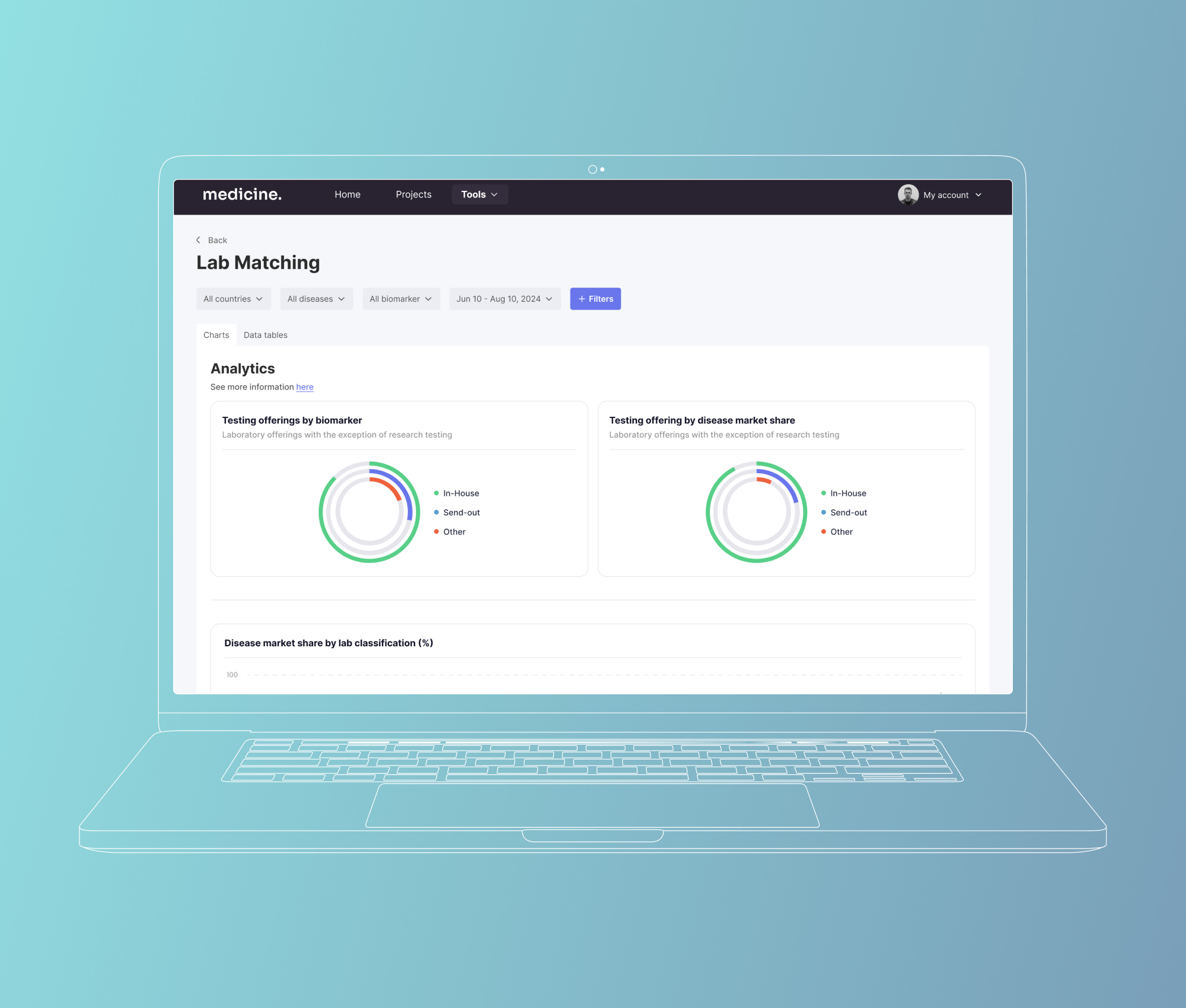
Innowise enhanced an advanced data management platform for precision medicine diagnostics, streamlining the analysis of diverse healthcare datasets to accelerate patient-treatment matching and provide critical insights for drug development.
The precision medicine company faced significant inefficiencies in its data processing pipelines and environment setup, hampering its ability to effectively aggregate, process, and analyze critical diagnostic test data from multiple sources. These inefficiencies led to delays in data availability for both data engineers and end-users, potential data quality issues, and suboptimal AWS infrastructure resource utilization.
The client also experienced challenges with adding new users and managing permissions for existing users within the AWS environment. Innowise’s team, consisting of DevOps engineers and data scientists, was entrusted with these tasks.
Our experts led a comprehensive overhaul of the client’s software to implement a multifaceted solution.
Our DevOps engineers redesigned the infrastructure workflows to improve their efficiency and scalability. We performed profiling of the existing data pipelines to identify gaps and then optimized data structures and formats to reduce redundancy and improve processing efficiency. To further speed up data transformation and analysis, the experts implemented parallel processing techniques. We also improved and refactored code to enhance its maintainability. These efforts resulted in a streamlined, high-performance data pipeline system.
We optimize the utilization of AWS cloud infrastructure by right-sizing instances, and implementing auto-scaling. We also applied Infrastructure-as-Code principles using Terraform to automate provisioning and management of cloud resources. Docker helped to containerize the data processing environment for consistency across development, testing, and production. A CI/CD pipeline was established to automate code integration, testing, and deployments. We also set up automated environment testing to catch configuration issues early.
We implemented AWS IAM best practices to enhance user and permission management. This included creating policies based on the principle of least privilege and setting up multi-factor authentication (MFA) for all IAM users. We optimized EC2 instance types based on workload analysis and set up CloudWatch alarms for proactive monitoring. Furthermore, to mitigate security risks, we developed automated scripts for user management and permissions.
To enhance the precision medicine data management platform, we followed a structured approach, ensuring each aspect of the solution was aligned with the client’s needs.
We examined the client's data processing pipelines and AWS infrastructure, pinpointing inefficiencies and areas for improvement.
We restructured the system to enhance data handling, scalability, and security within AWS.
Using Python and related tools, we improved back-end processes, data structures, and implemented parallel processing techniques.
We created Terraform scripts to streamline AWS resource management.
We containerized the data processing environment with Docker and set up automated integration, testing, and deployment pipelines.
We evaluated data processing speed, accuracy, system reliability, and IAM security measures.
1
Project Manager
2
DevOps Engineers
2
Data Scientists
1
QA Engineer

The implementation of our solution led to significant improvements in our client’s’ data management capabilities.
Your message has been sent.
We’ll process your request and contact you back as soon as possible.

By signing up you agree to our Privacy Policy, including the use of cookies and transfer of your personal information.