Hire us
 About us


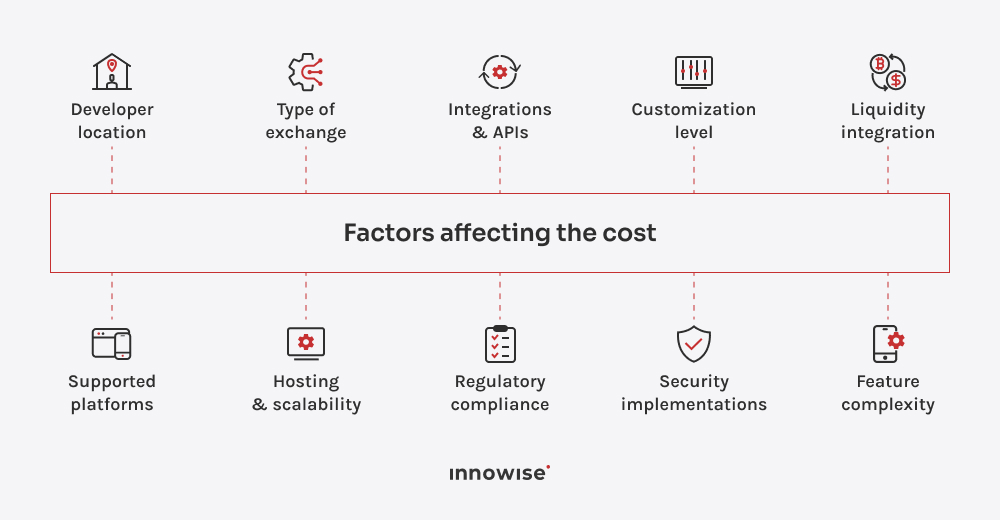
The type of exchange you pick affects how complicated the development is, how secure it is, what kind of regulations you need to follow, and how much it’ll cost overall.
- CEX: CEXs, like Binance and Coinbase, need solid backend systems, security, and liquidity management. Building one means creating a trading engine, security features, and compliance tools like KYC/AML. They’re usually more expensive because of the complex compliance requirements and centralized management.
- DEX: DEXs like Uniswap and PancakeSwap use smart contracts on blockchain networks. They don’t rely on centralized systems, and liquidity pools are created directly by the platform. Though they require more advanced blockchain development, they’re more affordable to maintain in the long run.
- Hybrid exchanges: A hybrid exchange, like Kinesis, combines centralized systems for order matching with decentralized elements like token management, so building that would require expertise in both areas. This mix makes hybrid exchanges more costly to build due to the need for cross-platform integration.
- Peer-to-Peer (P2P) exchanges: P2P platforms like LocalBitcoins let users trade directly with each other. While they’re cheaper to run, the platform still needs escrow systems, user verification, and solid security to keep transactions safe.